History of the Flight
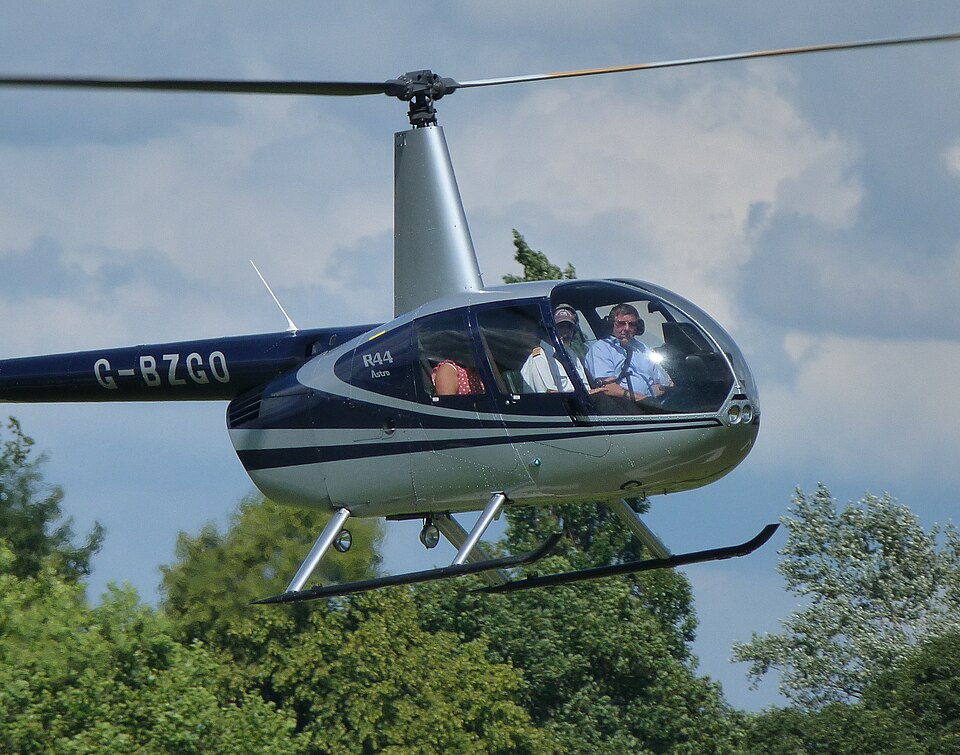
The Robinson R44 Astro, registration G-BZGO, departed from Manchester Barton Airport on 13 June 2016 at 1547 UTC. The helicopter was flying at approximately 1,500 ft and 90 kt. On board were the commander, aged 57, with 4,000 hours total flying experience (1,900 on type), and a qualified helicopter pilot undergoing refresher training in the right seat. The commander had just taken control of the helicopter when a bird struck and broke through the left windscreen. The bird was killed on impact and entered the cockpit with its wings unfolded. The pilot in the right seat took control; the helicopter lost approximately 700 ft in altitude while the crew dealt with the incident. They declared a MAYDAY and returned to Barton for an uneventful landing. Neither crew member was injured.
Damage
The left windscreen was broken. The bird was not sent for analysis, but photographs indicated it was most likely a Herring Gull. The pilot reported the bird weighed approximately 0.6 kg.
Birdstrike Requirements
The Robinson R44 was certified under FAA Regulation Part 27 (Normal category rotorcraft). Part 27 does not include requirements for birdstrike resistance, only that windshields and windows must not break into dangerous fragments. The equivalent EASA certification specification, CS-27, contains the same requirements.
Previous Incidents
The AAIB has issued two previous reports after similar events on helicopters certified to Part 27: N109TK (AAIB Bulletin 3/2012) and G-ODAZ (AAIB Bulletin 6/2014).
Safety Actions
In November 2010, the NTSB issued Safety Recommendations to the FAA following a birdstrike accident involving a Sikorsky S-76C (certified under Part 29, which includes birdstrike requirements). One recommendation addressed the lack of similar requirements in Part 27, proposing a revision to specify bird weight and impact velocity that a helicopter must withstand for safe landing and for windshield penetration resistance. In response, the FAA convened an Aviation Rulemaking Advisory Committee (ARAC) Rotorcraft Birdstrike Working Group to provide recommendations for enhancing birdstrike protection for Normal category rotorcraft. The helicopter manufacturer was participating in this initiative. EASA commissioned a study in 2008/2009 that recommended enhancing CS-27, preferably to include a 2 lb/1 kg windshield birdstrike capability. EASA participated in the FAA working group, and any decision to amend CS-27 depended on the outcome. The NTSB also advised that the helicopter manufacturer was investigating tougher windscreen materials to improve occupant protection.