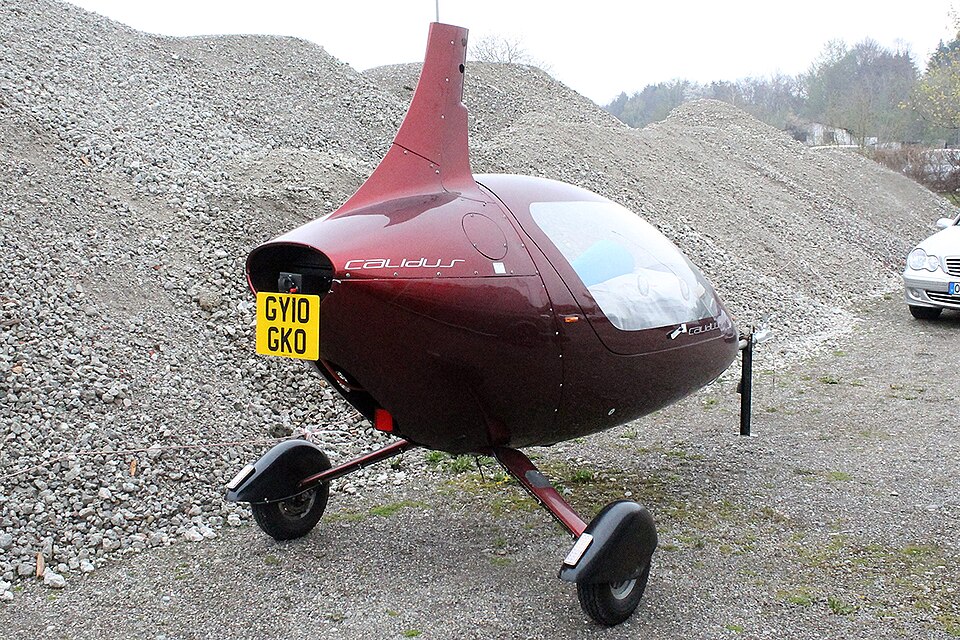
History of the Flight
The pilot intended to conduct a short flight with a passenger from a small grass strip adjacent to a golf course. This was only his second flight with a passenger from this strip. He had previously practiced his short-field takeoff technique several times at a nearby airfield. The short-field takeoff procedure for this gyroplane involves pre-rotating the rotor blades to 250 rpm, then accelerating down the strip with full power and the control stick held fully aft. When the nosewheel leaves the ground, the control stick is to be moved forward to maintain the nose just off the ground until the best angle of climb speed is reached, after which a speed-stable attitude is selected for climb.
During the takeoff roll, as the airspeed approached 40 mph, the nose rose rapidly and the aircraft became airborne. The attitude remained excessively nose-high with full power applied, causing the airspeed to reduce rapidly. The aircraft began descending and turning to the right. The pilot realized a collision was imminent and shouted a warning to his passenger. Subsequently, the rotor blades struck the ground, the aircraft rolled onto its side, and the engine stopped.
Injuries and Damage
The pilot and passenger each received minor injuries. The passenger was able to exit the aircraft without assistance, while the pilot required help from the passenger and passing golfers to free his arm from the wreckage. The aircraft was destroyed, and no fire occurred.
Pilot’s Considerations
The pilot believed that during the takeoff roll, the aircraft likely encountered a bump in the grass, causing the nose to pitch up excessively. He acknowledged that he did not move the control stick sufficiently forward to return the aircraft to a normal climbing attitude, and the aircraft became too slow. He noted that he could have closed the throttle and aborted the takeoff.