History of the Flight
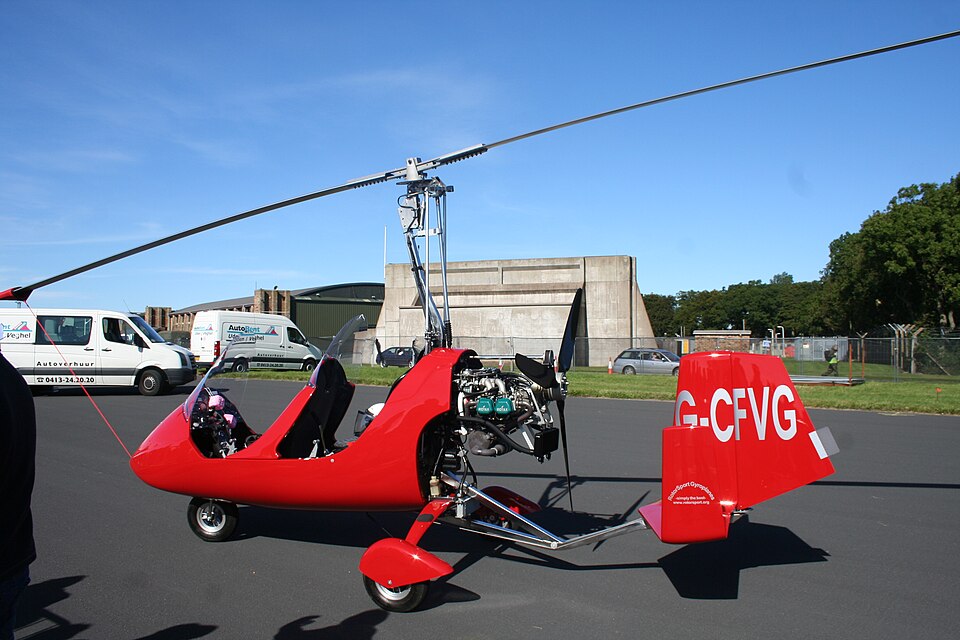
On 28 September 2016, at 0947 UTC, a Rotorsport UK MTO Sport gyroplane, registered G-CFVG, was conducting a private takeoff from Runway 22 at Northrepps (Cromer) Aerodrome, Norfolk. The pilot, who held a Private Pilot's Licence and had over 16,000 hours of fixed-wing experience including ATPL flying, with 160 hours on gyroplanes (all on type), reported the wind was 8-10 knots straight down the runway. After a pre-flight inspection, the pilot started the engine, taxied, back-tracked along Runway 22, and turned 180° for takeoff. Following magneto checks and standard operating procedures, he pre-rotated the rotor to 200 rpm, trimmed fully forward, and with the control stick fully aft, opened the throttle to 5,000 rpm, released the brakes, and began the takeoff roll. Initially everything appeared normal, but the pilot experienced an increasing realization that 'something was not right.' The next thing he remembered was being trapped inside the cockpit with the aircraft lying on its left side.
Rescue and Injuries
The airfield owner, who was nearby in his vehicle, called the emergency services. An ambulance arrived promptly, and the crew freed the pilot after cutting his clothes. Fire crews then righted the aircraft to prevent fuel and oil from leaking onto the engine and exhaust. The pilot sustained serious injuries. The aircraft suffered extensive damage to the cockpit pod, rotor blades, and propeller.
Additional Information
The pilot later flew a friend's MTO3 gyrocopter, which has essentially the same control and trim system. On one occasion he encountered what he felt may have been similar symptoms, when he needed to exert considerable forward force on the control stick to prevent the nose from lifting excessively after takeoff.
Description of Trim System
The gyrocopter is equipped with an electrically-operated pneumatic control system that operates the rotor brake and pitch (longitudinal) trim. An electric pump generates compressed air, passed through a filter and fed via solenoid valves to three cylinders: a double-acting cylinder for rotor brake and trim, a single-acting cylinder for pre-rotator engagement, and an additional cylinder for Bendix gear engagement. The pump has a maximum capability of 10 bar, limited to 8 bar by a pressure relief valve. A rotary knob on the instrument panel switches between brake and flight modes, and a pressure gauge shows trim position in flight (higher pressure indicates more nose-up trim). During the takeoff procedure, when the pre-rotator is released, air at about 2 bar is ported into the nose-up side of the trim actuating cylinder, causing the stick to move aft slightly. The current training standard (applied when the pilot of G-CFVG was learning) teaches pilots to release the trim pressure by trimming forward after pre-rotator release, though this is not in the flight manual. Successor models (Calidus and Cavalon) have modified trim systems that do not apply pneumatic pressure to the trim actuator following pre-rotator release.
Discussion
The gyroplane manufacturer commented that any pneumatic trim system fault was unlikely to have generated sufficient control forces to cause a problem. However, they emphasized the importance of maintaining accurate pitch control during takeoff: aft stick is applied during the takeoff roll to maintain airflow through the rotor disc; after the nose lifts off, forward stick is needed to maintain airspeed and allow rotor rpm to increase. If the pitch angle increases unchecked, rotor blades could strike the ground behind the aircraft, slowing or damaging the rotor and causing a loss of lift. This would be predominant on the left side (retreating blade) and result in a roll to the left. Retreating blade stall was considered unlikely because the vertical stabilizers were found intact after the accident. Other possibilities considered include an intermittent fault (such as moisture in a solenoid valve) causing the trim actuating cylinder to be subjected to pressure exceeding 2 bar, or the pilot omitting to release trim pressure after pre-rotator release.