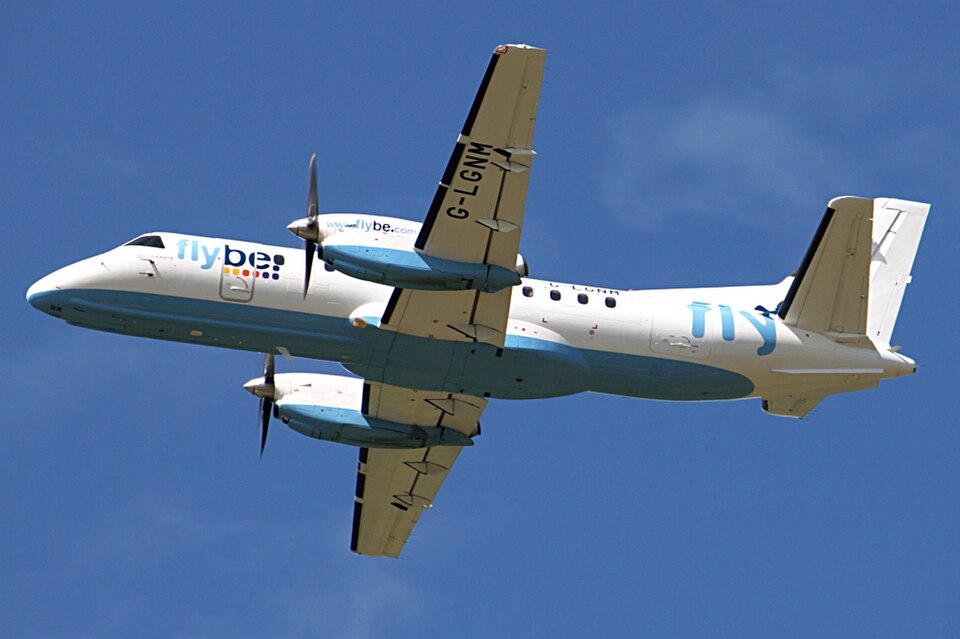
Incident Overview
On 3 October 2014, a Saab-Scania SF340B, registration G-LGNM, was operating a scheduled passenger service from Aberdeen to Sumburgh. The aircraft, manufactured in 1990, was powered by two General Electric CT7-9B turboprop engines. The crew consisted of two pilots and one cabin crew member, with 25 passengers on board. No injuries were reported and no damage occurred.
Flight History
The crew reported for duty at 0440 hrs and had already completed one round trip to Sumburgh without encountering significant icing. The second departure from Aberdeen occurred at 0900 hrs. A strong south-south-westerly airstream was present, and severe mountain waves were forecast between FL40 and FL280. The takeoff weight was 12,729 kg, 426 kg below the maximum, with the centre of gravity in the normal range. The planned cruising level was FL150, but ATC approved a climb to FL130.
Climb and Icing Encounter
Near FL65, the aircraft entered cloud, and the crew activated engine anti-icing, wing and stabiliser de-icing boots. Above FL110, the rate of climb decreased. Ice formed on windscreen wipers, initially attributed to mountain wave downdraughts. Ice accreted on propeller spinners, and propeller de-icing was selected when OAT reached -5ºC. The commander, as pilot flying, used autopilot vertical speed mode, reducing IAS from above 160 KIAS to 145 KIAS (the VERICING speed). Half-bank and IAS hold modes were engaged. The indicated rate of climb varied from 800 ft/min to slightly negative. Climb power and propeller rpm were maintained at 1,230 rpm. Approximately ¾ inch of ice formed on windscreen wipers; de-icing boots cleared ice from wings.
Stall Warning and Recovery
The aircraft reached FL130 at 0925 hrs but accelerated only to 164 KIAS, not the expected 180 KIAS or more. The commander briefly climbed then descended back to FL130 using VS mode, a manoeuvre he had not previously employed. After a discussion, ATC approved descent to FL110. The commander selected a descent rate of 1,000 ft/min, then increased to 2,500 ft/min after noticing a high pitch attitude (5º nose-up). A vibration began, likened to driving over a cattle grid. About 10 seconds later, at 09:28:49 hrs, the aural stall warning sounded for one second, the stick shaker activated, and the autopilot disengaged.
The commander manually pitched the aircraft to 2º nose-down, requiring slightly more force than usual. Speed increased above 190 KIAS, vibration stopped, and the aircraft seemed in trim. The autopilot was re-engaged 9 seconds later. An elevator mis-trim annunciation appeared briefly. The ice protection caution illuminated, and the co-pilot performed the timer light procedure. The flight continued to Sumburgh at FL110 without further incident.
Recorded Data
FDR data showed that during the incident, airspeed reduced to 140 KIAS, angle of attack exceeded 5.9º, and the stall warning would have activated if the Ice Speed function had been operative. When vibration was first felt, pitch attitude peaked at 7-8º nose-up, then decreased, but AOA continued to increase. The aircraft rolled left to 5º AOB. At stall warning activation, AOA was 13º, pitch attitude 4º, and airspeed 132 KIAS. Recovery followed.
Aircraft Information
The Saab 340B is certified for icing conditions per FAR/JAR 25 Appendix C. Certification tests with simulated ice shapes showed stall speed increases of 10% for ½ inch of ice on protected surfaces, and 15-20 KIAS increase for 1 inch of ice. G-LGNM was not fitted with an ice detector; visual cues from windscreen wiper arms were used, but the AFM noted ice could build without being visible.
Conclusion
The investigation determined that the aircraft encountered severe icing, based on unusual ice formations and manufacturer calculations. No probable cause was formally stated.