Accident Details
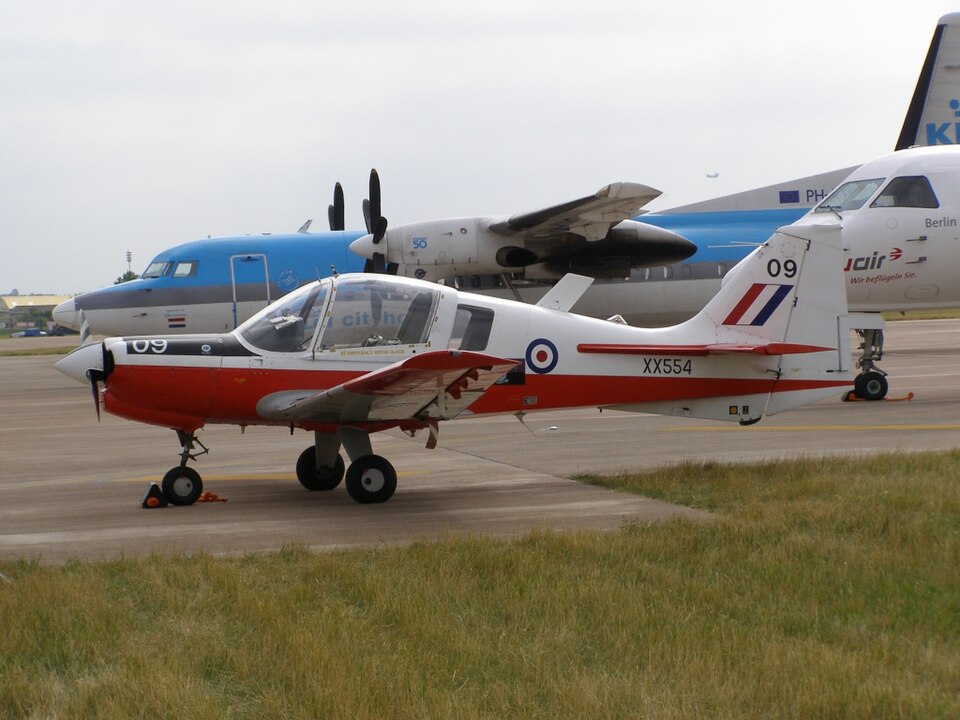
On 22 March 2018 at 16:35 UTC, a Scottish Aviation Bulldog (registration G-BZMD, serial number BH120/247) was involved in an accident at Slinfold Airfield, West Sussex. The aircraft was manufactured in 1973 and powered by a single Lycoming IO-320-A1B6 piston engine. The flight was a private operation with only the pilot on board; no passengers were carried.
Pilot Information
The commander, aged 50, held a Private Pilot’s Licence and had accumulated 8,929 total flying hours, including 23.40 hours on type. In the last 90 days, he had flown 194 hours, and in the last 28 days, 78 hours.
Sequence of Events
After identifying areas of soft ground on the runway, the pilot decided to use a “short-field” takeoff technique, beginning from a hardstanding at the end of the runway. The aircraft accelerated normally until it passed over an area of soft ground, at which point the acceleration decreased. At the required airspeed, the pilot carried out a “gentle” rotation, and the aircraft became airborne. Shortly after takeoff, there was a noticeable reduction in airspeed, and the stall warning system operated. The aircraft then descended slowly to a height of approximately 3 ft above the runway and struck a hedge at the end of the airfield. The aircraft remained upright and came to rest in a field 15 meters beyond the hedge.
Damage
The accident resulted in extensive damage to the wings, propeller, and fuselage. The pilot reported no injuries; toxicology tests were not mentioned in the source.
Investigation
The Aircraft Accident Report Form was submitted by the pilot. The reason for the loss of airspeed could not be determined. No probable cause was stated.