Background
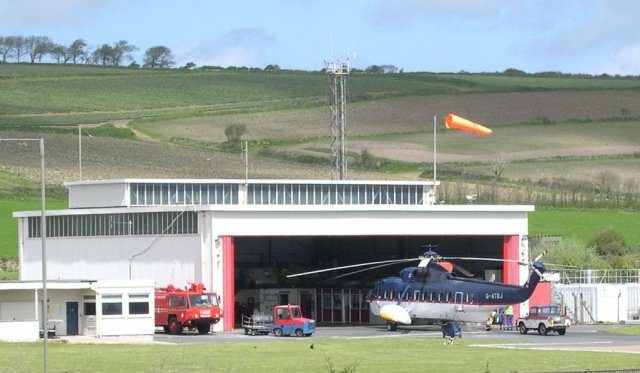
The helicopter, a Sikorsky S-61N Sea King (registration G-ATBJ), had been operating in the Falkland Islands for four years until its last flight on 31 December 2017. It was prepared for return by sea to the UK; the main and tail rotor blades were removed but no covers were used to protect the rotor head and transmission. On 8 January 2018, it was loaded onto a roll-on/roll-off ship and transported below decks to Marchwood Sea Mounting Centre, Hampshire, arriving on 29 January. The following day, the helicopter was prepared for flight, including fitting the blades, and a ground run was performed.
Accident Flight
On 1 February 2018, the flight crew planned a hover check before flying to Bournemouth Airport and then to the operator’s base at Cornwall Airport, Newquay. The co-pilot performed external checks while the commander conducted internal checks. Two engineers were present outside the helicopter. The crew aimed to proceed quickly due to limited battery power availability.
The first two attempts to start engine 1 failed due to low bus voltage (23V). After swapping the external battery, a third attempt also failed. The crew then successfully started engine 2. However, because subsequent checks required rotors and hydraulic pumps disengaged, the commander emphasized the need to be fast to conserve battery power for pressurizing hydraulics.
During after-start checks, a flying controls servo system check was performed but not to the full extent of movement. The pilot flying stated he was not doing a full and free check due to time constraints. The rotors were then engaged, and the auxiliary hydraulic pressure initially dropped but recovered as rotor speed increased. Engine 1 was then started.
Pre-flight checks were completed, and clearance for takeoff was received. The commander released the parking brake, and the co-pilot advanced engine speed. As the commander raised the collective, the helicopter moved forward. After arresting the movement with cyclic, he continued raising the collective. Upon liftoff, the helicopter pitched nose-down and started to climb. The commander applied aft cyclic but the helicopter did not respond. He promptly lowered the collective. The helicopter struck the ground with its nose, then the mainwheels contacted, causing the tail to pivot down. The time from last wheel off ground to impact was less than three seconds. Both pilots evacuated and checked on the engineers; there were no injuries.
The pilots reported that everything seemed normal until weight came off the wheels. The commander noted that cyclic forces felt unusually light in the fore-aft direction but normal side-to-side.
Investigation Findings
Examination revealed that the spherical bearing within the swashplate had seized due to corrosion, compounded by the helicopter’s inactivity during the sea voyage. This control restriction was not identified during pre-flight checks. The helicopter sustained damage beyond economical repair, including crushing of the front equipment bay and buckling of the rear fuselage skin.
Safety Action
In response, the helicopter manufacturer issued guidance on correct pre-flight procedures after prolonged inactivity, and the operator reminded flight crews to conduct flight control servo system checks to the full extent of control movement.