Synopsis
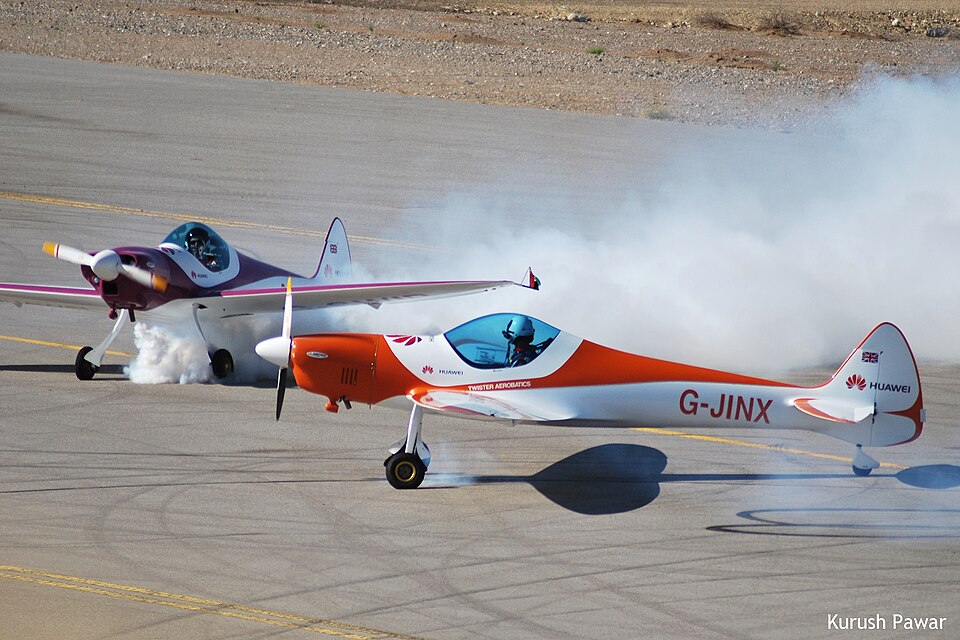
The accident occurred on 14 May 2017 during a formation aerobatics display at MOD Abingdon, Oxfordshire. The aircraft, a Silence Twister registered G-JINX, was the number 2 aircraft in a pair. Its engine lost power and subsequently stopped in flight. The pilot attempted a forced landing onto the runway but struck the grass east of the runway. The pilot sustained serious injuries. The aircraft and engine were severely damaged.
History of the Flight
The two Silence Twisters flew from their base in Buckinghamshire and landed at Abingdon before their display. During preparation, the pilot of G-JINX checked the engine oil quantity and found it indicating full. The display began after the previous display's aircraft landed. The weather was fine with wind from 260° at 12 kt. Runway 18 was in use.
The first few minutes of the display were uneventful. During barrel rolls, the pilot noticed the engine appeared to be underperforming and requested the leader reduce power. After a stall turn, the leader asked if the pilot was okay, to which the pilot replied he was low on energy and then stated he had a problem and would land off the manoeuvre. The aircraft was then downwind, about halfway along Runway 18, approximately 200 ft above airfield level and 200 m displaced from the runway centreline.
The pilot converted excess speed to height and turned left to move further from the runway. He then commenced a tight descending right turn to align with the runway. During the turn, the engine stopped. The aircraft struck the grass east of the runway with landing gear and flaps retracted, in a wings-level, slightly nose-down attitude. The aircraft bounced and slid to a halt. The formation leader was unaware of the accident and continued the display.
The display controller declared an aircraft accident and sent rescue resources, which arrived within 50 seconds. The pilot was found unconscious and slumped forward. Rescue personnel could not open the canopy, as the pilot's head was close to it. The pilot regained consciousness and opened the canopy from inside. He was taken to hospital with serious injuries.
Pilot's Comments
The pilot noted that the performance difference between the two aircraft during the barrel rolls and quarter clover was not unusual, as he had experienced similar differences in previous displays. He performed a quick scan of engine instruments after the barrel rolls and noted all parameters were within limits. He became aware of an engine problem during the stall turn, but despite a brief glance at the instruments, he did not notice any warnings. He elected to land on the runway due to low height and proximity, and the lack of suitable alternatives because of wooded areas and villages. He believed the engine stopped approximately 2 to 3 seconds before impact. He commented that he had to fly a tighter turn than desired due to the limited lateral offset to line up with the runway and the requirement not to breach crowd separation distances.
Aircraft Information
The Silence Twister is a single-seat, low-wing aircraft with conventional flying controls, retractable landing gear, and flaps. It is constructed from honeycomb composites reinforced with carbon and glass fibre, with a Kevlar cockpit safety cell. The aircraft is equipped with a one-piece bubble canopy hinged on the right side. The canopy is unlatched by operating a white handle on the left side; jettison requires simultaneous operation of the white handle and a black handle on the right. There are no external canopy opening handles, but the canopy can be unlatched from outside by reaching through a small ventilation window. No instructions were visible from outside.
Engine Information
The aircraft was powered by a 107 HP Ulpower UL260iSA four-cylinder, air-cooled, four-stroke piston engine, equipped with dual electronic ignition and multi-point fuel injection. A smoke system was fitted, with an oil tank behind the pilot's seat for injecting oil into the exhaust.
Investigation Findings
The investigation determined that the engine seized following the loss of its oil during the accident flight. Several safety actions were taken by the engine manufacturer, the owner, and the Light Aircraft Association.