History of the Flight
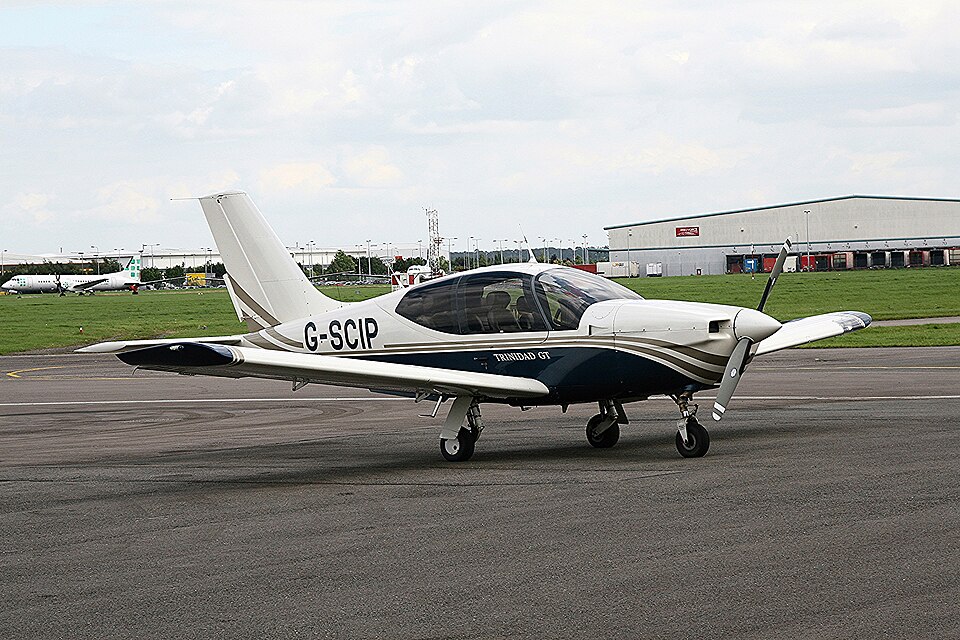
On 21 January 2016, a private pilot was returning to Welshpool from Elstree Aerodrome in a Socata TB20 Trinidad GT, registration G-SCIP. During the approach to Runway 22 at Welshpool, the pilot selected landing gear and flaps down. The cockpit indicators showed two green lights for the main landing gear, but the nose gear green light remained unlit. The electro-hydraulic pump continued running and the red gear-in-transit light was illuminated.
The pilot recycled the gear multiple times without success and requested the tower controller to visually inspect the gear as he flew past. The controller reported that the nose gear appeared only partially extended, which was confirmed by a medical helicopter pilot. The pilot aborted the landing and circled the airfield while considering options. He decided to divert to Sleap Airfield, where more assistance was available, two runways were present, and the aircraft was maintained.
During the ten-minute flight to Sleap, the pilot attempted further gear selections and emergency extensions while pulling g-forces. He sensed the pump motor straining and ceased efforts to prevent overheating. He also spoke with the maintenance company owner, who could only suggest measures already tried. The pilot coordinated with the controller to use Runway 23 for an emergency landing, and runway lights were activated. After a request from the fire service to go around for positioning, the pilot made his final approach.
As the aircraft crossed the start of the paved surface, the pilot shut down the engine to mitigate potential propeller damage. The aircraft descended rapidly and landed firmly on its main wheels, followed by the nose gear, which promptly collapsed. The aircraft slid with its nose on the ground for approximately 100 metres before stopping. The pilot shut off fuel and electrical systems and evacuated the aircraft quickly.
Investigation
The aircraft was lifted and supported on a trestle. A representative from the maintenance company attempted to manually extend the nose leg but could not move it until a union on the retract line of the nose gear piston was loosened. After this, the leg could be pulled fully down and locked. The aircraft was towed to a hangar and placed on jacks. No obvious mechanical anomalies were found, and the system was replenished and tested through several retraction and extension cycles, all functioning normally. The maintainer could not explain how a hydraulic lock had occurred. As a precaution, several components, including parts of the nose gear piston, were replaced.
Damage
The propeller was bent, the engine cowling scraped, and the engine experienced shock loading.
Injuries
No injuries were reported among the crew (the sole occupant).