Summary
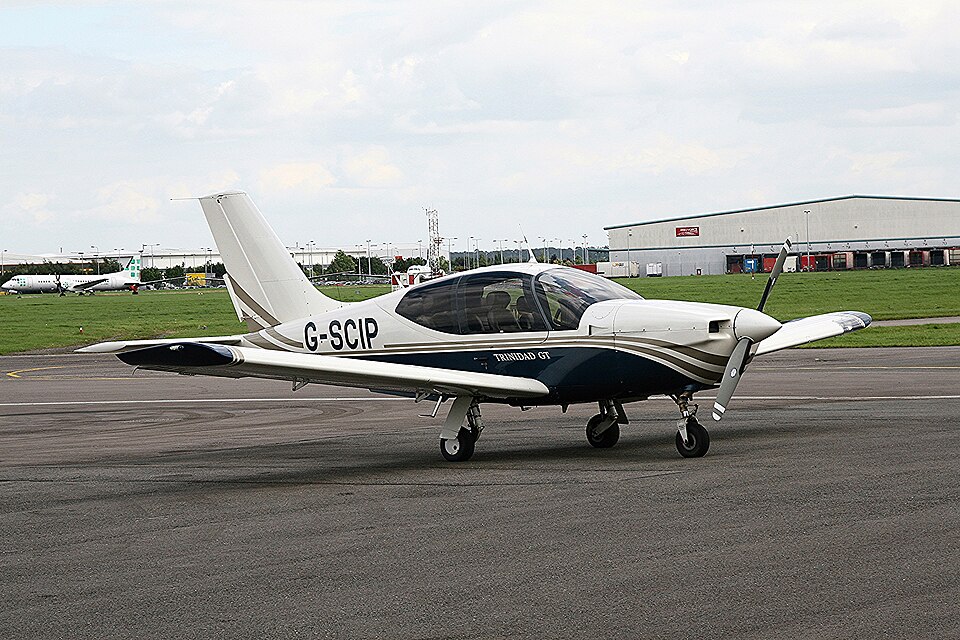
On 19 July 2016, a Socata TB20 Trinidad GT, registration G-SCIP, sustained damage when its nose landing gear collapsed during the landing roll at Sleap Airfield, Shropshire. The aircraft, operated on a private flight with a single pilot and no passengers, had departed from Goodwood and was returning to Welshpool. The pilot reported that after takeoff the nose gear 'down and locked' green light remained illuminated, and subsequent gear extensions failed to produce a positive nose gear lock. The aircraft landed on Runway 18 with the nose gear unlocked, leading to its collapse. The pilot was not injured.
History of the Flight
The flight to Goodwood was uneventful. Following takeoff for the return leg, the nose gear green light stayed on while the 'in-transit' light extinguished. Suspecting a sticking microswitch, the pilot continued toward Welshpool. A low pass at 200 ft over Welshpool confirmed all three gear appeared retracted, yet the green light persisted. On downwind, the pilot selected gear down and observed three green lights, but did not feel the nose gear lock through the rudder pedals. A subsequent low pass revealed the nose gear was not locked and was being pushed rearwards by airflow. The pilot conducted two more circuits, cycling the gear, but the nose gear would not lock. He diverted to Sleap Airfield, approximately 10 minutes away, where runway options and the maintenance company were available.
During the flight to Sleap, the pilot continued to cycle the gear and applied positive G-forces to encourage locking. An engineer from the maintenance company observed passes at 200 ft above Runway 18 and confirmed the nose gear failed to lock despite a green indication. On the third approach, the pilot selected half flap, reduced speed to 65 kt with a 10 kt southerly wind, and at about 50 ft cut the mixture and throttle to stop the engine. The aircraft touched down on the main wheels, but the nose gear collapsed on contact, dropping the nose onto the runway. The aircraft slowed and stopped after approximately 100 m. The pilot secured the aircraft and exited; rescue vehicles arrived within minutes. Afterward, an engineer released hydraulic pressure by disconnecting a hose before the nose leg could be manually locked, and the aircraft was towed to a hangar.
Aircraft Examination
The nose gear downlock microswitch (part number TB2061032005) was removed and tested by the AAIB. Continuity checks with and without the plunger pressed gave inconsistent results. The switch was sent to the aircraft manufacturer in France, with BEA supervision. Testing confirmed that the switch state changed randomly when lightly tapped. X-ray and disassembly revealed a spring-loaded plunger acting on two integral microswitches, each containing a metal plate with a rounded contact. The plates were loose; in one microswitch the spring was jammed under the plate. The manufacturer stated no similar failures had been reported, and stock switches functioned correctly. They considered that the internal disruption might have resulted from a severe impact.
Conclusion
The accident was attributed to a failure of the nose gear downlock microswitch mechanism, which caused the green indicator light to illuminate randomly and the hydraulic pump to cease operation regardless of the nose gear position. This prevented the nose gear from locking down. Notably, the same aircraft had experienced a similar nose gear collapse in January 2016, which remained unresolved. The manufacturer noted that the switch’s internal disruption could have been caused by a severe impact, possibly during the earlier accident, although the switch had operated normally during the 25 flight hours before this event.