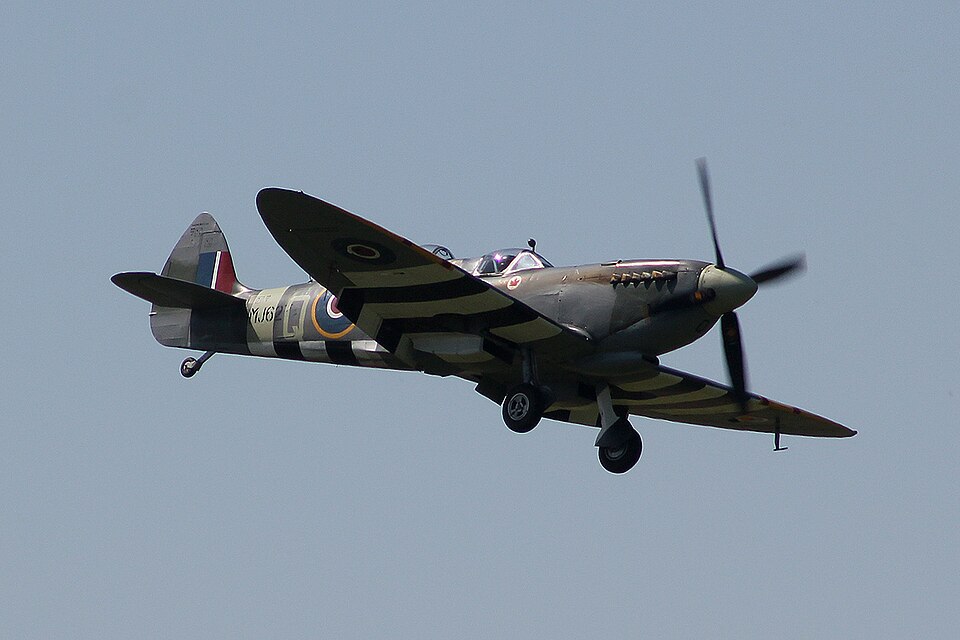
History of the Flight
The aircraft, a Spitfire IXT registered G-BMSB, was conducting a Safety Standards Acknowledgement and Consent passenger flight near Hythe, Kent. It had been flying for about 35 minutes in formation with another Spitfire when the pilot noticed a slight engine vibration. Within five seconds, the engine rapidly lost power, briefly recovered, surged, and lost power again. The engine began backfiring, and dark smoke emanated from the exhausts. The pilot smelled fuel in the cockpit and suspected a fuel problem. He lowered the nose, chose a suitable area of open ground, and made a gradual 10° right turn to line up for a forced landing. He briefed the passenger, who remained calm. The pilot was in radio contact with the other Spitfire pilot, who relayed a MAYDAY to Biggin Hill ATC. The pilot noted that the low fuel pressure warning light had illuminated and selected the boost pump on, but it made no difference. He also checked the magneto switches with no effect. He decided not to lower the landing gear, reduced airspeed to 100 kt, closed the throttle, and landed wheels-up in a field. The aircraft remained upright and stopped quickly. The passenger suffered minor bruising; the pilot was uninjured.
Engine Fuel System Description
Fuel is supplied to the supercharger by a Bendix injection carburettor, which relies on accurate metering to deliver fuel at about 5 psi. A fuel low pressure warning switch fitted to the carburettor controls a cockpit warning light.
Aircraft Examination and Cause
The aircraft was recovered to the operator's maintenance facility. Examination confirmed a substantial fuel leak. A gasket within the carburettor fuel low pressure switch assembly cover plate was found to have degraded, probably due to ageing. The switch had developed an external leak because casement securing screws had loosened. The fuel pressure switch was at least 70 years old with an unknown last overhaul date. The leak allowed pressurised fuel to spray into the lower rear part of the engine bay, above and into the air filter box. Fuel was drawn into the air flow, affecting the fuel-air mixture and causing the engine to run extremely rich. This directly resulted in the vibration and power loss.
Ageing Components and Safety Action
The CAA found similar pressure switches used in various piston and gas turbine powered aircraft from the 1940s to the 1980s, many of which remain in operation in the UK. As a result, the CAA issued Safety Notice SN-2025-009 on 9 June 2025, informing historic aircraft operators and maintenance organisations of the importance of monitoring and maintaining the airworthiness of ageing tertiary fuel and hydraulic system switches and similar components. The notice emphasises procedures for identifying age-degraded components and ensuring maintenance programmes include regular inspection, functional checks, and calendar life limits.
Pilot's Comments
Reflecting on the event, the pilot noted he did not lower the landing gear or jettison the canopy to avoid drag, which would have reduced the stable glide speed and increased the rate of descent. He delegated radio communications to the accompanying pilot to concentrate on the forced landing. He considered that being mindful of height in the cruise, avoiding overflying built-up areas, and performing regular practice forced landings were beneficial. He also felt that the operator's policy of holding regular 'What if?' discussions greatly helped his handling of the event.
Conclusion
The engine lost power when a failed gasket in the fuel pressure warning switch allowed pressurised fuel to spray into the engine bay and be drawn into the induction system, creating an overly rich mixture. The pilot completed a successful forced landing because his training and practice enabled him to identify a suitable landing site, prioritise actions, and effectively manage aircraft energy.