History of the Flight
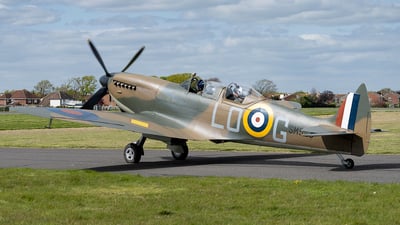
On 16 July 2018 at 1658 UTC, a Spitfire MkT IX (registration G-ILDA) was completing a passenger flight at Goodwood Aerodrome, Sussex. The pilot was on his third flight of the day and conducted a final approach to Runway 14. He had been advised of wind at 250°/13 kt but estimated the windsock indicated 230°, so continued the landing. The aircraft touched down satisfactorily and began slowing. As it passed the intersection with Runway 24/06, it deviated left from the centerline. The pilot applied gentle braking to correct, but at 20-30 mph and after traveling three-quarters of the runway length, the aircraft veered right, into the wind. Despite full left rudder and brake input, the aircraft rotated through 90°, causing the left main landing gear to collapse. The right landing gear partially collapsed, and the propeller struck the ground, stopping the engine. The pilot secured the aircraft and assisted his passenger in exiting; both were uninjured. Damage included collapsed landing gear, ground-shortened propeller tips, and a distorted left flap.
Aircraft and Pilot Information
G-ILDA was a 1945 Spitfire MkT IX (serial CBAF 10164) powered by a single Packard Merlin 266 piston engine. The pilot held an Airline Transport Pilot Licence, aged 51, with 15,616 total flying hours, including 37 hours on type. In the previous 90 days he had flown 218 hours, and 95 hours in the last 28 days. The flight was a passenger experience flight.
Runway and Environmental Conditions
Runway 14 was in use because Runway 24, normally preferred for the wind direction, was out of service due to a NOTAM. The recent prolonged abnormally hot and dry weather had degraded the runway surface, resulting in hard dry areas and patchy grass. The wind was from 250° at 13 kt, creating a crosswind component for landing on Runway 14.
Contributory Factors
Analysis of the ground loop showed that the left wheel left a mark indicating it was locked and slipping over the surface. As the aircraft swung right, the wheel presented side-on to the direction of travel, increasing friction. Combined with the degraded runway surface and the aircraft's weight and momentum, this caused the left landing gear leg to fold incorrectly under the fuselage. The pilot considered the combination of crosswind and unusually poor runway surface as contributory factors.