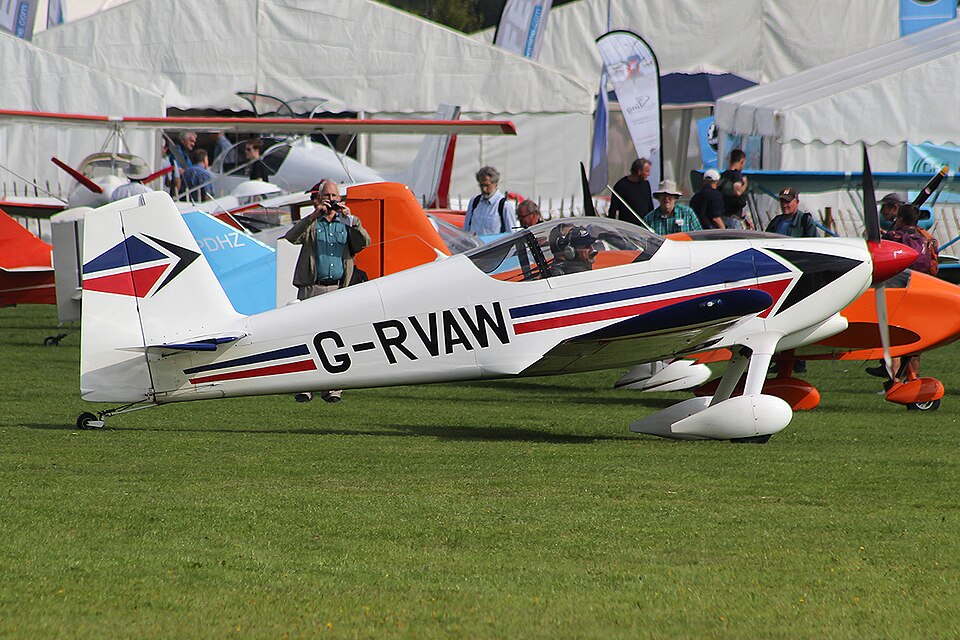
Aircraft and Pilot Information
G-RVAW was a Vans RV-6 single-engine aircraft, manufactured in 2000 with serial number PFA 181-13234. It was powered by a Lycoming O-320-A1A piston engine. The pilot, aged 43, held a Private Pilot's Licence and had accumulated 193 total flying hours, including 55 hours on type. His recent flying experience included 11 hours in the last 90 days and 2 hours in the last 28 days.
Accident Details
The accident occurred on 17 December 2011 at approximately 1100 hrs at Wickenby Aerodrome, Lincolnshire. The flight was private, with only the pilot on board. No injuries were sustained by the pilot or any other persons. The aircraft sustained damage to its right wing, engine cowl, and propeller. A collision with a stationary Vans RV-7, which had its engine running and one person on board, resulted in damage to both aircraft.
Sequence of Events
Earlier that day, the pilot flew two short flights. The aircraft was parked on the grass parking area at Wickenby when the pilot met with friends and arranged a simultaneous departure. The ambient temperature was low; Humberside Airport, 15 nm north, reported 3°C at 1050 hrs. The engine had been slow to start before the first flight but started normally before the second. When the pilot attempted to start it at Wickenby, the engine would not turn over. Suspecting it had stopped at top dead centre, he switched off the aircraft's electrics and exited the cockpit to hand-turn the propeller. As he began turning, the engine started, and the aircraft moved forward. The pilot ran but was struck by the left wing tip, causing the aircraft to turn left and collide with the adjacent Vans RV-7, which was about to taxi. The pilot reported that he had inadvertently left the magneto switches on. He attributed his error to a combination of low experience, cold weather affecting his performance, and time pressure to keep up with the planned joint departure.
Damage and Injuries
G-RVAW sustained damage to the right wing, engine cowl, and propeller. The other aircraft, a Vans RV-7, was also damaged. No injuries were reported among the pilot or the occupant of the other aircraft.