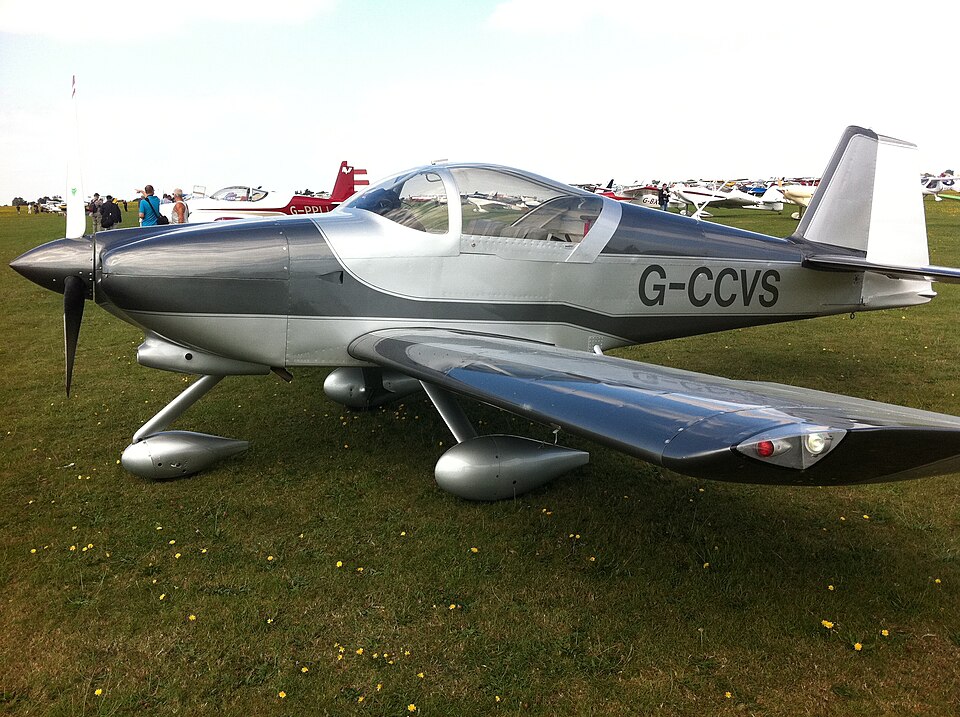
History of the Flight
The pilot was conducting circuits on grass Runway 24 at Old Sarum Airfield in good visibility with a 40° crosswind from the right at 10–15 kt. On the fourth circuit, during the final 200 ft of the approach, the aircraft encountered turbulence that culminated in a sudden downdraught when crossing the threshold at 10–15 ft. The pilot applied full power and pitched up, but the aircraft made a hard touchdown in a level attitude before climbing away. There was no indication of damage at that point.
For the subsequent landing, the pilot decided to hold the nosewheel off the ground as long as possible, suspecting it might have been weakened. After touching down, the nose landing gear collapsed rearwards. When the propeller struck the ground, the aircraft flipped inverted and came to a stop. The pilot shut off the fuel and electrics, and bystanders raised the tail to allow him to open the canopy and escape.
Pilot’s Assessment
The pilot assessed that he should have increased his airspeed on the fourth approach to account for the gusty crosswind. He noted that his speed had reduced by the time he crossed the threshold, leaving little energy in reserve to cope with the unexpected downdraught. Consequently, the aircraft struck the ground hard, and subsequent review of observer video footage showed that this deformed the nose landing gear leg. The pilot judged that he should have initiated a go-around earlier once he appreciated the intensity of the turbulence.
AAIB Comment
The AAIB reported on several previous accidents involving bending or collapse of the nose landing gear leg on Vans RV series aircraft. AAIB Bulletin 3/2017 contains a report concerning G-RPRV, an RV-9A that flipped upside down, and lists other recorded instances in the UK where the nose landing gear leg bent back. That report also mentions an ‘Anti Splat’ kit designed to restrain the nose landing gear leg from tucking under.