Accident Summary
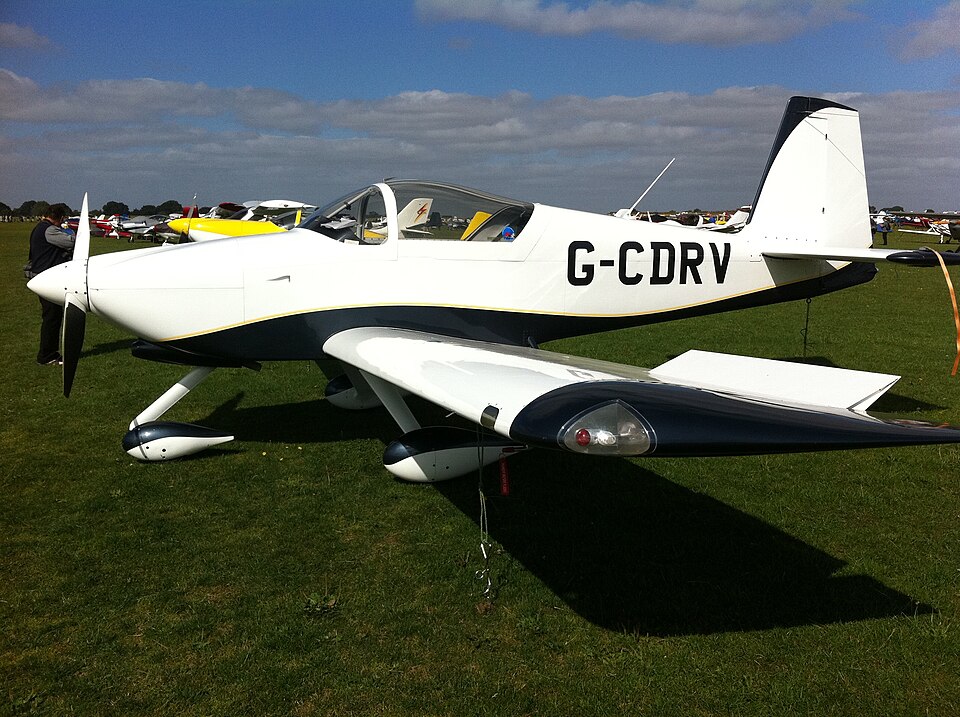
On 27 July 2014 at 1140 hrs, a Vans RV-9A aircraft, registration G-CDRV, was involved in an accident during landing rollout at Langham Airfield, Norfolk. The pilot and sole passenger were uninjured, but the aircraft sustained damage to the propeller, nose landing gear leg, right wing, and attachment points.
Aircraft and Pilot Information
The aircraft, a single-engine Vans RV-9A, was manufactured in 2010 and powered by a Lycoming O-320-D2J piston engine. The flight was conducted under a Private Pilot’s Licence by a 65-year-old pilot with a total of 647 flying hours, of which 300 were on type. His recent flying experience included 47 hours in the last 90 days and 9 hours in the last 28 days.
Sequence of Events
The pilot described making a normal approach and touchdown on Runway 02 at Langham Airfield, a grass strip. While decelerating, he positioned the aircraft close to the left edge of the landing area to avoid molehills visible near the center of the strip. At a speed slightly above normal taxiing speed, the aircraft yawed to the left. The pilot was unable to prevent the left mainwheel from leaving the strip and dropping into a deep trough in the adjacent cornfield. The aircraft then veered further left, causing the nosewheel to also enter the trough. This resulted in the aircraft pitching forward, bringing the propeller and right wing into firm contact with the ground.
Damage and Injuries
The aircraft sustained damage to the propeller, nose landing gear leg, right wing, and attachment points. Neither the pilot nor the passenger reported any injuries, and they vacated the aircraft normally after shutting down the engine.
Probable Cause
The pilot believed the accident occurred because he positioned himself too close to the edge of the runway and had insufficient room to correct the aircraft’s initial swing to the left.