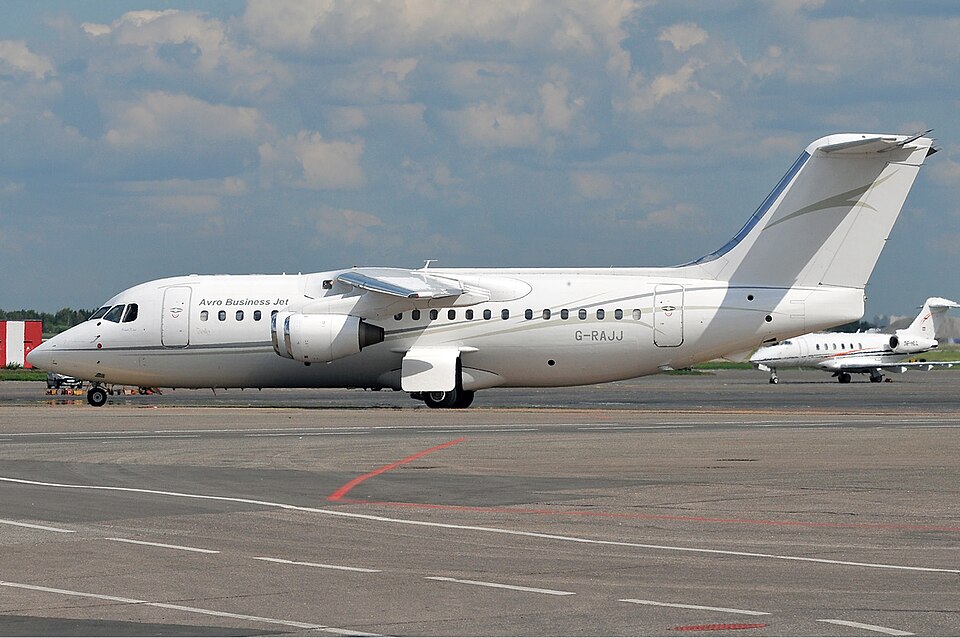
Landing Gear Failure and Tyre Burst on BAe 146 at Guernsey

Casualties unknown • Guernsey Airport, Channel Islands, GB

A BAe 146-200 experienced a shock absorber separation and tyre burst during landing at Guernsey Airport, leading to a loss of braking pressure and runway debris.

What happened

On 23 February 2015, a BAe 1s6-200, registration G-RAJJ, was operating a commercial passenger flight from Gatwick to Guernsey. During the initial climb from Gatwick, the crew attempted to retract the landing gear, but the main gear position indicators remained red, signifying the gear had not locked in the up position. Following emergency procedures, the crew selected the gear down, which successfully locked the mechanism. The flight continued to Guernsey, with the crew flying with the landing gear in the extended position.

Upon touchdown at Guernsey Airport, the aircraft pulled to the left. The co-pilot noted a total loss of pressure in the Green hydraulic braking system. The commander suspected a tyre burst and transitioned to the alternative braking system to decelerate. The aircraft vacated the runway, but the crew continued to taxi for several minutes without immediately notifying Air Traffic Control of the suspected tyre failure. During this taxiing period, another aircraft landed on the same runway.

Once the aircraft reached its parking stand, it was discovered that the No 1 mainwheel tyre had burst and the left main landing gear shock absorber had separated into two distinct parts. Debris, including a bolt head and rubber fragments, was later recovered from the runway and taxiway.

The investigation

AAIB investigators examined the damaged shock absorber assembly and the aircraft's flight data. The investigation established that the physical damage to the diaphragm threads and locking bolts had likely begun at least two flight cycles prior to the accident. The examination of the shock absorber revealed that the 1st stage floating piston had been forced out of the assembly during the separation event.

Technical analysis showed that the threads on the diaphragm had sheared due to a compressive load. The investigation also found that the heads of the diaphragm locking bolts had fractured due to tensile loads. The investigators determined that the separation occurred during the takeoff phase from Gatwick, as the recoil forces during the climb pushed the inner and outer cylinders apart once the mechanical integrity of the threads and bolts had been compromised.

Findings

  • The primary cause of the shock absorber separation was likely recoil loads exceeding design limits, potentially caused by a hard landing or incorrect gas and oil levels.
  • The damage to the diaphragm threads and locking bolts may have originated while the component was fitted to a different aircraft.
  • The crew's decision to continue to Guernsey with the gear down was influenced by the smooth takeoff and previous experience with faulty microswitches.
  • There was a delay in notifying ATC of the suspected tyre burst, which prevented a timely runway inspection and allowed another aircraft to land on a potentially contaminated runway.
  • The loss of Green hydraulic brake pressure was caused by the inner cylinder making contact with a hydraulic pipe, causing it to disconnect.

Probable cause

The separation of the landing gear shock absorber was caused by excessive recoil loads—likely from a hard landing or improper maintenance of gas/oil levels—which led to the shearing of the diaphragm locking bolts and threads. This mechanical failure subsequently caused the tyre burst and loss of hydraulic braking pressure.

Frequently asked questions

What happened in the 2015-02-23 BAe 146-200 accident near Guernsey Airport, Channel Islands, GB?

A BAe 146-200 experienced a shock absorber separation and tyre burst during landing at Guernsey Airport, leading to a loss of braking pressure and runway debris.

What aircraft was involved and where did it happen?

The accident on 2015-02-23 involved a BAe 146-200, registration G-RAJJ , at Guernsey Airport, Channel Islands, GB.

What was the probable cause of the accident?

The separation of the landing gear shock absorber was caused by excessive recoil loads—likely from a hard landing or improper maintenance of gas/oil levels—which led to the shearing of the diaphragm locking bolts and threads. This mechanical failure subsequently caused the tyre burst and loss of hydraulic braking…

Loading the flight search…