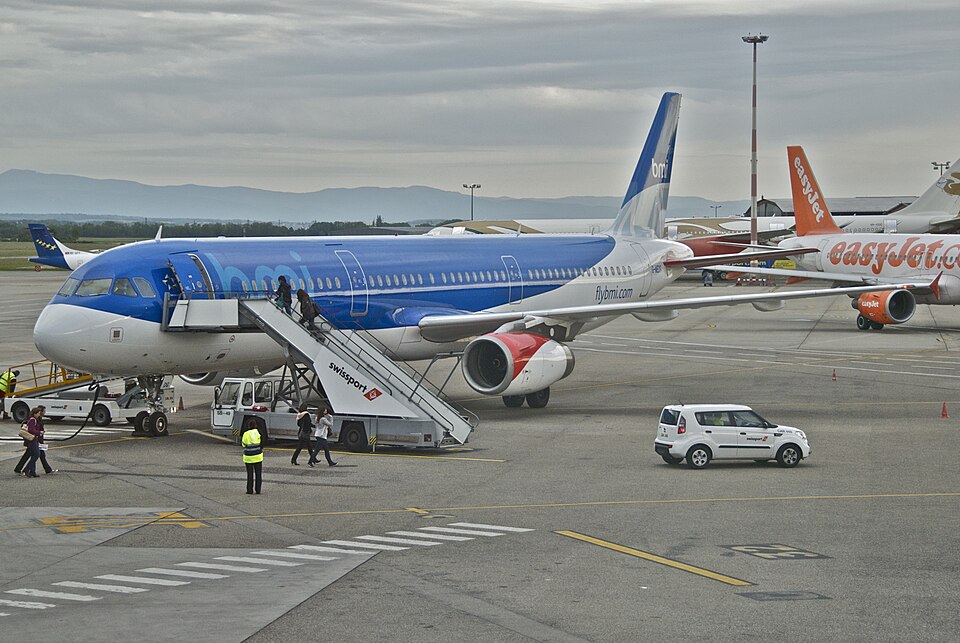
What happened
On 11 March 2005, an Airbus A321-231, registration G-MEDG, was conducting a night approach to Runway 36 at Khartoum Airport, Sudan. The aircraft was operating in weather conditions characterized by a dust storm, which resulted in low visibility and instrument meteorological conditions (IMC).
The crew was performing a Managed Non-Precision Approach (MNPA), a procedure where the autopilot follows a path defined by the aircraft's navigation database. However, a critical discrepancy existed between the approach charts and the onboard Flight Management and Guidance System (FMGC) database. While the charts indicated the final descent point was 5 nm from the runway threshold, the database correctly reflected a more recent update placing the point at 4.4 nm.
Because the aircraft began its descent 0.6 nm earlier than the crew anticipated, the handling pilot believed the aircraft was too high. In an attempt to correct this, the pilot changed the autopilot mode to increase the descent rate. This led to an unstable approach, with the aircraft descending at an excessive rate of over 1,700 ft/min. The crew continued below the Minimum Descent Altitude (MDA) without establishing visual contact with the runway, eventually initiating a go-around only after the aircraft was significantly below the required altitude.
The investigation
The AAIB investigation focused on the mismatch between navigational data sources and the effectiveness of the aircraft's warning systems. Investigators examined the FMGC database, the commercial approach charts, and the operator's training and operational procedures. The investigation also analyzed flight recorder data to determine the aircraft's vertical profile and the timing of the Enhanced Ground Proximity Warning System (EGPWS) alerts.
Findings
- The crew had not compared the approach charts against the navigation database prior to the approach, leaving them unaware of the 0.6 nm discrepancy.
- The mismatch between the approach chart and the navigation database caused the aircraft to begin its descent earlier than expected.
- The approach became unstable below 1,000 ft agl, and the crew failed to execute a go-around as required by company policy.
- Both pilots mistakenly believed the other had visual contact with the approach lights at the MDA.
- The EGPWS provided an alert, but the investigation concluded it likely would not have provided enough warning to prevent a collision with terrain.
- The operator's training and procedures for MNPA operations were found to be inconsistent and incomplete.
Safety action
- The UK CAA was recommended to provide guidance for pilots encountering conflicting approach parameters between charts and FMS databases.
- Recommendations were made to Airbus regarding the clarity of EGPWS emergency procedures and guidance for operations in blowing sand.
- A recommendation was issued to EASA to review TAWS design and certification criteria to improve the timeliness of alerts near the runway.