Factual Information
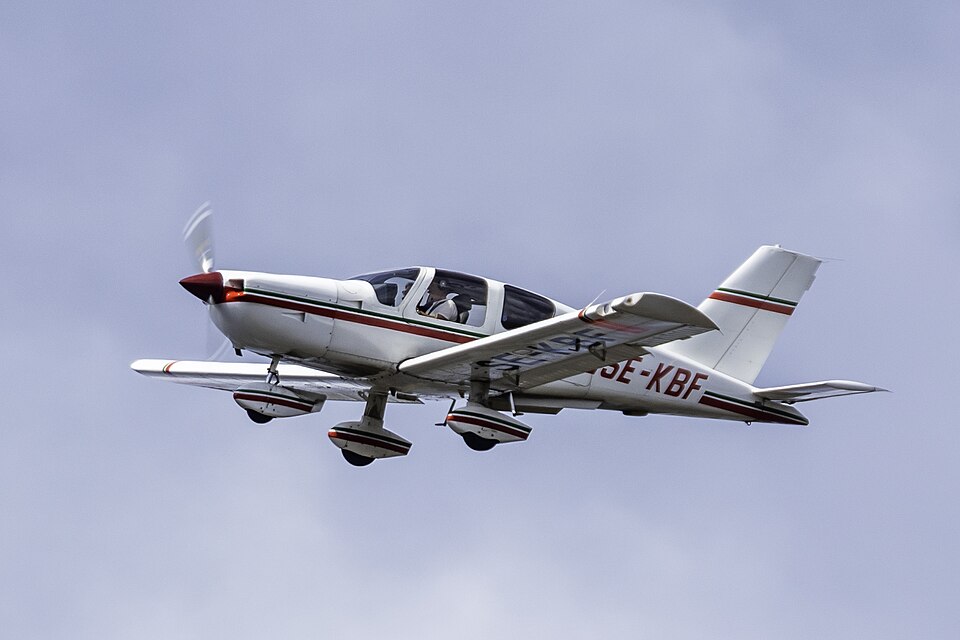
On 5 January 2025, two aircraft registered SE-KBL (DAHER TB 10) and SE-KBF (DAHER TB 9), both operated by Frivilliga Flygkåren (Voluntary Air Corps, FFK), were involved in a ground collision at Visby Airport, Gotland County. The aircraft were being prepared for a formation training flight near the airport, part of the FFK's Maritime Information Group (SIG). Each aircraft was occupied by a single pilot from Gotland's Flying Club.
Sequence of Events
Before the incident, snow and ice covered the concrete apron and grass in front of the club hangar. The pilots assessed the ground friction as good. Both aircraft were positioned on the extension of the apron, angled to the left. After starting the engine of the rear aircraft (SE-KBF), it began to move forward. The pilot applied significant force to the wheel brakes but could not stop the aircraft. The propeller of SE-KBF struck the left wing of the front aircraft (SE-KBL), causing structural damage. No injuries occurred.
Investigation Findings
The Swedish Accident Investigation Authority (SHK) examined the brake system and found no technical defects; brakes functioned normally when applied from the left pilot seat. Wheel tracks and photographs indicated that the rear aircraft was not parked at an angle that would allow it to move forward without hindrance. Witness observations and damage patterns suggested that the engine power after start was higher than normal, resulting in high thrust. The ground friction was limited due to snow and ice.
The aircraft were positioned too close together, with a relative angle that left no margin for maintaining clearance under the prevailing conditions.
Causes of the Accident
The thrust from the high engine power after engine start exceeded the ground friction, causing the rear aircraft to unintentionally move forward. The limited clearance led to a collision between the aircraft. The risks of a collision were not fully managed during the flight preparations.
Safety Recommendations
The SHK did not issue any safety recommendations, as both FFK and Gotland's Flying Club have taken appropriate measures.