History of the Flight
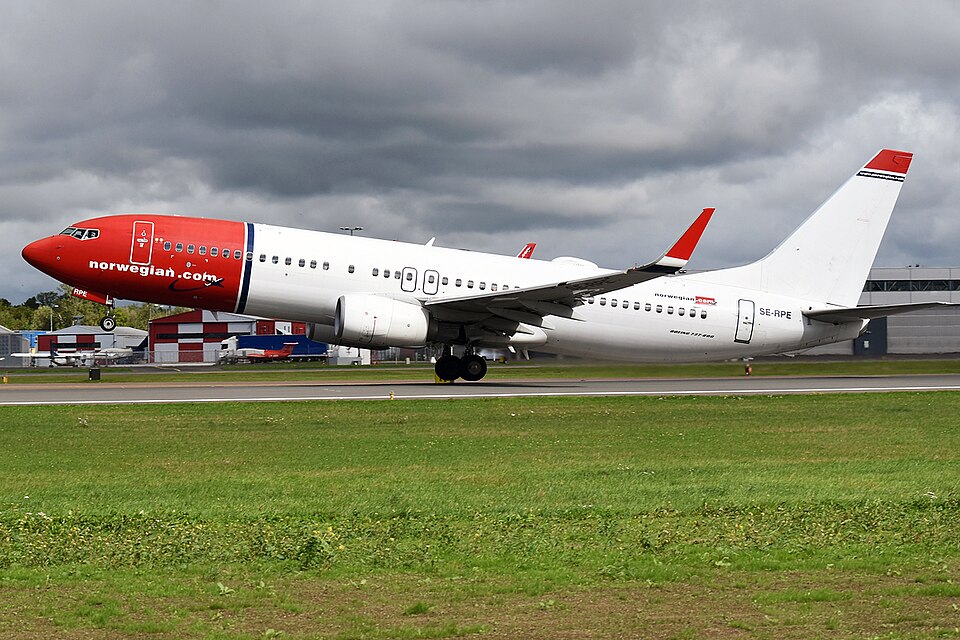
On 25 July 2021, a Boeing 737-800, registered SE-RPE, departed Copenhagen-Kastrup Airport for Nice Côte d'Azur Airport as passenger commercial flight NAX 3646. At 18:14 UTC, the crew contacted Milan Area Control Centre (ACC) and reported they were on a heading of 195° to avoid storm cells while at Flight Level (FL) 370. The controller asked them to report when able to proceed directly to waypoint BORDI. The crew indicated cumulonimbus ahead over 80 nautical miles. At 18:16, they requested a 20° right deviation, which was authorized.
After transfer to another Milan ACC sector, the crew discussed large storm cells to their left. At 18:24, the controller inquired about descent capability; the crew affirmed and were cleared to FL 340. They then stated they could turn left to BORDI, and the controller authorized the turn at 18:25. Subsequent clearances allowed descent to FL 310, then FL 270, and finally FL 170 before BORDI.
Between 18:31 and 18:33, the crew discussed avoidance strategies. At 18:33, they requested another 20° right deviation, approved by the controller who instructed stopping descent at FL 210. At 18:35, the captain noted a new area and informed the co-pilot of lightning. The crew notified the controller they could proceed to BORDI, and descent to FL 170 was authorized.
At 18:36:23, the captain observed a new storm cell and turned on the fasten seat belt sign. Airspeed decreased from 250 to 228 knots in 14 seconds, then increased to 272 knots. The pilot announced engine anti-ice on, and heavy precipitation was heard on the windshields. Vertical acceleration recorded +1.79 g, dropping to 0.38 g then rising to +1.52 g. Roll angle reached 35.5°, triggering a "BANK ANGLE" alert. The pilot disconnected the autopilot. Vertical acceleration fluctuated to 0.27 g then 1.67 g. The precipitation noise stopped at 18:36:53, and the captain stated they were out of the cell. Turbulence ceased at 18:36:59.
Crew Statements
The captain reported observing squall line returns on weather radar while over the Italian-Swiss Alps and requested deviations. After circumnavigating a cumulonimbus, they re-joined the route to BORDI and descended. The crew informed passengers of possible turbulence and notified cabin crew about 20 minutes to landing. The descent was uneventful until a new radar echo with a yellow center appeared. The crew decided to circumnavigate again, then saw developing storm clouds embedded in cloud layers. Realizing avoidance was too late, they activated the seat belt sign. Expecting turbulence, they maintained 250 knots. About 30 seconds later, speed dropped to 230 knots with pitch variations and hail. A violent roll over 30° triggered the BANK ANGLE alert; the captain disconnected the autopilot and autothrottle. A final jolt preceded clearing of clouds. The co-pilot noted unusual lateral turbulence.
The purser reported a cabin crew member likely had a broken leg. The crew requested an ambulance and priority landing. The aircraft landed at 18:57 UTC without further incident.
Cabin crew member 3 stated that when the seat belt sign came on, cabin crew member 2 was about to collect waste. A first jolt caused him to quickly take his seat, but severe turbulence threw him across the aft galley, lifting him off the floor. He landed heavily, catching his right foot under an escape slide housing; a second jolt caused an ankle crack, suspected broken leg. Cabin crew member 3 injured her ankle but assisted him.
Outcome
The aircraft landed safely at Nice Côte d'Azur Airport. One cabin crew member was severely injured (broken leg) and another injured. Passengers remained seated until medical personnel boarded. Both aft galley crew members were taken to hospital. The aircraft sustained no reported damage.