History of the Flight
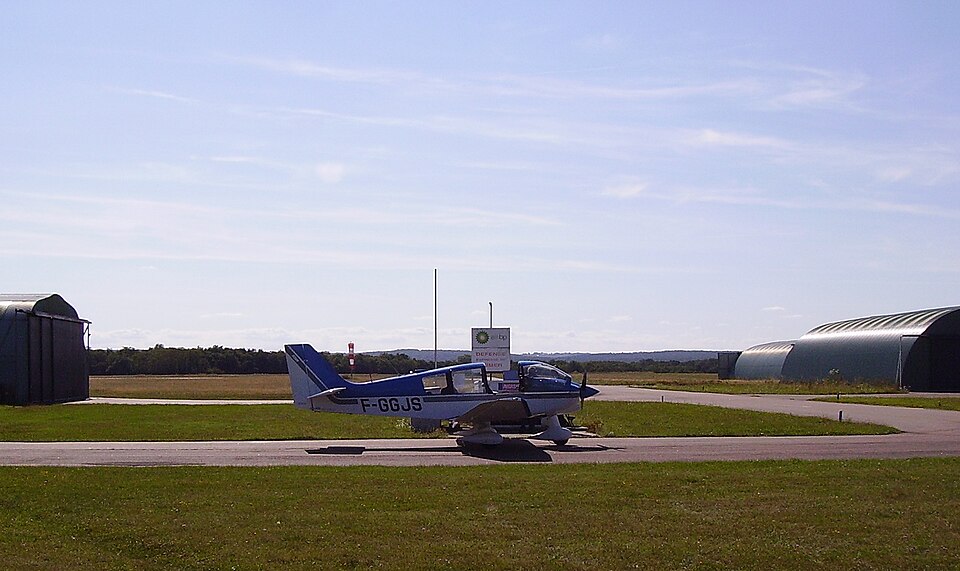
The pilot planned a local flight with a friend. Due to a substantial crosswind component, an instructor accompanied him. They agreed the pilot would fly and the instructor would demonstrate landing using a drift correction technique by banking on final. The pilot, instructor (front right), and passenger (rear seat) took off from runway 11 at Cosne-sur-Loire at 18:50. After a local flight, they joined downwind for runway 11. Wind was north-north-east at about 10 knots. On final, the pilot set flaps to landing configuration and corrected drift by pointing into the wind. The instructor noted the aeroplane was a little high and fast. He took controls at an estimated 300 ft, cancelled drift, and started a sideslip with left wing down. During the flare, the aeroplane rose and banked right. The instructor levelled wings and rejected the landing. The aeroplane did not accelerate, flew a few metres above ground, then touched down on the right side of the runway, ran through grass, and struck a metal fence, where it came to rest.
Additional Information
Site and Wreckage
Touchdown occurred on main gear, right side of runway 11, about 320 m from threshold. The aeroplane veered right and halted after striking metal fencing closing off a work zone. Carburettor heat control was found pulled; flaps were in landing configuration.
Meteorological Information
Météo-France reported north-north-east wind 8-10 kt, very good visibility, altocumulus base above 6,000 ft, temperature 18°C. A station 8 km away recorded 10-minute mean wind 020° at 9 kt, max 16 kt. Nevers METARs (12 NM) showed wind 030° at 6 kt, CAVOK, 17°C. Crosswind component for runway 11 was about 8-9 kt, max 15 kt.
Statements
Instructor (70, 1,830 hours, 630 as instructor): He had limited recent DR400 experience. He thought wind had dropped to 10 kt, so did not use flaps in first detent or increase speed. During sideslip, bank was 5-10° left, drift <10°. Final was stabilised; he explained actions. Just before flare, indicated airspeed was 60 kt. He rejected landing with full power without reconfiguring flaps, believing the engine could handle it. He thought carburettor heat was off but did not check. He may have delayed taking controls and was distracted by a newly installed fence. He noted sideslip is not taught at the club; he wanted to show an alternative method. He mentioned crosswind is common and aerology can be disturbed by trees on final.
Pilot (52, 130 hours, mostly on DR400): He felt the approach was a little fast and flare excessive. During flare, he heard stall warning. The aeroplane climbed to 4-5 m and banked right; he sensed a stall on the right wing. The instructor corrected roll before touchdown; ground contact was not hard.
GNSS Data Analysis
Approach slope was steeper than standard 3°, initially about 5.3°, increasing to 6.3°. Mean vertical speed in the last minute was 650 ft/min. Ground speed could not be accurately calculated.
Aircraft Information
F-GGJS has a 160-hp Lycoming O-320 engine. Weight was about 950 kg (max takeoff 1,000 kg). The flight manual specifies demonstrated crosswind 22 kt and includes a crosswind landing procedure. The club checklist requires flaps 2nd detent, speed 120 km/h, carburettor heat cold on very short final.
Aerodrome Information
The struck fence (rigid metal, 1.5 m high, 45 m from runway centreline) was part of a solar power station project. It was outside the runway safety area.
Sideslip and Drift Correction
Sideslip increases drag and sink rate without speed change, often used with reduced power. The technique of banking into wind to correct drift aligns the longitudinal axis with the runway, avoiding decrabbing.