Aircraft and Pilot Information
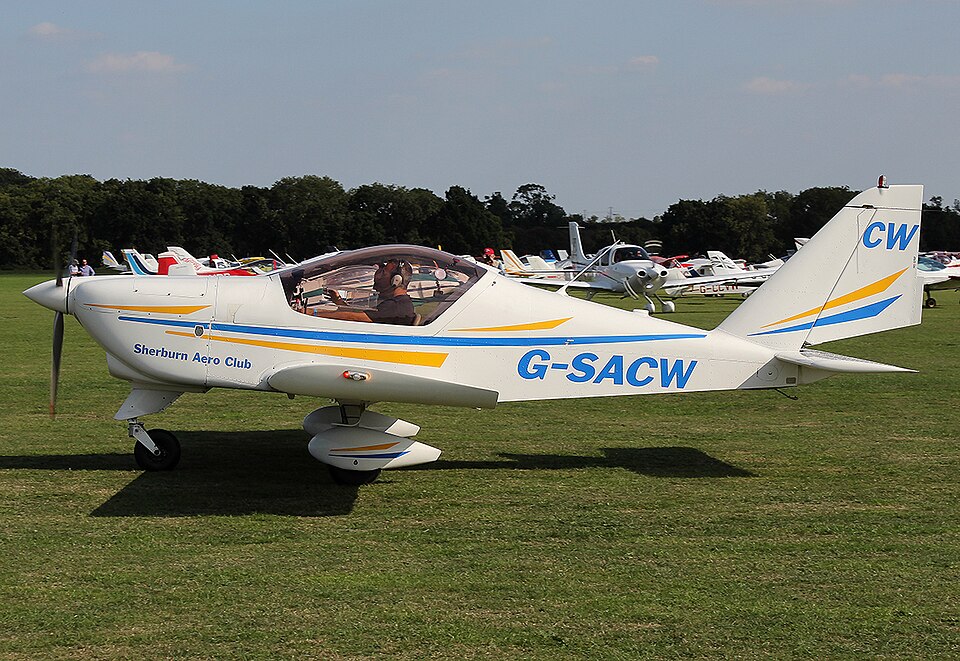
The aircraft involved was an Aero AT-3 R100, registration G-SACW, serial number At3-058, manufactured in 2010. It was powered by a single Rotax 912-S2 piston engine. The pilot held a National Private Pilot's Licence and was 63 years old. His total flying experience was 125 hours, of which 47 were on the accident type. In the preceding 90 days, he had flown 4 hours, and in the last 28 days, 2 hours. There were no passengers on board.
History of the Flight
On 24 July 2013 at 1055 UTC, the pilot returned to Sherburn in Elmet Airfield, North Yorkshire, after a local flight. He conducted a normal approach to Runway 24. Weather conditions were fine, with a surface wind from approximately 240° at 5 kt. During the flare for landing, the pilot anticipated a smooth touchdown but instead the aircraft landed heavily and bounced, surprising him. The second contact with the runway was also heavy and not in a controlled attitude. This caused the nose leg to shear off, the propeller to shatter as the nose pitched down, and the propeller struck the ground. The aircraft came to rest about halfway along the 793 m grass runway.
Damage
The propeller was destroyed, the nose leg sheared off, and the cockpit floor was ruptured.
Pilot's Assessment
The pilot believed the heavy landing resulted from flaring the aircraft slightly too early. He considered that the correct course of action at the point of the bounce would have been to apply power and go around.
Previous Occurrences
Since November 2007, the AAIB had reported on 12 accidents involving the Aero AT-3 R100, including this one. Five of these involved heavy or bounced landings that caused damage to the nose leg. In four cases, the nose leg was sheared off. In each of these accidents, the approaches seemed normal to the pilots, with difficulties encountered at or near the point of flare.