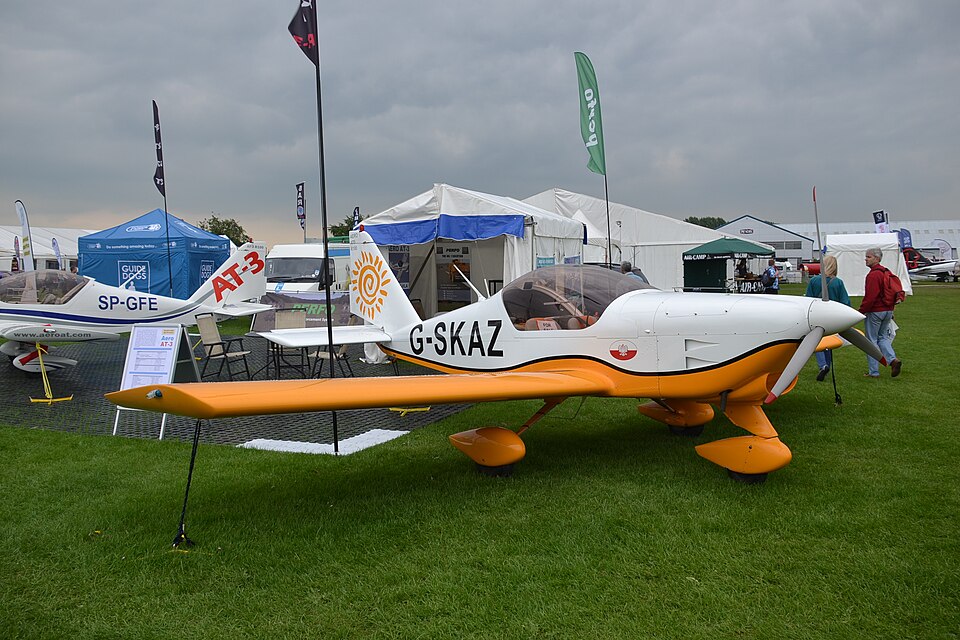
Accident Details
On 3 June 2011 at 1257 UTC, an Aero AT-3 R100, registration G-SKAZ, was landing on Runway 06 at Denham Airfield in Buckinghamshire during gusty conditions. The aircraft bounced upon touchdown. The pilot, a 53-year-old Private Pilot Licence holder, elected to perform a go-around and applied full power. During the bounce, the aircraft had developed a left-wing-low attitude. The pilot later stated that, in attempting to correct the left roll with aileron, he was slow to apply rudder to counteract the increased torque from the engine. The resultant torque caused the aircraft to yaw left with an increasing left roll. Despite applying full right aileron, the pilot was unable to recover. The left wing contacted the ground, and the aircraft cartwheeled.
Damage and Injuries
There was damage to both wings, the fuselage, landing gear, propeller, and canopy. However, there was no fire and the pilot was uninjured.
Aircraft and Pilot Information
The Aero AT-3 R100 (manufactured in 2010) was powered by a single Rotax 912-S2 piston engine. The pilot had accumulated 117 hours total flying experience, of which 33 hours were on type. His recent flying experience included 15 hours in the last 90 days and 11 hours in the last 28 days. The report was submitted by the pilot as an Aircraft Accident Report Form.