History of the Flight
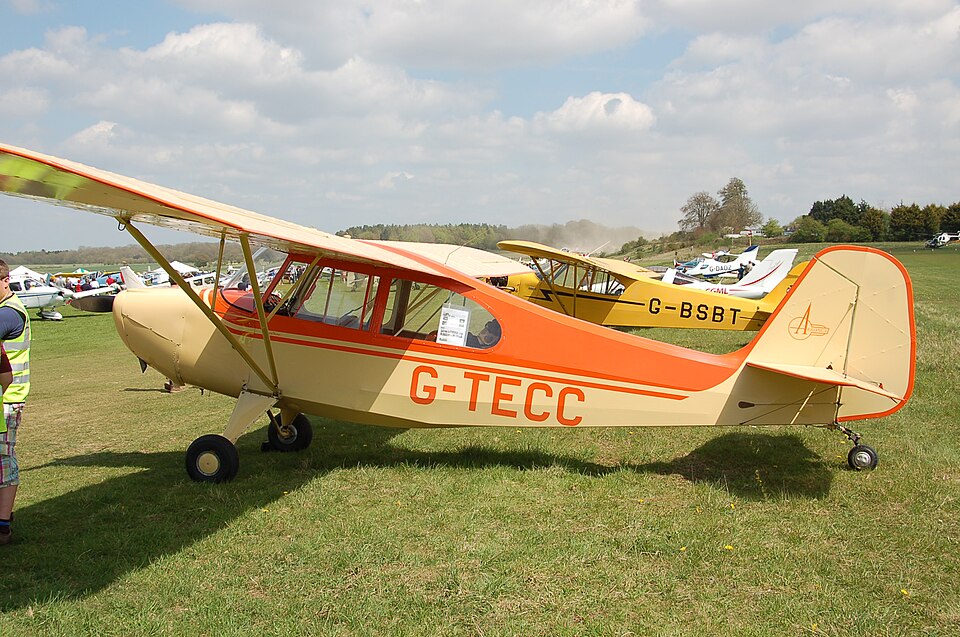
The aircraft, an Aeronca 7AC Champion (G-TECC), was on a private flight planned for approximately 2½ hours duration. Both the main tank (fuselage mounted) and the auxiliary wing fuel tanks were filled and topped off with AVGAS prior to departure. The flight proceeded without incident for about 1¾ hours at an altitude of 1,200 ft in good conditions.
Approximately 15 minutes before the loss of power, the fuel cock was opened to transfer fuel from the left wing tank to the main tank. When the main tank fuel gauge registered approximately 3/4 full, the fuel cock was closed. Almost immediately, without any vibration, rough running, or other warning, the engine stopped. Carburettor heat had been applied regularly throughout the flight as part of the FREDA airmanship checks, with the most recent application about 10 minutes before the power loss.
Accident Sequence
Following the engine stoppage, the pilot selected a field of pasture with cows grouped in one section, preferring it over alternatives with standing crops or power lines. While trimming for best glide speed, the pilot made a single short call on the RAF Coningsby Radar frequency but received no response. On short final approach, the pilot manoeuvred around some cows and turned to align with the longest landing upslope. Upon touchdown, the aircraft felt nose heavy, and the landing gear collapsed. The aircraft came to rest with damage including collapsed landing gear, damage to cowlings, lower engine bay, windscreen, a right wing strut bent through 90 degrees, and some damage to the right wing. The pilot vacated the aircraft through the main cabin door. Police, paramedics, and fire crews attended the scene, the latter in response to a report of an aircraft crashing near buildings containing asbestos.
Subsequent inspection of the landing area revealed that the touchdown had coincided with a transverse ridge, at which point the gear collapsed. The carburettor, breather pipe, and air box were found on the ground nearby, a short distance from the ridge.
Post-Accident Examination
The engine had been overhauled and zero-timed at the last annual inspection, with a newly refurbished carburettor fitted some 120 hours prior to the accident. The pilot considered carburettor icing as a possible cause but noted no rough running before the stoppage. Carburettor icing charts indicated that severe icing should be expected at glide power but not at cruise power under the reported temperature and dew point (25°C/16°C). Fuel contamination or a vapour lock were also considered, as the engine was running on AVGAS.
Examination of the engine by the owner revealed evidence from exhaust stacks and spark plugs that the engine had been running with a very lean fuel/air mixture. Inspection showed that the hose connecting the air intake duct to the No. 3 cylinder to the inlet manifold did not properly cover the end of one of the ducts, creating a small gap. Hand pressure was sufficient to open a significant gap between the hose and duct, allowing air to be entrained through the joint and affect the mixture entering the engine if the gap opened while the engine was running.