Synopsis
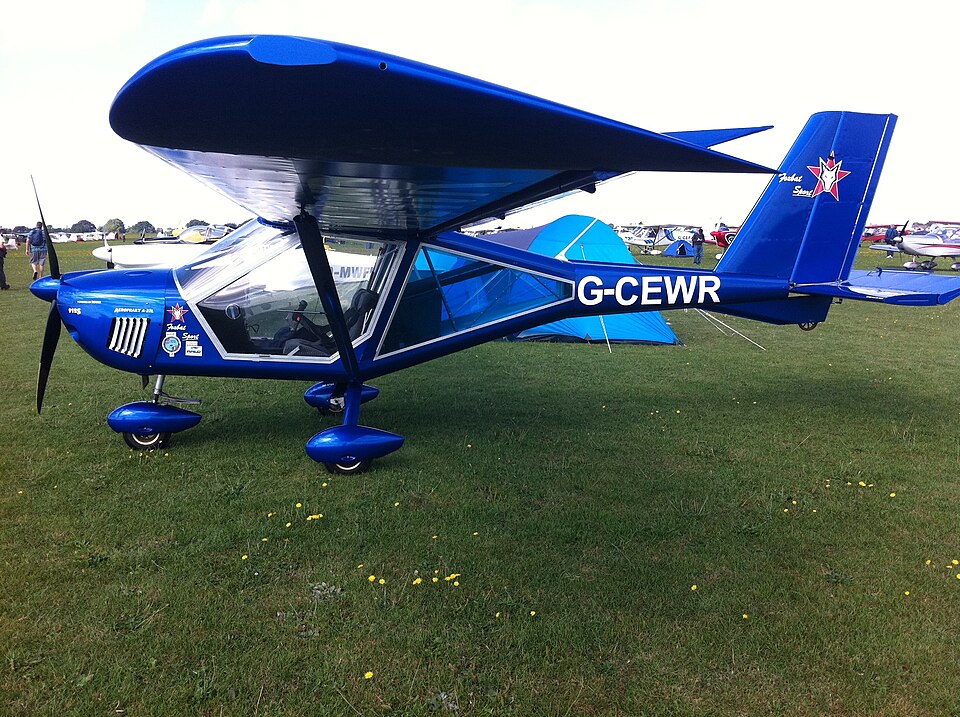
On 5 November 2011, the pilot of an Aeroprakt A22L Foxbat, registered G-CEWR, experienced a serious incident shortly after takeoff from Otherton Airfield. The aircraft, powered by a single Rotax 912 ULS piston engine, was on a private flight with one passenger. The pilot reported severe vibration lasting about 30 seconds, after which the rudder became jammed in the neutral position. Despite the jam, the pilot maintained control using aileron and elevator and landed safely back on Runway 34.
History of the Flight
After a normal pre-flight inspection, the pilot departed from Runway 34. At approximately 200 feet and 60 knots, severe vibration commenced. The vibration ceased after about 30 seconds, and the pilot then noticed the rudder was stuck neutral. He immediately banked left to follow the circuit pattern and executed an emergency landing.
Aircraft Examination
An engineer from the Light Aircraft Association (LAA) examined G-CEWR. The control horn connecting the anti-balance tab's cable to the tab was found bent downwards, impinging on the elevator and causing damage to its upper surface. This restriction limited rudder movement. Additionally, the anti-balance tab's spring hinge had seized, eliminating the spring return force and allowing the tab to flap freely. After cleaning and lubricating the hinge, normal spring function was restored. The control horn was replaced, and the securing bolt was reoriented head-down for maximum clearance. A subsequent test flight confirmed normal operation of the rudder anti-balance system.
Safety Action
The LAA determined that the vibration was a rudder flutter event caused by the seizure of the anti-balance tab's spring hinge, which allowed the tab to oscillate and induce high loads that bent the control horn, jamming the rudder against the elevator. In response, the LAA issued Airworthiness Information Leaflet (AIL) MOD/317/002 on 22 November 2011, requiring pre-flight checks of the tab's freedom and spring pressure. Despite these checks, a similar flutter incident occurred on another Foxbat (G-CGWP) on 10 January 2012, leading to a temporary grounding AIL (MOD/317/003) and subsequent development of two modifications (LAA Modification Approvals 13310 and 13311) to prevent recurrence.