History of Flight
The Aerotechnik EV-97 Eurostar, registration G-CCKK, was on a private flight from Hullavington Airfield in Wiltshire to Shobdon Airfield in Herefordshire, and then returning. The pilot, a 48-year-old male with a Private Pilot's Licence and 321 total flying hours (129 on type), departed Hullavington at 1550 UTC on 15 June 2005, accompanied by a passenger. The aircraft landed at Shobdon at 1630 UTC. After a meal, the pilot filed an intended departure time of 1700 UTC and took off at 1725 UTC for the return journey.
During the return flight, the pilot encountered worsening weather conditions as the aircraft approached the Cotswold Hills. The aircraft deviated from its track, apparently to avoid the poorest weather. It was observed by witnesses manoeuvring at a very low height near Wotton-under-Edge, Gloucestershire, approximately 10 nautical miles from its destination at Hullavington.
Witness Observations
Several witnesses on the Cotswold Edge golf course observed the aircraft. The two closest witnesses initially heard the engine and saw the aircraft emerge from cloud or mist at low altitude, flying level or in a shallow descent. The aircraft then entered a left turn, appearing to prepare for a forced landing on the fairway. As it turned, the aircraft rolled quickly to the left in a manner described as sudden and violent, and its nose dropped into a near-vertical descent. The impact was hidden from view by trees. Other witnesses further up the slope saw the aircraft at low altitude but lost sight as it flew into mist; they noted a reduction in engine noise.
Witnesses described the weather as misty with low cloud and light drizzle. No engine misfiring was reported, though some changes in engine note were noted during the turn.
Wreckage Examination
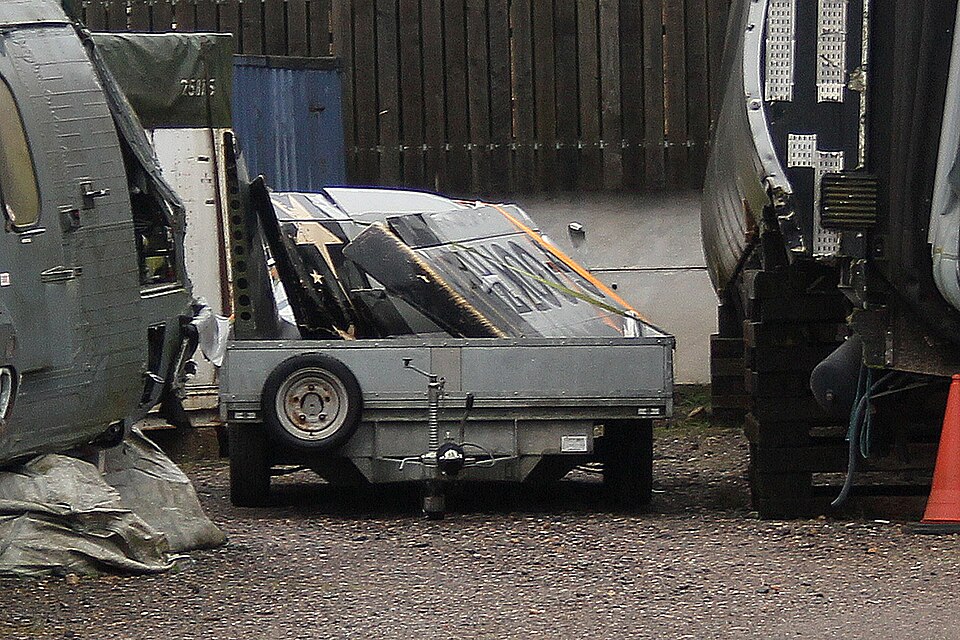
The aircraft struck the ground in a steep nose-down and slightly right-wing-down attitude at relatively low forward speed. The wreckage was structurally complete. Examination at the AAIB facility revealed no pre-impact failure of the airframe or flight controls. The engine showed no pre-impact mechanical defect, and both ignition systems performed satisfactorily. The propeller reduction gear indicated the engine was producing power at impact, though the amount could not be determined. The fuel tank contained a significant amount of fuel.
Investigation Conclusion
The investigation concluded that the aircraft suffered an aerodynamic stall with insufficient height for the pilot to effect a recovery. No pre-impact failures or defects were found. No safety recommendations were made.