Background
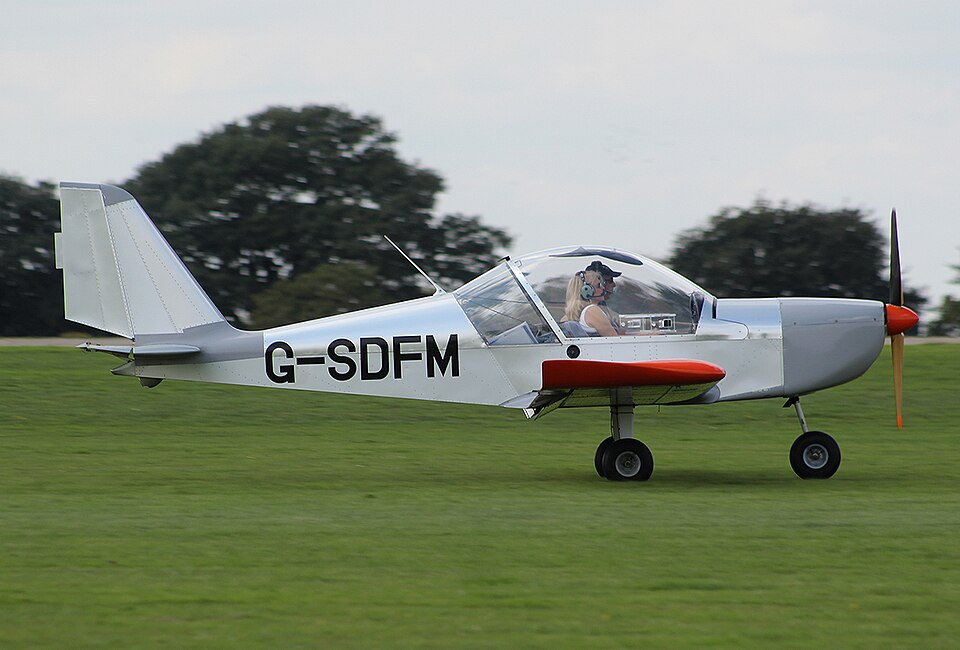
The accident involved an Aerotechnik EV-97 Eurostar, registration G-SDFM, powered by a single Rotax 912-UL piston engine. The aircraft was manufactured in 2002. The flight was a private operation conducted by a 56-year-old pilot holding a Private Pilot's Licence with a total flying experience of 312 hours, including 13 hours on type. In the preceding 90 days, he had flown 20 hours, all within the last 28 days.
The pilot was practicing short field landings at his private airstrip near Pointon, Lincolnshire. The grass runway was approximately 300 meters in length, oriented east-west, with a dyke running across its western end adjacent to the Runway 09 threshold. The top of the dyke bank next to the threshold was about one foot higher than the runway surface, covered with grass, and blended with the runway when viewed from above.
Flight History
The pilot had completed some general handling and stalling exercises in the local area before attempting landings. The wind was from the east-southeast, gusting up to 13 kt, with dry conditions and scattered cloud at about 4,000 feet. His first approach to Runway 09 used full flap, landing about 50 meters from the threshold, which he converted to a touch and go. Two subsequent circuits aimed to land closer to the threshold, but both resulted in go-arounds due to the aircraft being too long or undershooting.
Accident Sequence
On the fourth approach, the pilot believed he would achieve a good landing close to the threshold. However, the main wheels struck the top of the dyke bank next to the threshold. The aircraft pitched rapidly onto its nose wheel, which collapsed. The propeller shattered after striking the ground. The canopy sprang open during the landing. The aircraft came to a stop, and the pilot shut down the engine and exited normally. He was uninjured, and there was no fire.
Aftermath
Subsequent examination revealed that the aircraft had also suffered a crack in the center section of its wing spar. The pilot was not aware of any turbulence or windshear during the approach and landing.
The source notes guidance from CAP 428, Safety Standards at Unlicensed Aerodromes, recommended that runways under 800 meters have a 30-meter clear area beyond each end to accommodate overruns or undershoots. Had the aircraft landed shorter and stopped abruptly in the dyke, the consequences would probably have been more severe.