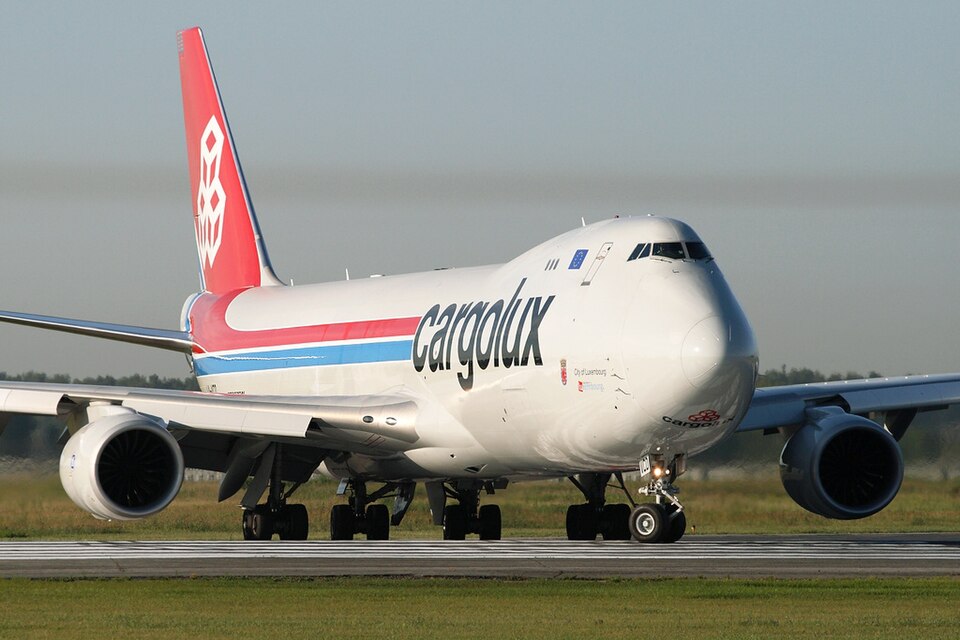
History of the Flight
On 22 March 2021, at 0122 UTC, a Boeing 747-8F aircraft, registration LX-VCD, operated by Cargolux Airlines, departed from Al Maktoum International Airport (OMDW) to Luxembourg International Airport. There were six people on board: two flight crewmembers and four deadhead crew (two pilots and two aircraft maintenance engineers). The Commander was the pilot monitoring and the Copilot was the pilot flying.
At 0147:15, after levelling off at flight level 280, the flight crew called Bahrain ATC declaring PAN PAN due to a technical malfunction of the window heating system and requested to return to OMDW. The controller confirmed the request and provided instructions.
Technical Malfunction
The flight crew reported electrical sparks followed by smoke from the right window windshield heating terminal block. The Commander switched off the right window heater electrical, and the electrical sparks stopped and smoke dissipated. The crew informed ATC that sparks had stopped and smoke disseminated, and no further assistance was needed.
Fuel Jettison and Landing
The aircraft began descent at 0150:00. The crew requested and received approval to commence fuel jettisoning. After fuel jettison, the aircraft landed at OMDW at 0242:52 uneventfully. The Commander informed the tower that no assistance was required; however, the controller had declared a full emergency prior to landing. After landing, the runway and taxiway were inspected and found clear.
Aircraft and Personnel Information
The aircraft, manufactured in October 2011, had no technical defects prior to the incident. The last C-check was 2,789 flight hours and 490 cycles prior. Both flight crew held valid licenses and medical certificates, and reported being well-rested and fit for the flight.
Examination Findings
The right (R1) flight deck windshield was removed and examined at Boeing's Equipment Quality Analysis Laboratory. Evidence of heat damage was noted adjacent to terminal (A) of the windshield anti-ice electrical system. Deposited materials and discoloration were observed. X-ray and CT scans revealed damage to the terminal block. The windshield heating electrical terminal was damaged due to overheating, causing electrical sparks.