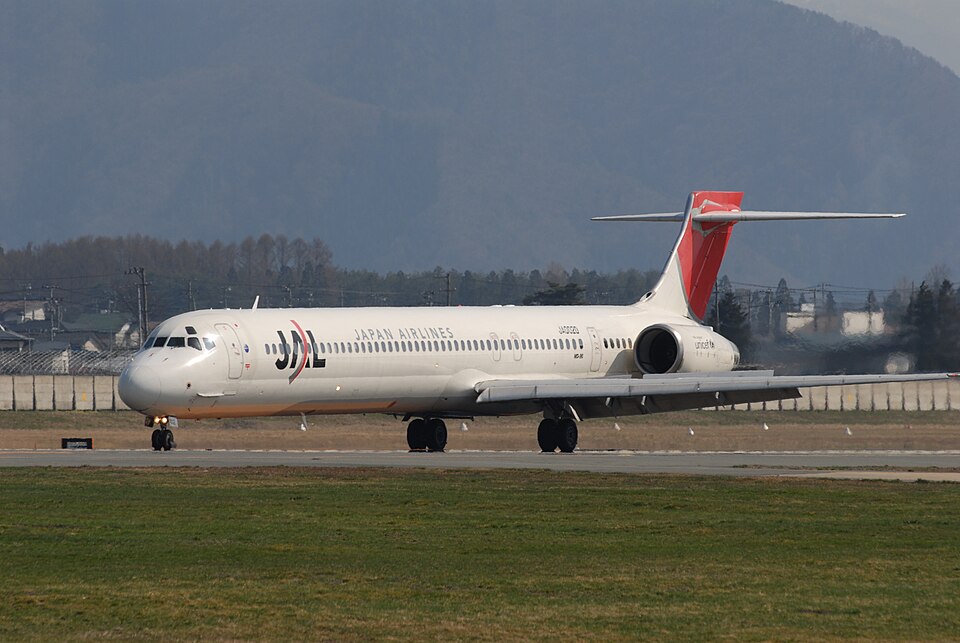
Incident Details
On Sunday, August 15, 2010, at 16:08 Japan Standard Time, a McDonnell Douglas MD-90-30, registered JA002D, operated by Japan Airlines International Co., Ltd., took off from Sendai Airport for Fukuoka Airport as scheduled flight 3538. Approximately two minutes later, while climbing through about 5,500 feet, the right engine fire warning alarm activated. The crew declared a state of emergency, shut down the right engine, and activated the fire-extinguishing system. The aircraft returned to Sendai Airport and landed at 16:23. After landing, heat damage was confirmed inside the cowling of the right engine. There were 111 people on board, including the pilot in command, four other crewmembers, and 106 passengers; no one was injured.
Investigation
The Japan Transport Safety Board (JTSB) investigated the serious incident. The Digital Flight Data Recorder and Cockpit Voice Recorder were analyzed. A teardown inspection of the engine revealed that the No. 4 Bearing Scavenge Tube had fractured. Detailed inspection showed fatigue cracks originating from the outer diameter of the tube, which had been covered by a heat shield, preventing direct visual inspection during regular maintenance.
Probable Cause
It is probable that this serious incident occurred as follows: The Aircraft No. 4 Bearing Scavenge Tube of the right engine fractured during takeoff, resulting in the tube breaking loose from the Diffuser Case, letting engine oil blow out through an opening where it broke loose, and subsequently the oil contact with the engine high temperature section developed into an engine fire. It is highly probable that the repeated stress associated with engine operations generated the crack origins in the No.4 Scavenge Tube and the fatigue crack grew into the fracture of the tube.