History of the Flight
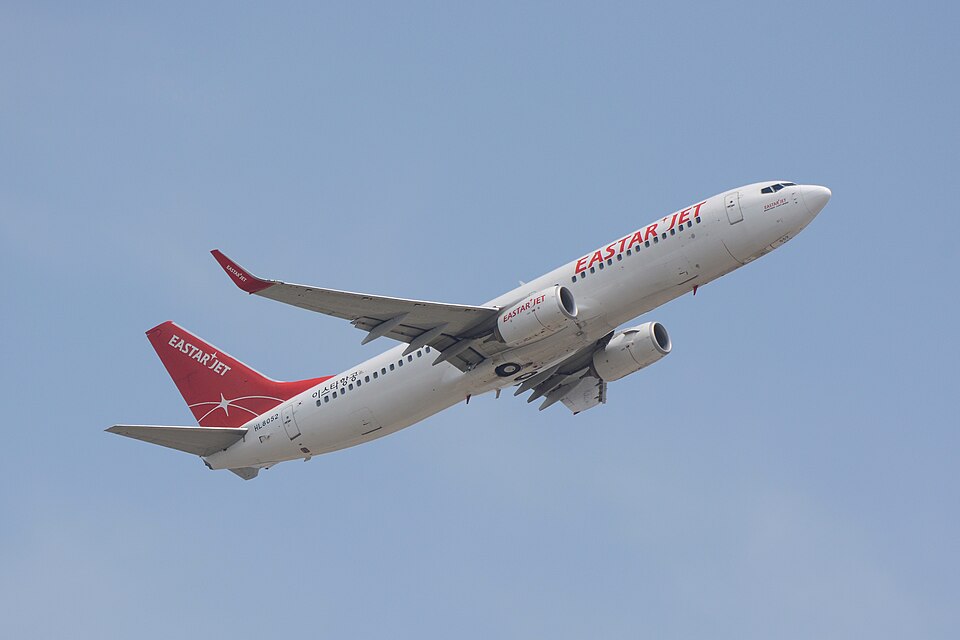
On August 22, 2019, at 14:09 Japan Standard Time, Eastar Jet flight 681, a Boeing 737-800 registered as HL8052, departed from Inchon International Airport in South Korea for Hyakuri Airfield in Ibaraki Prefecture, Japan. The flight crew consisted of a captain and a first officer. During the approach briefing, the crew confirmed the expected landing runways (03L and 21R) and input runway centerline information for Runway 03L (the Westside runway) into the flight management computer.
After entering the Hyakuri approach control area, the flight was informed that a visual approach for Runway 03L was expected. At approximately 16:12, Hyakuri Approach cleared the aircraft for a visual approach to the Westside runway and instructed a frequency change to Hyakuri Tower. The crew entered the downwind leg on the west side of the airfield. At 16:14:41, while turning onto the base leg, the aircraft was cleared to land on Runway 03L.
During the final turn, the captain visually acquired a white runway (the Eastside runway, Runway 03R) and mistakenly believed it was the cleared runway. He disconnected the autopilot and manually flew the aircraft, focusing on stabilizing the approach. Meanwhile, an inspection vehicle from the Japan Air Self-Defense Force was traveling northbound on the Eastside runway, which was temporarily suspended for inspection.
Hyakuri Tower observed the aircraft overshooting the intended approach and, at 16:16:24, reconfirmed with the crew that they were cleared to land on the Westside runway. The flight crew read back the clearance. At approximately 500 feet altitude, the first officer called "Five hundred," and the captain called "Stabilized." Looking outside, the captain saw the markings "03L" on the Westside runway to his left and a dark spot (the inspection vehicle) on the runway ahead. Realizing the aircraft was approaching the wrong runway, he briefly considered correcting the flight path but decided to execute a go-around at about 200 feet above ground level.
At 16:16:49, as the aircraft began to climb, Hyakuri Tower issued a go-around instruction. The tower had not been notified of the crew's self-initiated go-around. The aircraft then entered the traffic pattern and landed safely on the Westside runway around 16:26. The serious incident occurred approximately 0.2 nautical miles southwest of the south end of Runway 03R at Hyakuri Airfield, at 36°09'59"N, 140°24'32"E, around 16:17.
Aircraft and Crew Information
The aircraft was a Boeing 737-800, registration HL8052, operated by Eastar Jet Co., Ltd. The captain held an airline transport pilot certificate with a Boeing 737 type rating and had accumulated 3,708 flight hours, with 1,616 hours on type. The first officer held a commercial pilot certificate with a Boeing 737 type rating and had 2,942 flight hours, with 2,652 hours on type. No injuries to persons or damage to the aircraft were reported.