Incident Overview
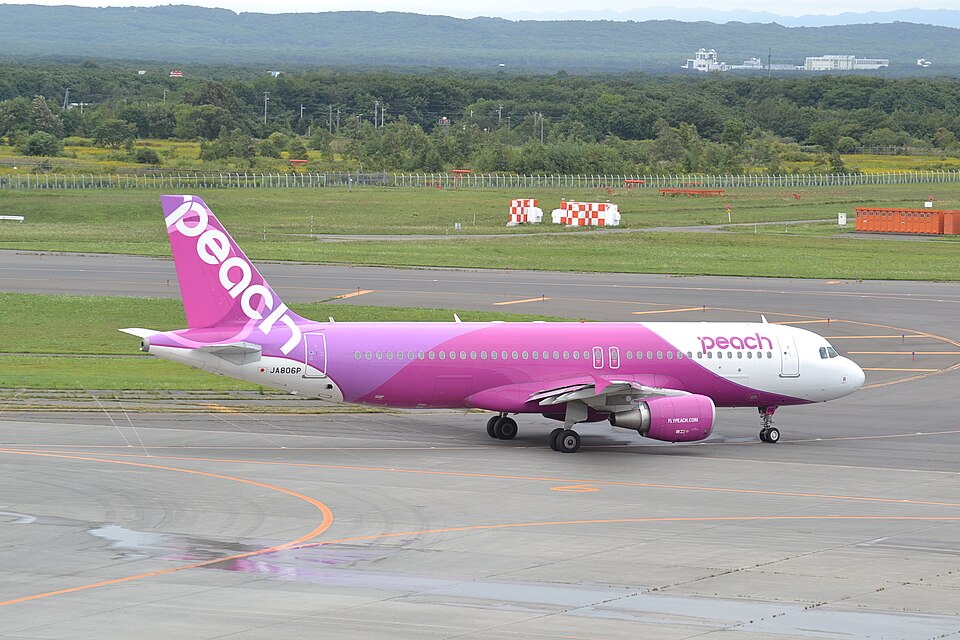
On Saturday, November 30, 2019, at approximately 01:03 Japan Standard Time, a serious incident occurred on Runway 34L (Runway A) at Tokyo International Airport. An Airbus A320-214, registered as JA806P and operated by Peach Aviation Limited, was on approach for landing when a work vehicle entered the runway strip without clearance. The aircraft landed safely and no injuries or damage to the aircraft were reported.
Aircraft and Crew
The aircraft involved was an Airbus A320-214 (serial number 5384, manufactured November 27, 2012). It was operating as Peach Aviation Flight 808, a scheduled passenger flight. The captain, aged 30, held an airline transport pilot certificate and had a total flight time of 4,251 hours and 26 minutes. The co-pilot was also in the cockpit. The aircraft carried 170 people—6 crew members and 164 passengers.
Work Vehicle and Personnel
The work vehicle was an ordinary motor vehicle, painted open white, equipped with a vehicle marking flag and a yellow flashing light. Two subcontract workers (referred to as Worker A, aged 61, and Worker B, aged 35) were in the vehicle. They had attended in-house safety training for construction in restricted areas on November 6, 2019. The workers were performing pavement surface measurement work on Runway B (04/22), which had been closed for planned night work.
Sequence of Events
At 23:30 on November 29, 2019, Runway B and Runway C (16L/34R) were closed for construction, while Runway A (34L/16R) and Runway D (05/23) remained active. Three towing routes (B7, B9, B12) allowed aircraft to cross the closed Runway B. At 00:56:37, Worker A requested clearance to cross B7 towing route to move to the north side of Runway B. The controller instructed the vehicle to hold short and allowed two departing aircraft to pass.
At 01:00:04, when the aircraft was about 8 nautical miles from Runway 34L, the controller visually confirmed the runway was clear and issued a landing clearance. At 01:02:00, Worker A again requested clearance to cross B7 towing route, believing only the three green-indicated towing routes required controller clearance per the closure coordination diagram. After receiving clearance, the workers crossed B7 and at 01:02:55 held short of Runway A, reporting to the controller. The controller visually acknowledged the vehicle's position but then turned attention elsewhere.
At 01:03:31, the aircraft passed the Runway 34L threshold. The flight crew visually confirmed the runway appeared safe for landing. At 01:03:35, Worker A, relying on the closure coordination diagram that showed the intersection of Runways A and B painted red (indicating closure), allowed the work vehicle to enter the runway strip (within 75 meters of the runway centerline) of Runway A without requesting further clearance. This constituted a runway incursion. At 01:03:41, the vehicle began crossing Runway A, unnoticed by the crew. The aircraft landed at 01:03:43 and initiated reverse thrust. The work vehicle vacated Runway A at 01:03:51 and reached the runway strip boundary at 01:03:58. The controller did not notice the crossing until 01:04:27 when the workers requested clearance for subsequent towing routes. The controller then warned them about contacting the tower. At 01:04:55, the aircraft vacated the runway via Taxiway L12.
Investigation and Classification
The Japan Transport Safety Board classified this occurrence as a serious incident under Japanese regulations, corresponding to "Landing on a closed runway or a runway being used by other aircraft or attempt of landing." The investigation involved analysis of flight data, GPS records, ATC communications, and interviews with the captain, workers, controllers, and other personnel.