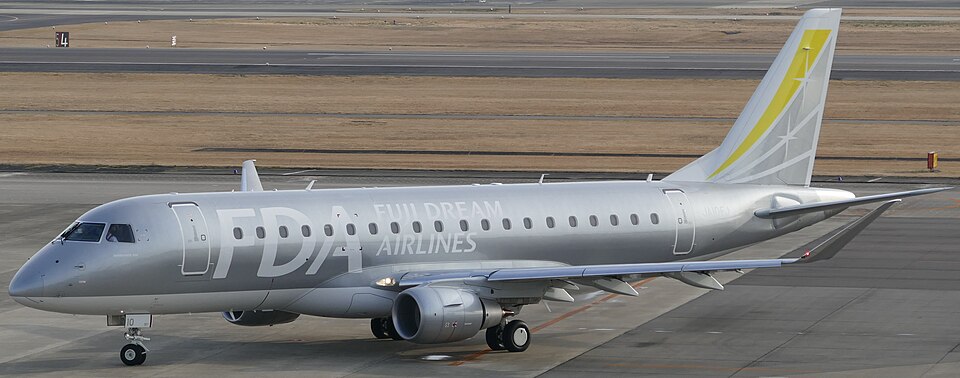
Aircraft and Operator
The aircraft involved was an Embraer ERJ170-200STD, registration JA10FJ, operated by Fuji Dream Airlines Co., Ltd. The flight was a charter service from Hiroshima Airport to Hyakuri Airfield, carrying 47 occupants including the pilot in charge, three other crew members, and 43 passengers.
Incident Timeline
On May 20, 2022, at approximately 14:50 Japan Standard Time, the aircraft was on approach to Runway 21R after receiving landing clearance from air traffic control. At that time, a vehicle belonging to the Civil Engineering Squadron of the Japan Air Self-Defense Force (JASDF) was on the same runway conducting a daily inspection of the aircraft arresting barriers. The vehicle had entered the runway at 13:50 after receiving permission from the ground control position and had been moving between the south and north overrun areas to inspect barriers.
Air Traffic Control Actions
Prior to the incident, the air traffic control tower was staffed by multiple controllers, including Controller A (tower control), Controller B (ground control and watch supervisor), Trainee C (on-the-job training at ground control), Controller D (tower control), Trainee E (on-the-job training at coordinator), and Trainee F (former trainee). Reminders indicating that Runway 21R was unavailable for landing and takeoff due to vehicle activity were set on control consoles by Controller B (two types), Controller D (two types), and Controller A (one type). However, these reminders were not observed by any of the controllers when the aircraft approached.
Vehicle Movements
The vehicle's inspection activities included operating the barriers (raising and lowering) between 14:06 and 14:09. After completing checks on the northwest barrier, the vehicle re-entered the runway to return to the south side for further inspection. At the time of the aircraft's landing attempt, the vehicle was on the runway.
Aircraft Approach
At 14:45, the aircraft established communication with the tower controller (Controller A). The controller instructed the aircraft to report passing the fix MAGRY, located 7.5 nautical miles from the runway threshold. As the aircraft approached, the controller scanned the runway with binoculars but did not see the vehicle. The watch supervisor also scanned but failed to notice the vehicle. At 14:47:47, the aircraft reported passing MAGRY. Controller A then issued landing clearance, unaware of the vehicle's presence.
Outcome
The aircraft attempted to land on Runway 21R while a vehicle was present. The incident is classified as a serious incident under Japanese regulations.