Investigation Report
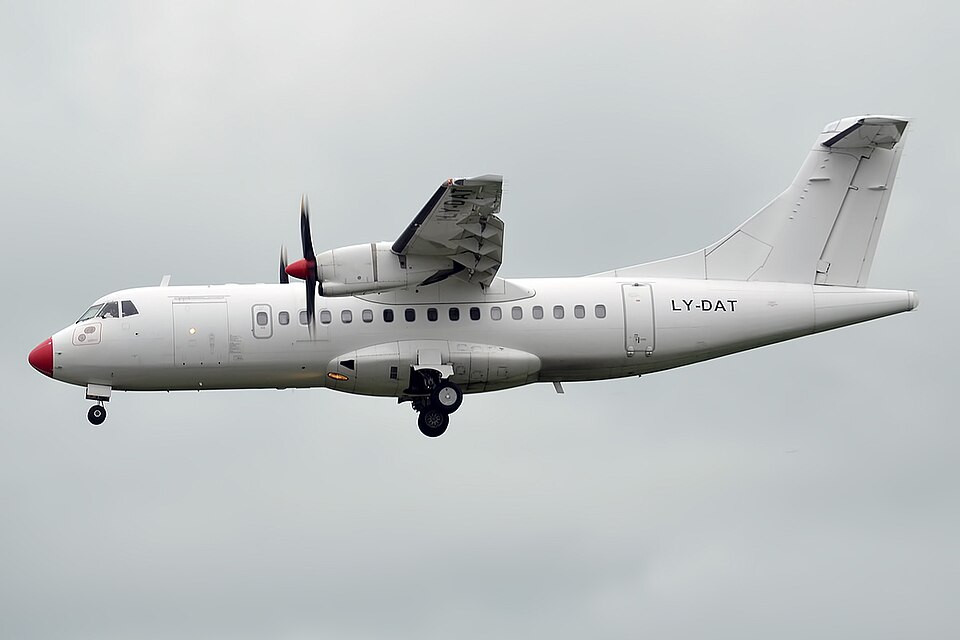
The Danish Accident Investigation Board (AIB) released a final report on a serious incident that occurred on 17 March 2016 involving an ATR42-500 aircraft registered as LY-DAT. The report, consisting of 60 pages, details the circumstances of the occurrence and its causes and consequences.
According to the report's table of contents, the investigation covered factual information including the history of the flight, injuries to persons, damage to the aircraft, other damage, personnel information (commander and first officer), aircraft information (general description, power plants, fuel system, maintenance history), operations manual procedures, meteorological information, aids to navigation, communication, aerodrome information, flight recorder data (solid state flight data recorder and solid state cockpit voice recorder), wreckage and impact information, medical and pathological information, fire, survival aspects, tests and research (airframe fuel system investigation and engine investigations), organization and management information, additional information on fuel management, and useful investigation techniques.
The analysis section addresses the right engine flame out after departure, left engine compressor stall during approach, and flight operations. The conclusions include findings, factors, and a summary. Safety recommendations and preventative safety measures were also issued.
The foreword notes that the investigation was of an exclusively technical and operational nature, with the objective of preventing future accidents and serious incidents, not assigning blame or liability.