History of Flight
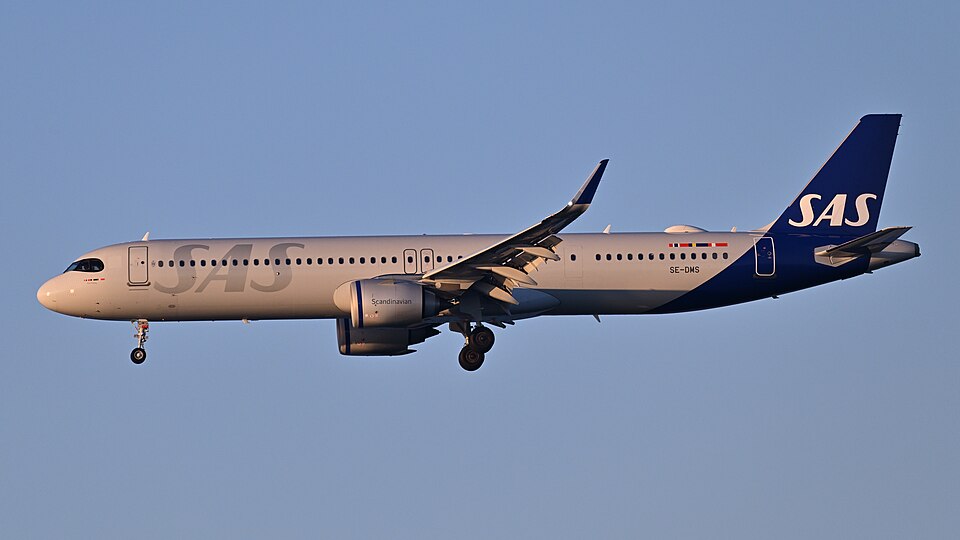
On 20 December 2023 at 07:15 UTC, an Airbus A321-253NX, registration SE-DMS, departed Copenhagen Airport (EKCH) on an instrument flight rules (IFR) ferry flight to Oslo Airport (ENGM). The commander was pilot monitoring, and the first officer was pilot flying. Prior to departure, additional fuel had been uplifted as ballast. Upon entering the cockpit, the flight crew noticed on the Electronic Centralized Aircraft Monitor (ECAM) that fuel distribution was not as expected, with fuel still present in the Additional Center Tanks (ACT). ECAM displayed an "ACT XFR FAULT" caution message. The crew performed the associated procedure by selecting manual fuel transfer from the ACT to the center tank. After approximately five minutes, the caution message disappeared, and the crew deactivated manual transfer.
During climb from Copenhagen, at approximately 5,000 feet, the "ACT XFR FAULT" caution reappeared, and the crew repeated the manual transfer procedure. While passing Flight Level 250, the first officer reported smelling electrical fire. The commander confirmed the smell, instructed oxygen masks on, and declared a MAYDAY to Sweden Control, requesting immediate return and descent to Copenhagen. Sweden Control directed the aircraft to turn right inbound to LAMOX and descend to FL 180. The first officer initiated the approach, and the commander consulted the Quick Reference Handbook (QRH) for the "Smoke/Fumes/AVNCS smoke" checklist. During the approach, the transponder was set to code 7700. The aircraft landed safely on runway 22L and vacated via taxiway B5, stopping on the taxiway. The onsite fire brigade observed no external fire or smoke. With the commander's oxygen mask removed, the smell of electrical fire was less noticeable. The flight crew taxied to a remote parking stand, followed by the fire brigade. After engine shutdown, the fire brigade boarded. The smell was confined to the cockpit; none was detected in the passenger cabin. Upon opening the avionics compartment under the cockpit floor, a strong smell of electrical fire was present, but no sign of smoke or fire was visible.
Injuries and Damage
There were no injuries to the 2 crew members. The aircraft sustained minor damage: a burnt electrical Ground Fault Interrupter (GFI) relay. No other damage was reported.
Aircraft Information
The aircraft was an Airbus A321-253NX (A321 Long Range), serial number 10,500, with a valid airworthiness review certificate until 22 February 2024. It was powered by two CFM International LEAP-1A33 engines. Maximum take-off mass was 97,000 kg, and fuel on board at take-off was 12,000 kg. The fuel system comprised two wing tanks, one center tank, three ACTs (forward, aft 1, aft 2), and two outboard vent surge tanks. Fuel transfer from ACTs was automatic when landing gear was up for more than 30 minutes and center tank quantity below 5,000 kg. In case of automatic transfer failure, manual transfer could be selected, which closed main contacts in the GFI relays (122HQ and 124QH) to power the ACT transfer pump. The GFI relays provided ground fault protection. The 124QH relay was located in the avionics compartment under the cockpit floor in contactor box 107VU.
Investigation Findings
The Danish Accident Investigation Board (AIB) conducted a preliminary investigation. Maintenance crew inspected the avionics compartment and found GFI relay 124QH with black soot and a burnt hole in its plastic housing. Adjacent relay 17QA had soot deposits. Both relays were removed. No other damages to the mating installation or wiring were noted; no circuit breakers were open. The French BEA performed a non-destructive CT scan of the damaged GFI relay, confirming internal overheating. Further inspections by the relay manufacturer, supervised by the NTSB, concluded that the capacitor, current limiting resistor, Pulse Width Modulator (PWM) chip, PWM trace wires, Transient Voltage Suppressor (TVS), internal wiring, blocking diode, and freewheeling diode had damages typical of exposure to voltage levels exceeding design limits. The AIB decided not to conduct further safety investigations, closing the case.