History of Flight
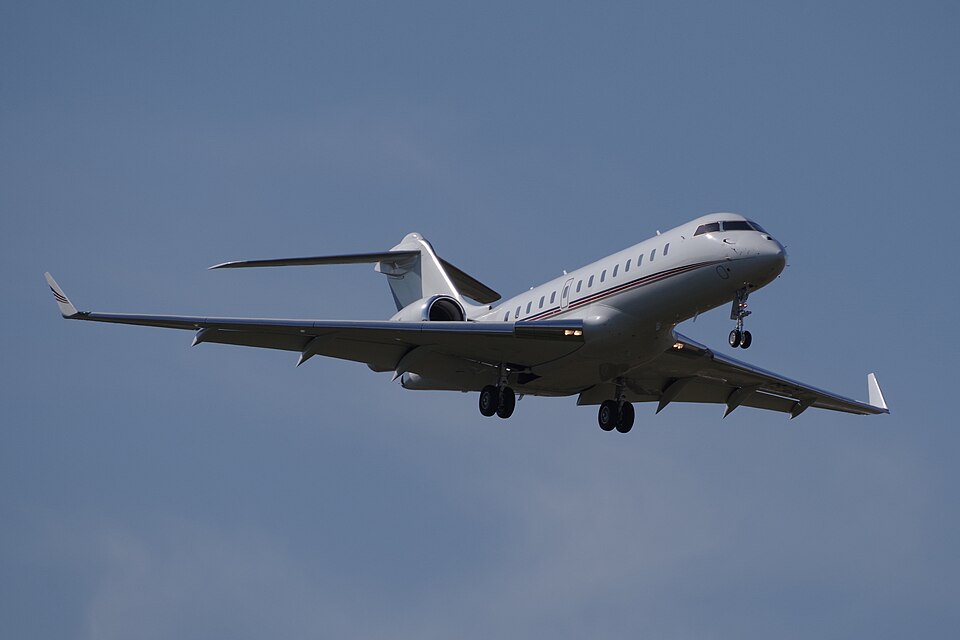
On 29 January 2024, a Bombardier BD-700-1A11 Global 5000 aircraft, registration CS-GLY, operated by NetJets Transportes Aereos S.A., was conducting a ferry flight (NJE316K) from London Biggin Hill Airport to Dubai International Airport. The aircraft landed on runway 30L and vacated the runway. It then needed to taxi to its parking stand, which required crossing runway 30R via specific taxiways. The flight crew received a conditional clearance to cross runway 30R. However, during the crossing, another aircraft, an Airbus A330-343 (registration HZ-AQ14) operated by Saudi Arabian Airlines, took off from the same runway. The minimum distance between the two aircraft was approximately 1,330 meters when the departing aircraft lifted off while the crossing aircraft was at the edge of the runway. This event was classified as a serious incident.
Causes
The Air Accident Investigation Sector (AAIS) determined that the causes of the runway incursion serious incident were:
- The tower controller’s use of non-standard phraseology in the conditional clearance issued to the Global 5000 for crossing the runway, which led the flight crew to incorrectly identify an aircraft taxiing ahead as the conditional aircraft.
- The flight crew did not seek clarification from the tower controller despite being uncertain about the taxiway lights being off beyond the stop bars and the guidance lights for crossing the runway.
Contributing Factors
The AAIS identified the following contributing factors:
- The Global 5000 was not yet on tower frequency when the controller issued the take-off clearance to the A330 for runway 30R, resulting in the flight crew being unaware of the departure.
- Improper handling of the stop bars at taxiway Mike 2 led to their activation nearly simultaneously with the Global 5000 crossing, preventing the flight crew from noticing the stop bars activation as they passed.
Safety Recommendations
The AAIS issued four safety recommendations to the air navigation service provider: 1. Emphasize to air traffic controllers the importance of using correct standard phraseology that enhances pilots’ situational awareness. 2. Ensure adherence to revised standard operating procedures for selecting holding point stop bars. 3. Study the potential for improving the current system functionality to allow automatic activation of stop bars based on updated standard operating procedures. 4. Incorporate familiarization training for air traffic controllers with actual night-time conditions on the airfield.
Additionally, one safety recommendation was addressed to NetJets Transportes Aereos S.A. to assess the effectiveness of the safety measures taken following the incident, ensuring that the safety efforts are both efficient and effective.