History of the Flight
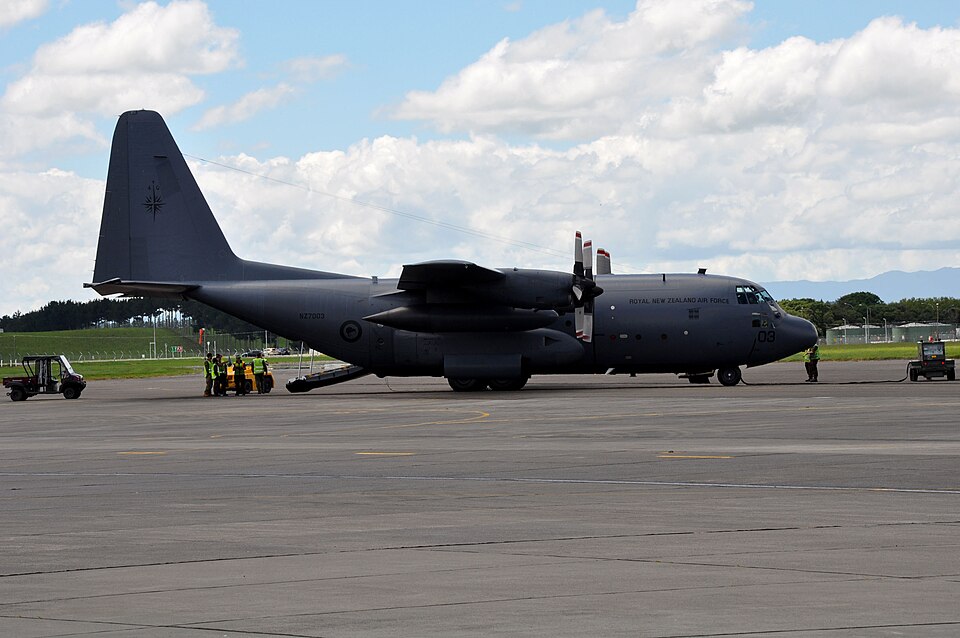
On 14 June 2017, a Royal New Zealand Air Force Lockheed C-130, registration NZ7003, departed Baghdad International Airport, Iraq, for Al Minhad Airport (OMDM) in the United Arab Emirates. The aircraft was one of three holding for approach clearance to runway 09 due to fog and low visibility at OMDM. When weather conditions improved, the C-130 was sequenced as the second aircraft for an ILS approach to runway 09.
While under the control of Al Maktoum Radar, the air traffic control officer instructed the aircraft to descend to 3,000 feet, followed by a clearance to 2,000 feet. The aircraft was then vectored to a heading of 030 degrees, at which point it had just cleared a sector with a radar minimum sector altitude (RMA) of 2,000 feet. After turning to heading 030, the aircraft entered a sector with an RMA of 2,800 feet, intended to capture the ILS for runway 09. Entering this sector triggered a brief automatic minimum safe altitude warning on the ATC monitor. Another brief automatic LOW warning was triggered before the aircraft became established on the ILS localizer for runway 09. The aircraft landed safely without further incident.
Injuries and Damage
The occurrence resulted in no injuries to persons. The aircraft was undamaged, and no other damage was reported.
Meteorological Information
At the time of the incident, the wind at OMDM was 4 knots from 170 degrees, with fog and a reported cloud base of 200 feet. Visibility at runway 09 gradually improved from 275 meters at 0230 UTC to 800 meters at 0330 UTC. Temperature and dew point were both 27°C. METAR reports indicated fog and vertical visibility of zero throughout the period, with improving conditions after 0330 UTC.
Investigation
The Air Accident Investigation Sector (AAIS) of the UAE was notified on 14 June 2017 and classified the event as a serious incident. The investigation team includes members from AAIS and the Transport Accident Investigation Commission (TAIC) of New Zealand, as the state of registration. This preliminary report provides factual information; further details on personnel, aircraft systems, communications, and organizational aspects will be included in the final report.