Synopsis
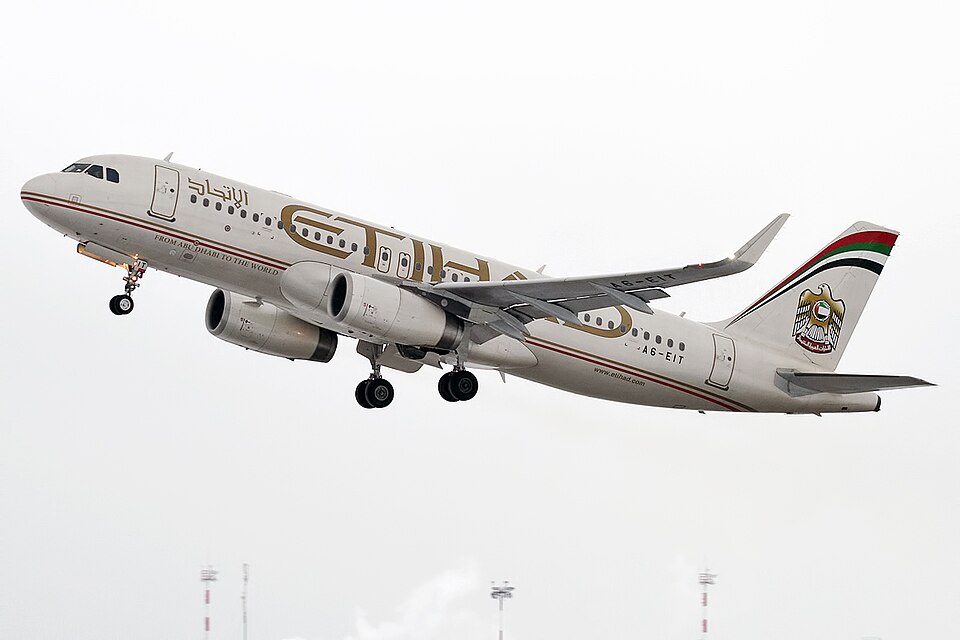
On 20 June 2019, an Etihad Airways Airbus A320-232, registration A6-EIT, operated scheduled passenger flight EY250 from Abu Dhabi International Airport, United Arab Emirates, to Calicut International Airport, India. The aircraft carried 124 persons: 116 passengers, two flight crew, and six cabin crew. During the second ILS approach to runway 28, the aircraft touched down to the right of the runway centerline, and the right main landing gear struck five runway edge lights. The commander steered the aircraft back to the centerline, and the landing roll continued without further incident.
History of the Flight
The flight crew initiated a go-around on the first ILS approach due to heavy rain over the runway, as reported by ATC. Approximately 16 minutes later, they began a second ILS approach to runway 28. On landing, the aircraft deviated right of the centerline, striking runway edge lights.
Aircraft and Crew Information
The aircraft was an Airbus A320-232, manufacturer serial number 5791, powered by two IAE V2527-A5 turbofan engines. The operator was Etihad Airways. The flight crew consisted of a commander and a co-pilot; details of their qualifications are not specified in this report.
Meteorological Conditions
At the time of the incident, moderate intensity rain showers were present over the runway, affecting visibility after the aircraft crossed the threshold.
Cause of the Incident
The Air Accident Investigation Sector (AAIS) determined that the cause of the incident was that after crossing the threshold, the aircraft drifted towards the right side of the runway due to a slight but continuous roll input to the right. The aircraft touched down almost at the runway edge line, and this was followed by an increase in lateral deviation towards the runway edge due to the application of an ineffective flight control recovery technique. The aircraft then struck and damaged five runway edge lights as the right main landing gear entered the runway shoulder.
Contributing Factors
The AAIS identified several contributing factors: the lack of runway centerline lighting; moderate intensity rain shower over the runway that affected visibility after crossing the threshold, resulting in loss of visual references; the pilot flying's expectation that the aircraft would remain aligned with the centerline; unintentional roll inputs to the right; insufficient control inputs to re-align the aircraft before touchdown; delayed recovery action after touchdown; and the co-pilot not intervening despite awareness of the deviation.
Safety Recommendations
The AAIS issued six safety recommendations: five to Etihad Airways and one to Calicut Airport Authority.