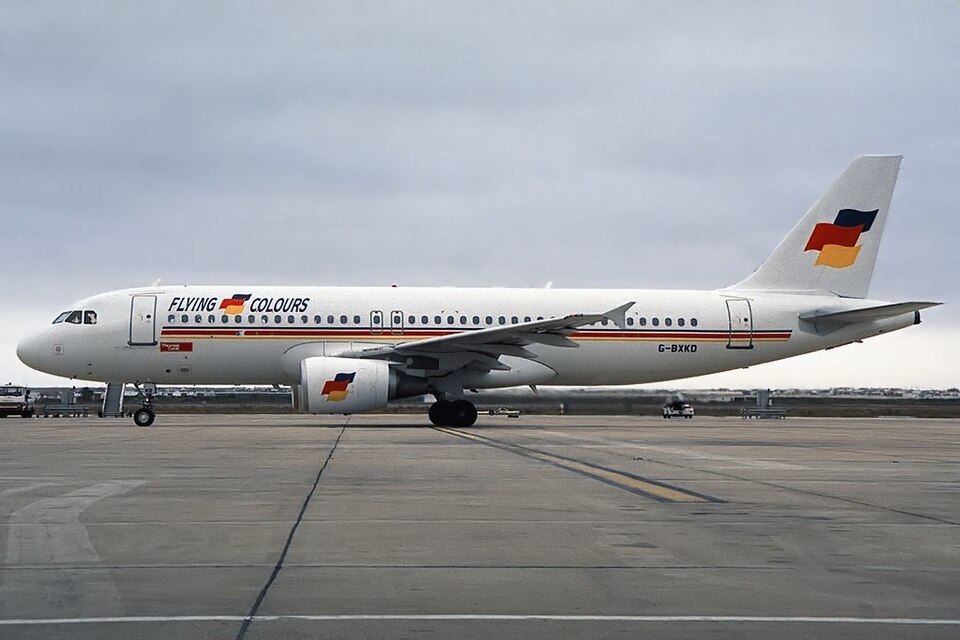
Flight History
The incident occurred on 15 January 2005 at London Gatwick Airport. The aircraft, an Airbus A320-214 registered G-BXKD, was scheduled to depart at 1400 hrs for Sofia, Bulgaria, with 7 crew and 177 passengers. The taxi and takeoff at 1434 hrs were uneventful, but one minute after becoming airborne, Air Traffic Control advised the crew that a wheel had been lost. The aircraft was cleared to climb to 3,000 ft initially, then 6,000 ft, and to hold at the Mayfield VOR. Ten minutes later, ATC confirmed it was the left nose wheel that had detached.
Crew Actions
The crew reviewed options, deciding to burn fuel to reach maximum landing weight (64,500 kg) and then land. They initially planned to divert to Manchester but switched back to Gatwick due to better weather and daylight. Uncertain of the landing gear integrity, they reviewed the Quick Reference Handbook and the Flight Crew Operating Manual, deciding to apply the 'LDG WITH ABNORMAL L/G' procedure. A flypast at 200 ft agl was conducted to allow engineering personnel to inspect the gear, confirming the left nose wheel missing but the right in place. The crew then prepared for landing, planning to shut down both engines before touchdown as per the QRH procedure.
At 1620 hrs, with Gatwick ATIS reporting surface wind 140°/3 kt, CAVOK, they commenced approach. Normal approach continued until just before touchdown when the first officer shut down both engines. A gentle touchdown at 135 kt with 6° pitch attitude followed. The commander applied brakes carefully, noting the anti-skid system was unavailable. The aircraft rolled out, with some difficulty maintaining directional control; the commander braked harder on the right side. One right main gear tyre burst, but the aircraft stayed on the centreline until nearly stopping, when the nose swung left about 30°. The aircraft stopped after using approximately 2,300 m of the 2,766 m runway.
After stopping, the commander consulted the Airport Fire Service and decided evacuation was unnecessary. A jack and spare nose wheel were brought, and passengers disembarked normally.
Damage and Inspection
Damage was limited to the missing left nose wheel, a burst right main tyre, and scuffing on the remaining nose wheel tyre. The axle and securing threads were undamaged, with no overheating signs. Minor scratches on the sleeve were likely from routine maintenance. The aircraft was secured after fitting the spare wheel.
Cause
The nose wheel detached due to partial seizure of the outer wheel bearing, most probably caused by water contamination of the grease in the bearing.