Flight History
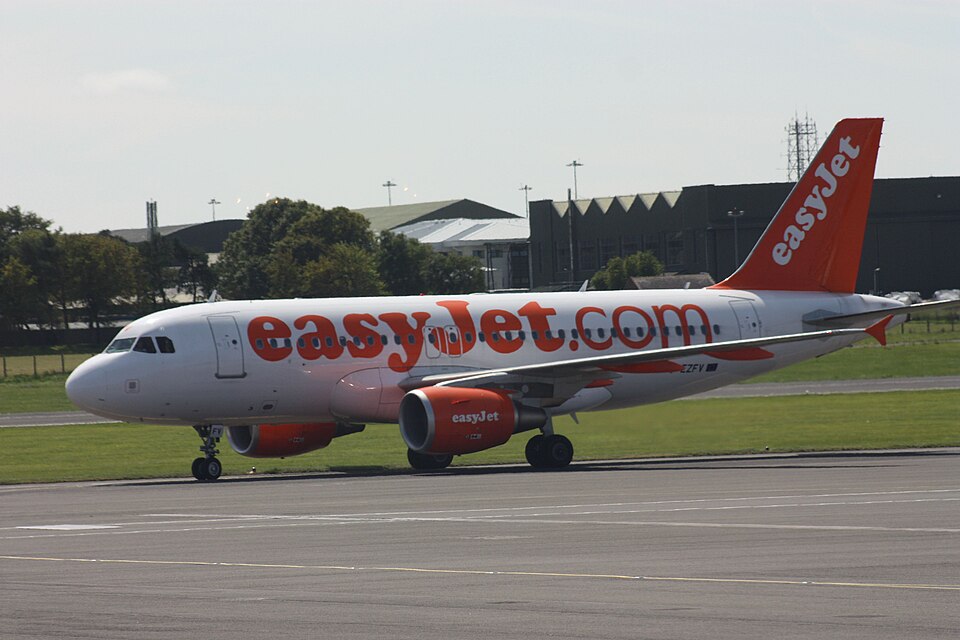
On 14 February 2012, an Airbus A319-111, registration G-EZFV, was conducting a scheduled passenger flight from Faro, Portugal, to London Luton Airport. The pilot flying (PF) was a captain-under-training occupying the left seat, while a training captain served as the commander in the right seat. The aircraft was inbound on the LOREL 4C standard arrival procedure from the south. Air traffic control provided an early radar vector toward the final approach track, and the PF increased the rate of descent to capture the correct profile. The aircraft was cleared to intercept the localiser and descend on the glidepath. The PF configured the aircraft with flap 2 and landing gear down. During arming of the approach mode, the EXPED pushbutton was inadvertently selected, engaging the expedite climb mode. The PF disconnected the autopilot and autothrust to regain the correct profile. After passing through the localiser, ATC issued a revised heading. The PF continued manually, and the aircraft was established on the localiser at 5.5 nm, with full flap selected at 5 nm. Landing clearance was issued at 1355 hrs with a surface wind of 320°/15 kt. The approach was stable at 1,000 ft and 500 ft radio altitude. At 50 ft, the approach remained stable. Below 50 ft, a small nose-up input was followed by two nose-down inputs, and the descent rate increased from about 600 fpm to 850 fpm. Below 30 ft, both pilots sensed the aircraft sinking rapidly and initiated a TOGA 10 go-around. The PF momentarily retarded the thrust levers to idle before selecting TOGA and made a full forward sidestick input, rapidly reversed to full aft. The commander initiated an aft sidestick input reaching full aft within one second, pushed the thrust levers forward, and announced "I HAVE CONTROL." The aircraft made firm contact with the runway on all three landing gear legs simultaneously, then lifted off and began to climb. The PF relinquished control, and the commander completed the go-around, followed by an uneventful landing on the same runway. No injuries were reported.
Crew Information
The captain-under-training had completed nine sectors of command training without notable incident, with positive training reports. He had practiced TOGA 10 manoeuvres in the simulator but never in the aircraft. The commander had previous line training experience on another aircraft type but was relatively inexperienced on the Airbus A320 series. He had also practiced TOGA 10 in the simulator; this was his first experience in the aircraft.
Meteorological Conditions
The ATIS issued at 1320 hrs reported surface wind from 300°M at 12 kt, CAVOK, temperature 7°C, dewpoint 3°C, and pressure 1024 hPa. No significant changes occurred before 1400 hrs. Runway 26 touchdown zone sensor readings at 1400 hrs showed average wind direction from 315°M (varying 297°–342°) and average speed 13 kt (varying 9–17 kt). The wind was gusty and caused turbulence on approach, which the crew expected with northwesterly winds.
Aircraft Systems and Procedures
The operator's baulked landing procedure (TOGA 10) requires calling "TOGA TEN," selecting TOGA, pitching to 10°, and not retracting flaps until a positive rate of climb is established. The manufacturer recommends using autothrust even in turbulence unless thrust variations become excessive. For takeover, the pilot not flying must call "I have control" and press the sidestick priority pushbutton. The sidesticks add inputs if both are used. The flare mode engages at 50 ft radio altitude, memorizing the attitude and reducing pitch to 2° nose-down over 8 seconds from 30 ft.
Engineering Investigation
The aircraft's load reporting system generated a report because the normal acceleration at touchdown was 2.99g, exceeding the 2.6g threshold. All three landing gear legs exceeded their maximum certified loads and were replaced. The operator sent flight data recorder information to the manufacturer, who requested a comprehensive list of structural inspections due to the high vertical acceleration and three-point landing. These inspections covered areas including the fuselage, belly fairing, pylons, and horizontal stabiliser.