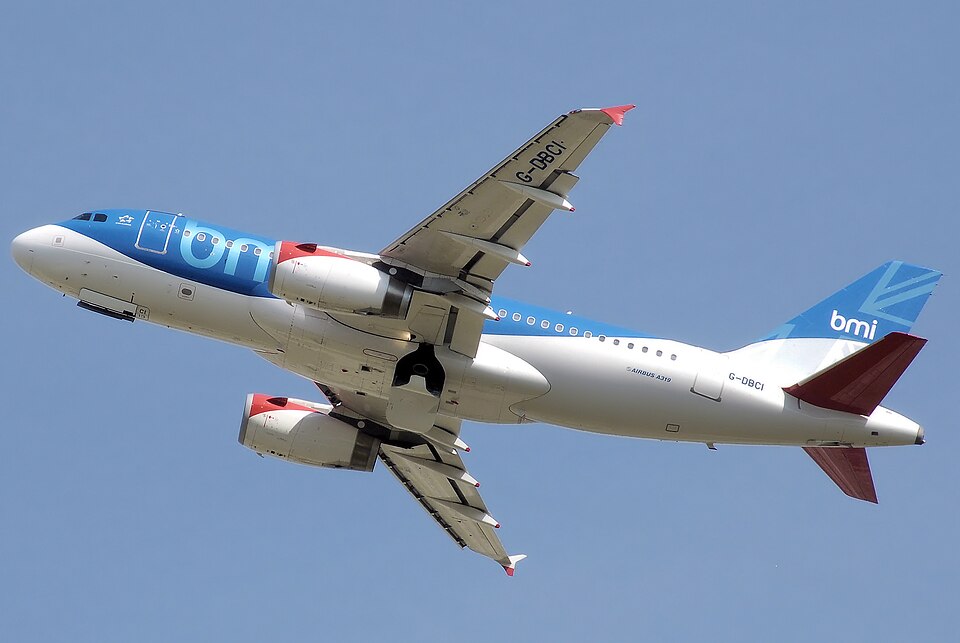
Incident Overview
On 18 April 2007, an Airbus A319-131 (registration G-DBCI) operated by a commercial air transport company departed Amsterdam Schiphol Airport, Netherlands, on a scheduled passenger flight to London Heathrow. The aircraft had two International Aero Engines V2522-A5 turbofan engines and was manufactured in 2006. On board were 5 crew and 112 passengers; no injuries were reported and no damage occurred.
Sequence of Events
The crew reported for duty at 0450 hrs at Manchester Airport for a four-sector rotation. The commander was pilot flying (PF) for the first sector to London Heathrow; the co-pilot was PF for the second sector to Amsterdam and continued as PF for the third sector back to London. Weather at Amsterdam was good: visibility over 10 km, few cumulus clouds between 3,200 ft and 8,000 ft amsl, temperature 12°C. Surface wind was from 350° at 7 kt.
After pushback and a 14-minute taxi, G-DBCI was cleared to line up on Runway 36L behind a departing Airbus A330. The crew was cautioned about wake turbulence. A rolling takeoff commenced at 0944:20 hrs at a weight of 58,124 kg. Calculated speeds were V1 143 kt, VR 143 kt, V2 147 kt.
The commander (pilot not flying, PNF) reported that the takeoff was normal until approximately 130 kt, when the aircraft yawed about 30° to the right. He called "engine failure". The co-pilot felt the right rudder pedal move forward and the aircraft slew right without his input. He applied left rudder and heard "V1 engine failure". The aircraft headed toward the right runway edge; the co-pilot rotated, and the aircraft became airborne at 0944:57 hrs, lifting off 5 kt below V1 and over the side of the runway on a heading 18° right of the centreline. It was then manoeuvred back to the centreline and continued on the assigned Standard Instrument Departure (SID), which involved maintaining the extended centreline to a point 4.4 nm from the AMS VOR before turning left. The departure was unencumbered.
Both pilots realized engine indications were normal and no engine failure had occurred. They considered wake turbulence from the preceding A330, but ATC advised the A330 was 8 nm ahead. During the takeoff roll, the commander had placed his feet lightly on the rudder pedals, more lightly later, and his left hand near his sidestick; he noted the takeoff was normal until the yaw.
Post-Event Actions
G-DBCI continued to London. The crew discussed whether the co-pilot might have made an inadvertent rudder input, but discounted this and concluded the cause was atmospheric conditions. Near the end of the flight, ATC relayed that tyre debris had been found on the runway at Amsterdam and concern existed that the right main landing gear was locked. The crew had no such indications, but concerned about possible tyre damage, they declared a MAYDAY and carried out an emergency landing with autobrake off, idle reverse, and gentle left braking. The landing was uneventful; a slight rumbling noise was heard. Fire services attended and observed nothing unusual. Passengers disembarked normally.
Later, Amsterdam ATC told the commander that the following departure crew reported skid marks on the runway. A runway inspection confirmed skid marks, and it was considered that G-DBCI's right main landing gear may have become blocked. The commander had interpreted this during flight as the landing gear being locked.
Recorded Data and Investigation
Recorded data showed the rapid yaw during the ground roll was caused by a rudder deflection. Evidence indicated no aircraft malfunction nor significant wake vortex effects. The rudder deflection was in response to rudder pedal movements. The reasons for the right rudder pedal inputs could not be positively determined. The speed at which the turn began was such that aborting the takeoff would have been appropriate, albeit at a late stage. Under-arousal in the benign operating conditions may have affected both crew members' performance.
As a result of miscommunication, the aircraft remained in service for a period after the incident without comprehensive checks to determine if a malfunction might have been responsible for the rapid yaw.
Aircraft Systems
The A319 rudder is controlled by three hydraulic Powered Flight Control Units (PFCUs) in the fin, signalled mechanically. Rudder pedals are mechanically linked; each drives a transducer providing pedal position to Elevator and Aileron Computers and Flight Augmentation Computers. Maximum rudder deflection is controlled by a Travel Limiter Unit as a function of airspeed. The rudder trim system alters the datum via an electrically motorised actuator. A yaw damping system also acts on the PFCU input linkage.
Wind Conditions
Anemometers at both ends of Runway 18R/36L recorded wind variations. At 0945:00 hrs, the Runway 36L anemometer indicated 325°/5 kt, and the Runway 18R anemometer indicated 320°/8.5 kt.
Safety Recommendations
Two Safety Recommendations were made by the AAIB.