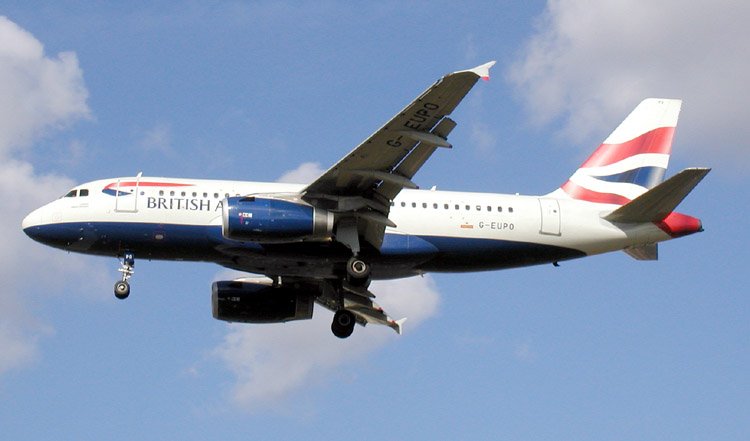
History of the Flight
The incident occurred on a flight from Geneva to London Heathrow. Before departure, two Minimum Equipment List (MEL) items were outstanding: the forward cargo hold was unusable and the APU was unserviceable. Prior to engine start at Geneva, a ‘VENT AVNCS SYS FAULT’ caution message appeared on the Electronic Centralized Aircraft Monitoring (ECAM) screen, which was cleared by resetting circuit breakers per the Quick Reference Handbook (QRH). During the initial climb, a ‘CAB PR SYS 1 FAULT’ caution appeared. The crew discussed the implications and continued.
The co-pilot was flying with autopilot and autothrust engaged. During descent, the aircraft was vectored toward the final approach for Runway 27L. Engine anti-ice and wing anti-ice were selected on due to icing conditions. Several ECAM cautions related to anti-ice faults appeared, including ‘ANTI ICE CAPT R STAT’ and ‘ANTI ICE CAPT TAT’. The crew set the Air Data selector to CAPT 3 and selected probe heat on. The standby ASI was cross-checked and agreed with the PFD.
Loss of Airspeed
Seven minutes later, at 7,000 ft, an ‘ANTI ICE STBY R STAT’ caution appeared. The crew decided to review the QRH unreliable speed procedure. On final approach, as the co-pilot began the review, the commander’s indicated airspeed dropped to VLS. The commander selected speed on the FCU to increase speed, but airspeed decayed rapidly to 50-60 KIAS, and the standby ASI fell to 0 KIAS. The commander called “UNRELIABLE AIRSPEED” and initiated a go-around at 800 ft aal in IMC, with flaps FULL. The co-pilot disconnected autopilot and autothrust, selected TOGA thrust, and pitched to 15° nose-up. Flaps remained at FULL per QRH memory items. Landing gear was not retracted until 4,000 ft. The commander declared a MAYDAY and climbed straight ahead.
The aircraft climbed to 4,000 ft and was leveled using pitch and power settings from the QRH. It was then vectored to a northerly heading, climbing to 5,000 ft, out of icing conditions. The crew diagnosed the failure by cross-checking airspeed and altitude with GPS data, determining that ADR 2 was the only reliable source. They turned off ADR 1 and 3. The aircraft entered Alternate Law. The crew decided to divert to Luton Airport, where weather was better. Landing was made on Runway 26 in Direct Law with flaps set to configuration 3. After stopping on the runway, the ECAM status page displayed ‘NW STRG’ because ADIRU 1 and 3 were off. The commander requested a tow due to possible difficulty with icy surfaces.
Meteorological Information
At London Heathrow, weather was reported as surface wind 290° at 11 kt, scattered cloud at 600 ft, broken cloud at 2,400 ft, heavy snow showers, visibility 900 m, temperature -1°C, dew point -4°C, QNH 997 HPa. Heavy cloud cover and sub-zero temperatures were reported along the route. Crew observed accumulations of rime and clear ice on the external visual ice indicator.
Post-Flight Report
The Post-Flight Report (PFR) listed ECAM warnings and failure messages, including ‘VENT AVNCS SYS FAULT’, ‘CAB PR SYS 1 FAULT’, ‘ANTI ICE CAPT TAT’, ‘ANTI ICE CAPT R STAT’, ‘ANTI ICE STBY R STAT’, ‘NAV IAS DISCREPANCY’, ‘AUTO FLT A/THR OFF’, ‘F/CTL ALTN LAW’, ‘NAV ADR 1 FAULT’, ‘NAV ADR 1 – 3 FAULT’, and others.
System Information
The Electronic Instrument System includes PFD, ND, and ECAM functions. ECAM uses data from SDAC, FWC, and DMC. The Centralised Fault Display System (CFDS) provides maintenance information and BITE tests. The Air Data and Inertial Reference System (ADIRS) supplies air data and inertial parameters via three ADIRUs. Probe heat computers (PHCs) independently heat pitot, static, AOA, and TAT probes.