Incident Summary
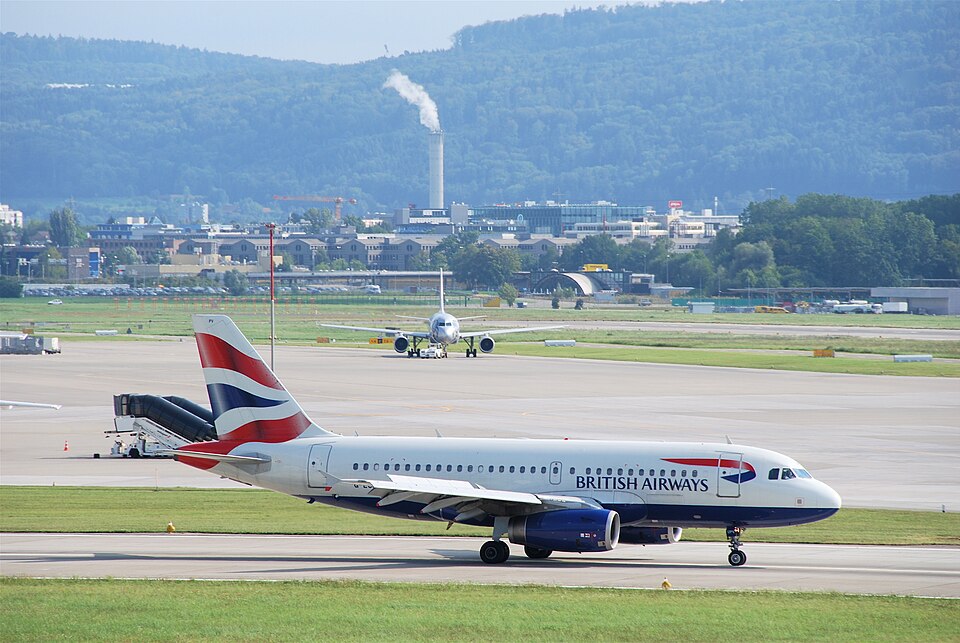
On 9 August 2001, an Airbus A319-131 (registration G-EUPV) operating a public transport flight experienced an airspeed discrepancy during approach to London Heathrow Airport. The aircraft, with 7 crew and 82 passengers on board, landed without injury or damage.
Background
During the two previous sectors, the aircraft exhibited discrepancies between the airspeed indications on the commander's and first officer's Primary Flight Displays. Each time, the crew compared them with the standby indicator and determined the commander's indication was incorrect. After the first occurrence, engineering tests of Air Data Reference (ADR) 1 and Inertial Reference (IR) 1 revealed no faults. On the subsequent sector from Heathrow to Belfast International, the discrepancy reappeared, with the commander's indication 20 kt lower than the first officer's. The aircraft landed uneventfully at Belfast.
Maintenance Actions at Belfast
Belfast lacked immediate repair capability. Based on the symptoms, Air Data/Inertial Reference Unit (ADIRU) 1 was suspected faulty. The Minimum Equipment List (MEL) did not allow dispatch with an inoperative ADIRU 1 but permitted an inoperative ADIRU 3. To return the aircraft to its base, the crew transposed ADIRU 1 and ADIRU 3, then pulled and collared the circuit breaker for ADIRU 3, rendering it inoperative. Ground tests were satisfactory, and the aircraft departed for Heathrow.
Flight Events During Approach
The sector was uneventful until the intermediate approach for Runway 27L at Heathrow. At 6,000 feet, speed 210 knots in cloud, the autopilot and autothrust disengaged uncommandedly. The commander took manual control. Multiple warnings and cautions appeared on the Electronic Centralised Aircraft Monitoring (ECAM) display, including ADR Disagree, ADR Fault, Auto Flight Rudder Travel Limit, and Flight Augmentation Computer (FAC) 2. The commander noted the airspeed discrepancy persisted, with his indication 15 kt different from the first officer's and the standby indicator.
The commander issued a PAN call and the crew performed ECAM actions and the Quick Reference Handbook procedure for 'Unreliable Airspeed'. The approach continued with the aircraft in Alternate Law flight control mode, which reverts to Direct Law after landing gear extension. The commander landed uneventfully using configuration 3 with an increased approach speed per manufacturer procedures. Weather was wind 320° at 10 kt, visibility 4,000 metres in rain, broken cloud base 1,800 feet, temperature +14°C.
Post-Flight Engineering Investigation
After landing, the aircraft was taken out of service. Troubleshooting per the manufacturer's manual found no faults, indicating the issue was not an ADIRU defect. The commander's pitot probe, Air Data Module (ADM), Total Air Temperature (TAT) probe, and the hose from the ADM to the pitot probe were removed and examined. The ADM and TAT probe were serviceable. The pitot probe had both water drain holes blocked, with particles in the tube. Dissection revealed burrs on the internal side of both drain holes, and on one hole, the drilled central part remained attached by a thin sliver of material. The inner tube showed heat damage, a bulge, and carbon-like deposits.
Replacement parts were fitted, and the aircraft returned to service without recurrence. The operator informed the aircraft and component manufacturers, and the AAIB notified the CAA and manufacturer's flight safety department to ensure quality assurance. The manufacturer was also alerted that the troubleshooting manual procedures were inadequate to identify this type of defect.
Analysis
The aircraft downgraded to Alternate Law (then Direct Law after gear extension) because a discrepancy was detected between the airspeed calculations from No 1 and No 2 air data systems. The voting function that would normally identify the faulty system was rendered inoperative by the inhibition of No 3 ADIRU per MEL dispatch procedures. The ECAM warnings were consistent with the downgrade and airspeed discrepancy. It is likely that the airspeed discrepancies occurred intermittently due to unwanted material in the No 1 pitot water drain holes, causing incorrect drainage and erroneous air pressure sensing when the aircraft flew through cloud or rain.