Introduction
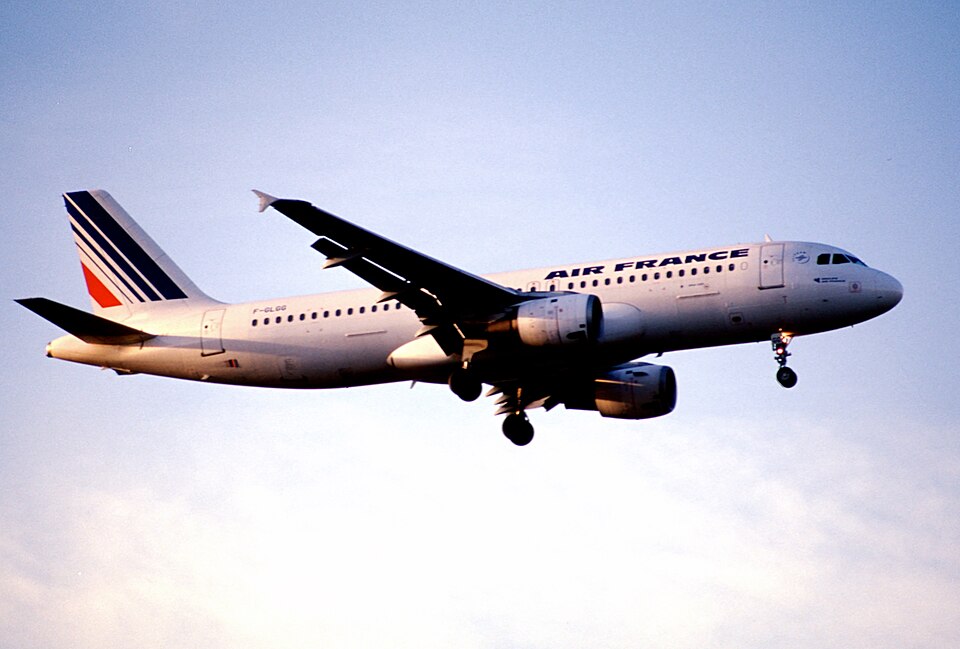
On 4 August 2001, an Airbus A320-111, registration F-GLGG, sustained damage to its nose cone during a pushback operation at London Heathrow Airport. The aircraft, powered by two CFM56-5A1 turbofan engines, was operating a public transport passenger flight with 6 crew and 157 passengers on board. No injuries were reported.
Incident Details
The aircraft was being pushed back from Stand F11 using a tug of an older design, characterized by a relatively high roof and a sliding cabin door oriented across the longitudinal axis of the tug. The tug was operated with its cabin door open, which increased the effective width of the cabin. During the pushback, an acute angle developed between the tug and the aircraft's longitudinal axis, positioning the top corner of the open tug door directly beneath the aircraft's nose. As the aircraft traversed a concrete joint in the apron, the nose dipped, and the top corner of the tug's cabin door contacted the aircraft's nose, causing a small dent and a 10 cm scoring mark on the nose-cone skin.
Contributing Factors
The tow bar used for this pushback was approximately half a metre shorter than other tow bars available in the handling agent's inventory. The handling agent had conducted a risk assessment for the combination of tug, tow bar, and aircraft, which concluded that clearance between the open tug door and the aircraft would be maintained throughout all pushback stages. However, the assessment did not consider the possibility that a bump in the apron surface could compromise this clearance.
Response
The tug involved in this incident is being replaced with a more modern version featuring a lower cabin roof. In the interim, the handling agent has implemented measures to prevent the same combination of tug and tow bar from being used for the A320 and other susceptible aircraft types.