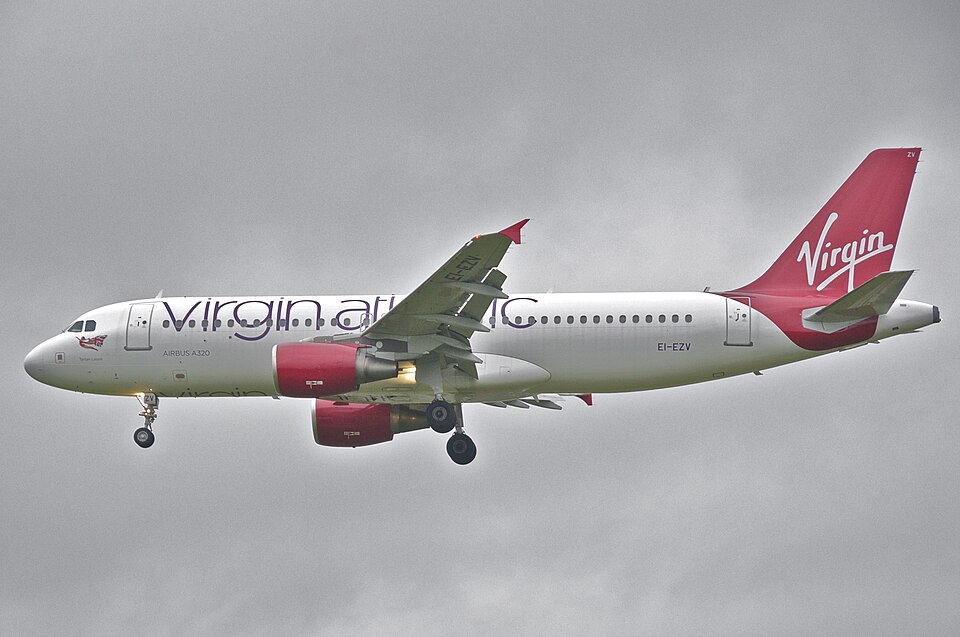
Synopsis
A serious incident occurred on 16 January 2014 when an Airbus A320-214, registration EI-EZV, landed heavily at London Heathrow Airport. The aircraft was conducting a commercial passenger flight with 6 crew and 41 passengers on board. Four crew members suffered minor injuries; no passengers were injured. The aircraft sustained no reported damage.
History of the Flight
The flight was performing an ILS approach to Runway 27L at London Heathrow. The co-pilot was the pilot flying, and the commander was the pilot monitoring. Weather conditions included surface wind from 180° at 12 kt, visibility 9,000 m, few clouds at 2,200 ft, scattered clouds at 2,600 ft, and a temperature of 9°C. The commander noted light turbulence during the approach.
The crew sighted the runway at approximately 5 nm from touchdown. They disconnected the autopilot and autothrust, and configured the aircraft with flaps 3 for landing. At the normal flare height, thrust was reduced, but no flare was apparent. The commander called “flare,” yet the rate of descent did not decrease, and the aircraft touched down heavily.
Commander's Comments
The airline had recently introduced the practice of landing with flap 3 on long runways, instead of the full flap configuration. The pilots discussed that the aircraft would be more responsive with flap 3. The commander believed that light turbulence combined with the aircraft's increased responsiveness might have led to over-control in pitch.
Flight Data Analysis
Flight data recorder information showed that the computed airspeed at touchdown was approximately 130 kt. The thrust levers were retarded to idle over about 1.5 seconds. The average rate of descent from 500 ft radio altitude to touchdown was 706 ft/min, close to the 690 ft/min required to maintain the ILS glideslope at 130 kt groundspeed.
In the final 28 seconds before touchdown, sidestick pitch input amplitude gradually increased. Although pitch attitude varied, the average rate of descent remained constant. In the last two seconds, pitch attitude changed from approximately 1.5° to 6.5° nose-up. This late increase did not reduce the rate of descent.
Analysis and Findings
The investigation determined that during the final 28 seconds, the high frequency and reversal of pitch inputs prevented the pitch attitude from responding consistently. The inputs had little effect on the flight path or rate of descent. The pitch attitude varied significantly in the last six seconds, including a 5° nose-up change in the final two seconds, but this came too late to arrest the descent rate, resulting in the hard landing. A subsequent correction corrected the scale labeling in the published figure, but the analysis remained unchanged.