Synopsis
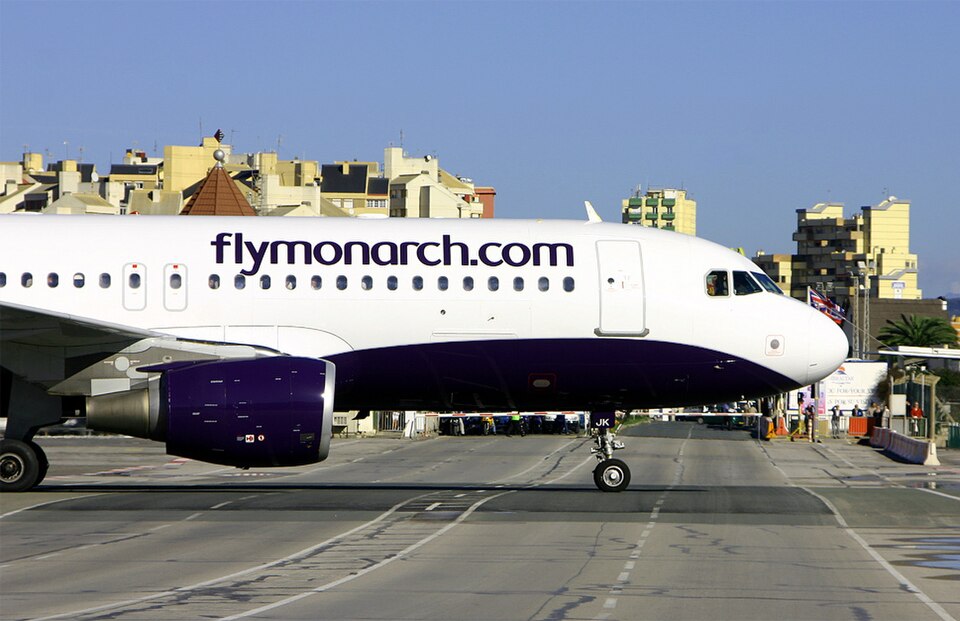
On 30 May 2012 at 0624 UTC, Airbus A320-214 registration G-MRJK was being pulled forward onto a taxiway at London Luton Airport when its right horizontal stabilizer made contact with the APU tail cone of an unoccupied G-OZBM parked on Stand 46. Both aircraft were damaged; G-MRJK sustained significant damage to its right horizontal stabilizer, while G-OZBM received a scrape to its tail cone. No injuries were reported among the 6 crew and 180 passengers on board G-MRJK.
History of the Flight
The pushback from Stand 43 began after the initial tug failed to start. A replacement tug and towbar, approximately 2.5 m longer than the original equipment, were used. The pushback was 'S' shaped and non-standard. The headset operative stood to the aircraft's left to monitor proximity to a blast fence and maintain visual contact with the commander. The tug driver judged that the main landing gear had not crossed the rear of a stand road and that the nosewheel had not crossed the taxiway centreline. As G-MRJK was pulled forward to line up with the taxiway centreline, the collision occurred. A passing dispatcher witnessed the event and raised the alarm after the aircraft stopped. Neither pilot nor the tug driver felt the impact.
Pushback Procedures
The pushback was non-standard and differed from the model provided by the airport operator, which had not been shared with the handling agent. The airport operator stated that the choice of pushback was a matter of preference for the airline, handling agent, or tug driver. The handling agent had not performed a risk assessment for non-standard pushbacks from individual stands. An airport instruction required a person at the back-of-stand roadway to stop traffic during pushback, but there was no local instruction for additional personnel on the opposite road. The handling agent's training did not explicitly state that a tug driver should stop and check if unsure of clearance.
Discussion
The tug driver and headset operative reported that glare from the low sun reflected off the taxiway hindered their ability to see the rear of the aircraft. Neither had sunglasses. The tug driver was tired, nearing the end of a night shift starting at 2000 hrs the previous evening without a break, and had symptoms of a cold. He did not believe his judgment was impaired but noted that the longer tug and towbar combination may have affected their ability to position the aircraft. The tug driver was aware of the procedure that the nosewheel should not cross the taxiway centreline and believed it had not done so.
Safety Actions
Following the incident, the handling agent stopped using the long tug and towbar for pushbacks on the East Apron. The agent will conduct risk assessments for all non-standard pushbacks at every airport it operates. The driver training package will be amended to explicitly state that if a tug driver is unsure of clearance, he should stop the pushback and check. The airport operator shared its pushback models with the handling agent, which will be used in training to increase driver awareness.