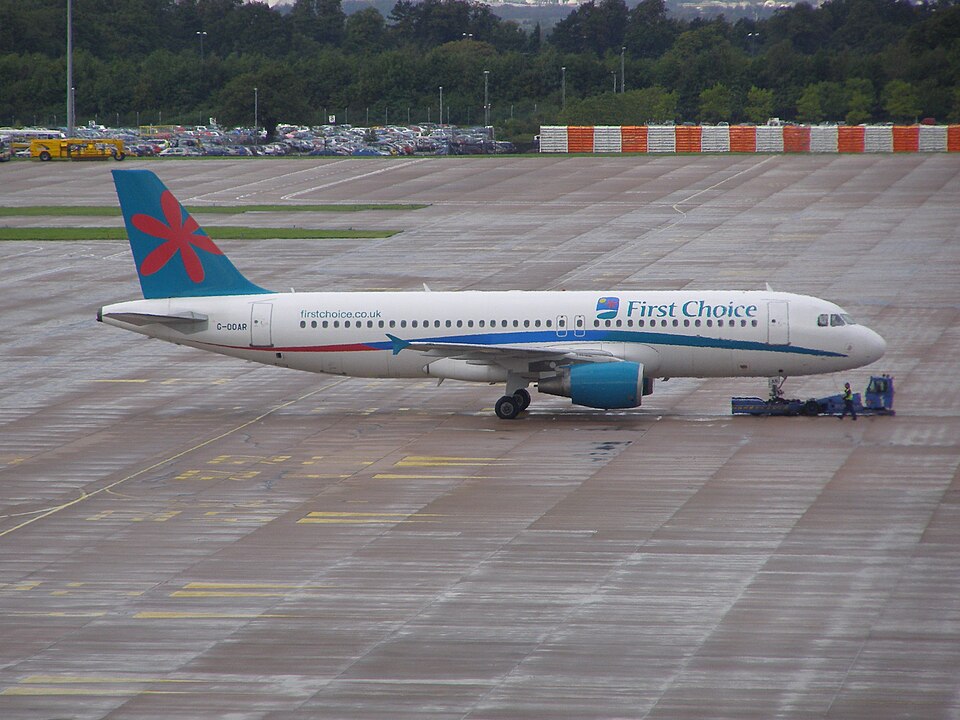
Incident Overview
On 27 October 2002 at 1200 hrs local time, an Airbus A320-214, registration G-OOAR, was preparing to depart from Kefallinia, Greece, on a public transport flight to Zakinthos. The aircraft had arrived empty from Gatwick and 69 passengers boarded. The commander was the handling pilot. After lining up on Runway 32 with a surface wind from 250° at 4 kt, the commander advanced the thrust levers to 50% N1 while holding the brakes, then released the brakes and advanced to takeoff power. As the aircraft began its takeoff roll, the nose pitched up rapidly. The commander immediately reduced thrust to idle, applied forward side-stick and gentle braking, and the aircraft promptly pitched back down. The aircraft had very little forward speed and was quickly brought to a halt on the runway. After liaising with cabin crew and reassuring passengers, the commander taxied slowly back to the stand.
Findings
There were no injuries; however, one cabin crew member heard a scraping noise after the pitch-up. Inspection revealed damage to the rear galley drain mast. Additionally, the first officer noticed the nose oleo was extended, suggesting a possible center of gravity (CG) issue. Investigation of passenger seating showed that all passengers were seated aft of row 13, which was significantly different from the distribution on the Load Form and Trim Sheet. These forms indicated passengers were spread evenly. A post-incident Trim Sheet based on actual loading produced a CG significantly beyond the aft limit of the envelope. A calculation using the handling agent's original non-standard seating plan, with baggage in Hold 1 or split between Holds 3 and 4, confirmed the aircraft would have been within limits in either case.
Loading Procedures
The operator's loading procedures state that captains have overall responsibility to ensure procedures are complied with. A Load Form and Trim Sheet are required for each flight. Standard loading distributes passengers evenly; non-standard loading involves uneven distribution. The handling agent allocated seats in rows 1-5 and 24-30, leaving rows 6-23 for passengers joining in Zakinthos, but completed the Load Form as standard loading. The commander, not seeing the seating plan, instructed baggage to be moved from Hold 1 to Holds 3 and 4 to avoid a forward CG, based on his recollection of a previous incident. The flight supervisor moved passengers to seats aft of row 13 on the commander's instruction, believing an even spread was desired.
Conclusion
The actual passenger loading differed from the documented loading, resulting in a CG beyond the aft limit. The incident involved no injuries, but damage to the drain mast occurred.