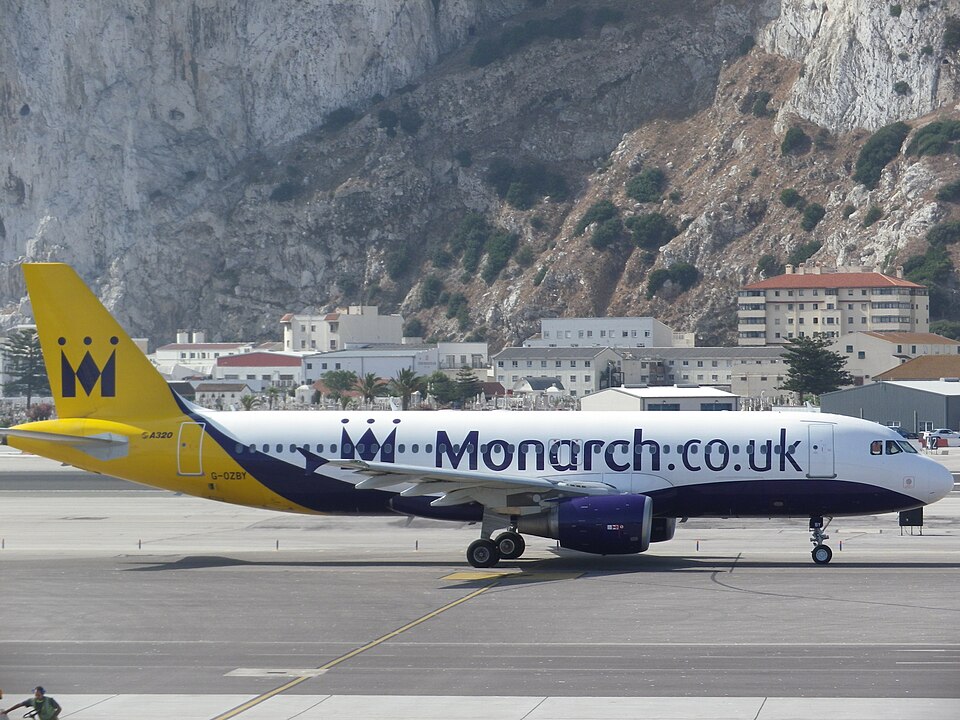
Aircraft and Crew
The Airbus A320-214, registration G-OZBY, was operating a flight crew base training detail at Prestwick Airport. The aircraft was equipped with two CFM56-5B4/P turbofan engines and had been manufactured in 2000 (serial no. 1320). The commander, aged 58, held an Airline Transport Pilot's Licence and had accumulated 15,085 flying hours (2,791 on type). Fourteen flight crew were on board: two training captains, 11 trainees, and a safety pilot. No passengers were carried, and no injuries were reported.
Sequence of Events
The flight originated from Birmingham Airport, with training circuits conducted on Runway 13 at Prestwick. During the fourth touch-and-go landing of the second session, the trainee co-pilot performed the landing with flap full. The commander, acting as pilot monitoring, disarmed the spoilers, selected flap 2, and set trim. He advanced the thrust levers to MCT and called "rotate." Shortly after, a takeoff configuration warning sounded, and an ECAM message showed "SPD BRK NOT RETRACTED."
The commander rejected the takeoff by closing the thrust levers and applying nose-down sidestick input. Dual inputs occurred briefly before the aircraft stopped. The commander applied heavy braking, then reduced brake pressure. The aircraft came to a halt on the runway, and the commander taxied off. The crew noted a firm touchdown on the nose landing gear but did not consider it excessive.
After the rejected takeoff (RTO), ATC offered assistance, which the crew declined. They checked brake temperatures and selected brake fans. The training captains discussed the firm nosewheel contact; none deemed it a heavy landing requiring inspection. They decided to continue training without arming the spoilers, suspecting a spoiler system fault.
On the subsequent takeoff, with a different co-pilot as PF, difficulty was encountered entering a flight plan into the MCDU. The commander decided visual circuits would not require a flight plan and briefed that the landing gear should remain down for brake cooling. After liftoff, an ECAM message indicated "L/G SHOCK ABSORBER FAULT." As the commander moved the thrust levers from MCT to CL at 800 ft, thrust reduced to idle (a result of autothrust engaging with a selected speed target). The aircraft began to descend. The commander took control, applied manual thrust, and climbed to circuit altitude. The crew performed ECAM actions, which limited speed to 280 kt and required the landing gear to remain extended.
Subsequent Actions
The trainee co-pilot was replaced by the other training captain. The two training captains assessed the situation: with no landing gear retraction capability and autopilot/autothrust unavailable, they discontinued training. A PAN call was made, and the aircraft was cleared to climb to FL190 en route to Birmingham. En route, the crew consulted the operator's engineering department and decided to divert to Manchester. An uneventful landing was made at Manchester Airport following a VOR/DME approach.
Meteorological and Airport Information
METAR at Prestwick (1450 UTC): wind 120° at 6 kt, visibility 9,000 m, temperature 10°C, dewpoint -2°C, pressure 1003 hPa. Runway 13 has a displaced threshold and a landing distance available of 2,743 m. Manchester METAR (1550 UTC): wind 150° at 7 kt, visibility 4,000 m in haze, few clouds at 4,600 ft, temperature 10°C, dewpoint 1°C, pressure 1002 hPa.
Technical Details
The takeoff configuration warning is triggered when thrust levers are at or above FLX/MCT and a condition such as the speedbrake lever not being in the detent exists. In this case, the ECAM displayed "SPD BRK NOT RETRACTED." The landing gear shock absorber fault message occurs when the shock absorber does not extend after takeoff. The ECAM Status page advises the gear must remain down and speed limited to 280 kt, and the INOP SYSTEMS field lists "L/G RETRACT." The manufacturer noted that a failure or mis-rigging of NLG proximity sensors, or damage preventing full extension, could cause this discrete to be set.