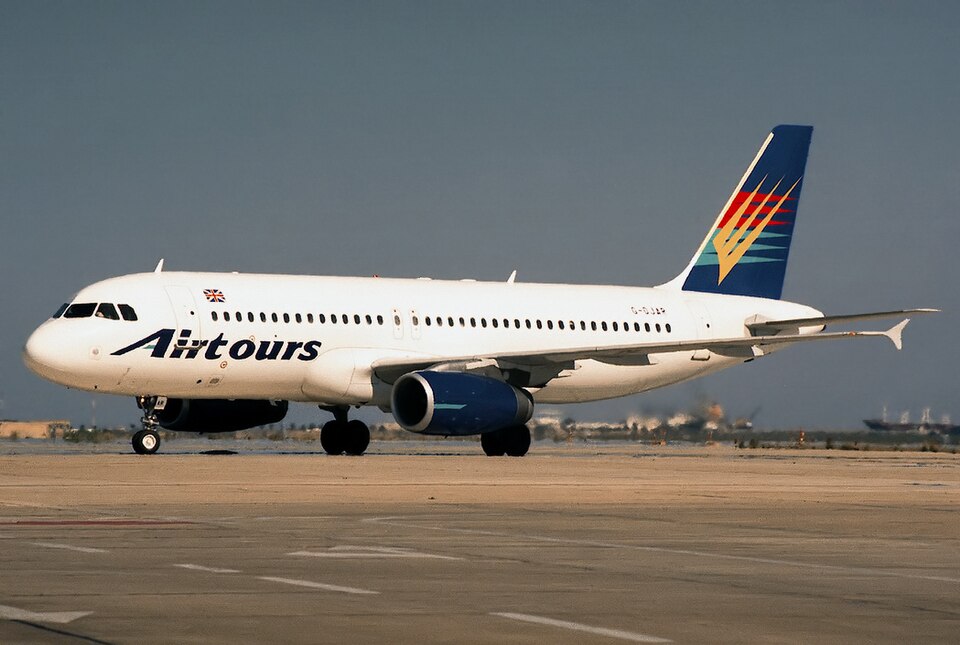
History of the Flight
On 10 June 2000, an Airbus A320-231, registration G-DJAR, operated a public transport flight from Gatwick to Palma, Majorca. The aircraft had experienced a loss of pressurisation earlier that day during a positioning flight from Manchester to Gatwick, for which rectification action was taken. Before departure to Palma, the commander briefed the cabin crew about the previous air conditioning issues, and the crew adjusted their service procedures to minimise galley equipment out of stowage until pressurisation was confirmed satisfactory.
After an uneventful take-off, the commander elected a reduced rate of climb of about 1,000 feet per minute. Passing Flight Level 200, he selected 'Open Climb'. At FL 300, he heard a resonance similar to that heard before the previous loss of cabin pressure. A decompression occurred, and cabin altitude climbed rapidly. The flight crew donned emergency oxygen masks, deployed passenger oxygen masks, and initiated an emergency descent. A PAN call was made, and the aircraft levelled at FL 100, returning to Gatwick. The maximum cabin altitude reached was 14,000 feet. A normal landing was conducted with emergency services in attendance.
Examination of the Aircraft
Post-flight examination revealed that the No.2 pack air conditioning bay blow-out panel was displaced, indicating an overpressure event. The flexible bellows section in the outlet ducting of the pack was disconnected at its aft end, damaged and frayed from rapid fluttering and axial compression. The non-return valve (NRV) at the entry to the pressure hull was broken, with approximately half of the flap missing. Fracture surfaces indicated overload failure. Fragments of the flap were found in the under-wing fairing, consistent with expulsion through the open duct and blow-out panel.
It was concluded that the bellows detached at its aft end and oscillated violently due to airflow from the pack. The NRV had likely broken during the earlier pressurisation loss on the positioning flight, caused by flow and pressure fluctuations from the detached bellows.
Maintenance History
Relevant maintenance entries date back to July 1998, when a repair was recorded to the No.1 pack flexible duct, followed by its replacement. In September 1998, the No.2 pack outflow duct was reported split; a new duct was installed three days later after a temporary repair. There were subsequent log entries involving the No.2 pack but none directly mentioning the flexible duct. On 6 June 2000, an overheating problem on the No.2 pack was reported but not confirmed by BITE check or ground run.