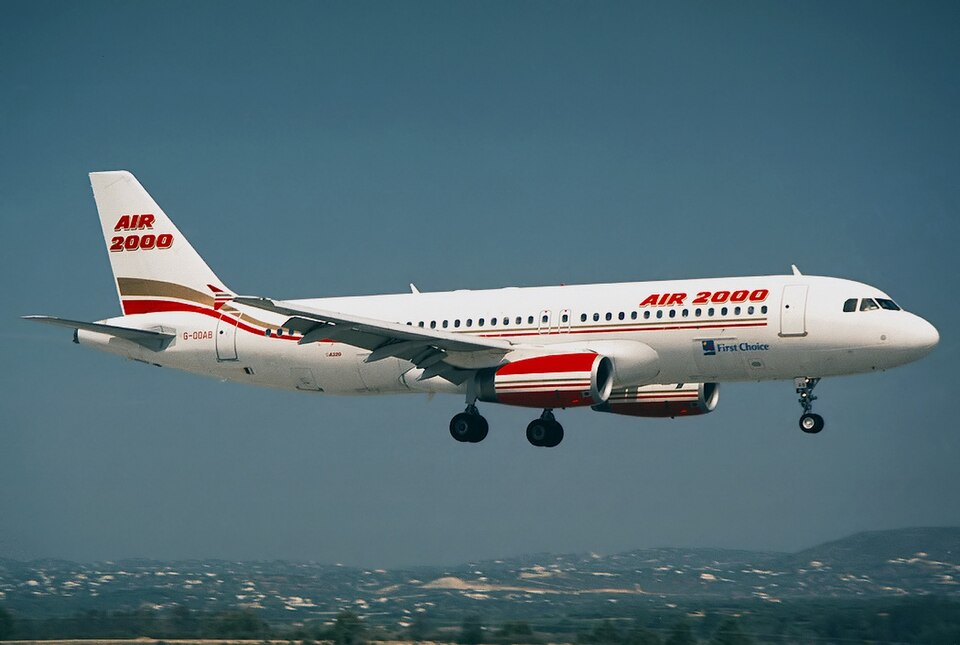
Aircraft and Crew
The aircraft involved was an Airbus A320-231, registration G-OOAB, manufactured in 1992 and powered by two V2500-A1 turbofan engines. The commander, aged 33, held an Air Transport Pilot's Licence and had accumulated 6,300 flying hours, with 4,500 hours on type. The flight was a public transport operation with 11 crew and 178 passengers on board; no injuries were reported and no damage occurred.
Flight History
The aircraft departed Gatwick on the afternoon of 18 April 1998 for a return flight to Tel Aviv. The outbound leg was uneventful. After turnaround, the aircraft was loaded to 75.4 tonnes, and takeoff reference speeds for configuration 1+F were calculated as V1 155 kt, VR 163 kt, and V2 163 kt. The auxiliary power unit and both engine compressor air bleeds were selected off for takeoff. After holding for approximately 10 minutes, the aircraft was cleared for departure. The commander taxied onto the runway and initiated a standing-start takeoff in calm wind conditions.
At about 150 kt during the takeoff roll, the commander's Primary Flying Display and Navigation Display suddenly went blank. Shortly after, both the upper and lower Electronic Centralised Aircraft Monitor displays also blanked. The first officer's displays remained normal. Both pilots individually decided to continue the takeoff and did not call for a stop. However, within three seconds, the Master Warning lights illuminated and a continuous repetitive chime activated. At that point, both pilots called for a stop, and the commander selected full reverse thrust on both engines, which activated maximum autobrake and deployed ground spoilers. The commander observed the autobrake DECEL light confirming maximum braking. During deceleration, the first officer briefly noticed a 'T.O. CONFIG' warning on the ECAM.
In the passenger cabin, the main lights had been dimmed for takeoff. The senior flight attendant observed that just before braking began, the cabin lights extinguished and the emergency lights illuminated.
The aircraft came to a stop on the runway centerline, approximately 600 metres from the runway end. As it stopped, both pilots noticed a pall of smoke or dust overtaking the aircraft. The commander applied the parking brake and then noted that the CRT displays had recovered to normal operation and the chime had ceased. No red warnings were present on the ECAM, but numerous amber cautions appeared, including Slat and Flap Computer No 1 and System Data Acquisition Concentrator No 1. The wheel brakes were very hot, around 900°C, prompting the commander to request the Airport Fire Service via ATC. He then summoned the senior flight attendant and briefed her on the situation, asking her to standby for a possible evacuation.
The fire service arrived quickly, but communication was hampered because there was no discrete frequency for direct contact with the fire chief; messages were relayed through the tower controller, who translated between English and Hebrew. ATC, expecting a VIP flight, wanted the aircraft to clear the runway promptly. The commander, concerned about hot brakes seizing, had the landing gear inspected by the fire service and then taxied slowly off the runway. After stopping on a taxiway, the main landing gear wheel thermal safety plugs melted, causing the tyres to deflate. The APU was started, and a strong smell of burning rubber permeated the cabin and flight deck. The commander requested a further inspection and made an announcement to reassure passengers about the emergency vehicles. A miscommunication occurred when the tower controller erroneously reported a fire on No 1 engine; the commander clarified that both engines were shut down and no fire existed. The fire service began discharging foam but ceased upon the commander's request. Wheel chocks were provided, cabin crew were stood down, and passengers disembarked via steps and were transported to the terminal by coaches.
Electrical and Display Systems
The Airbus A320 cockpit features six cathode ray tube displays: two per pilot for Primary Flying Display and Navigation Display, and two centrally for ECAM. Three Display Management Computers drive these displays: DMC 1 powers the left-side displays and upper ECAM, DMC 2 powers the right-side displays and lower ECAM, and DMC 3 is a standby unit. Two Flight Warning Computers acquire data for alerts directly from sensors and from System Data Acquisition Concentrators. The electrical system includes engine-driven integrated drive generators supplying AC buses, with normal power distribution feeding commander's instruments from No 1 system and first officer's from No 2. The essential AC and DC buses are normally powered by No 1 system.
Second Related Occurrence
On 4 May 1998, while descending towards Belfast, the same aircraft experienced intermittent blanking of the commander's PFD, ND, and both ECAM screens. The commander noted a 'GEN 1' fault on ECAM and selected No 1 generator off, after which all displays recovered. The flight continued using power from No 2 generator.
Flight Data Recorder Analysis
The Digital Flight Data Recorder provided data for the Tel Aviv incident. No cockpit voice recording was available as the relevant period had been overwritten. Analysis showed that at T+33 seconds during the takeoff roll, at 143 kt, data synchronisation was lost for about 1.5 seconds, likely due to a temporary loss of electrical power to the DFDR consistent with a malfunction of AC bus 1. After re-synchronisation, at T+36 seconds and 150 kt, thrust levers were retarded and reverse selected. The DFDR recorded that maximum autobrake had been selected before the takeoff roll and the deceleration confirmed its use. At T+37.5 seconds, a Master Warning was recorded for one second, though its source could not be determined from other parameters. The DFDR recorded no change in the status of the electrical supply.