History of the Flight
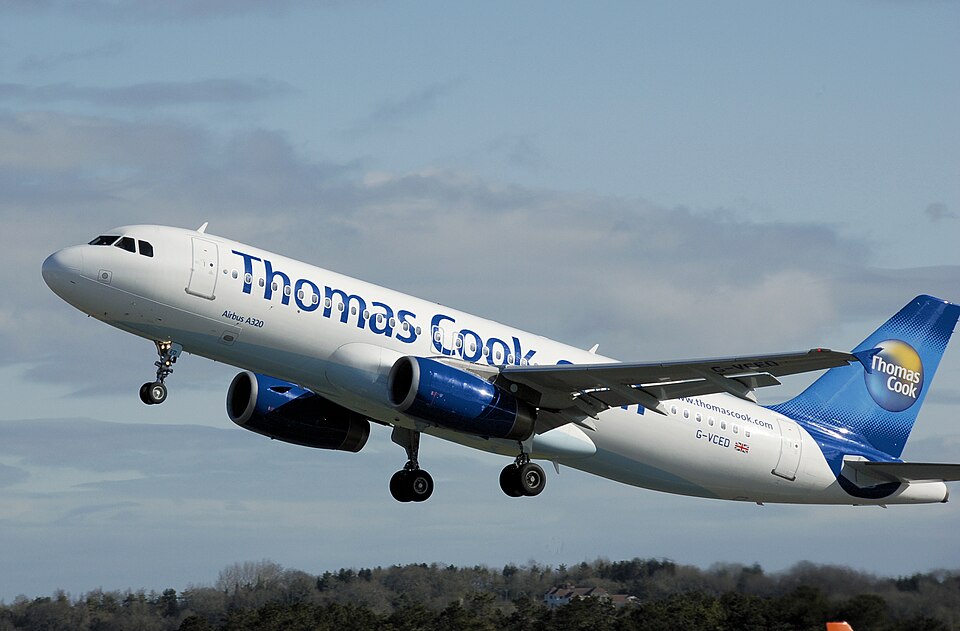
The aircraft arrived at Gatwick Airport the evening before the incident and parked overnight. During the night, a routine Weekly Check required the fan cowl doors on both engines to be opened. After the check, a Pre-Departure Inspection was conducted, followed by de-icing at 0503 hrs. The commander performed a walk-round inspection using a torch; sunrise was at 0753 hrs. The pushback crew also conducted an external inspection. Nothing unusual was noted. After pushback and engine start, the crew commenced a reduced power takeoff from Runway 26L. At rotation speed of 158 kt, both fan cowl doors detached from the No 1 powerplant. The first indication of a problem was a caution at 1,500 ft indicating a possible issue with the left forward overwing emergency exit. Passengers heard a bang and saw a panel fly off. The commander was informed, and the first officer confirmed missing cowling. The aircraft held at FL 90 to burn fuel and later diverted to London Stansted, landing without further incident. Five aircraft movements occurred on the runway before debris was suspected; two sustained minor damage. The runway was closed for inspection and debris recovery.
Component Description
The fan cowling consists of two semi-circular doors between the intake and aft fixed cowl. Each door measures approximately 4.7 feet wide and 10 feet high, weighing 93 lb (left) and 103 lb (right), made of carbon fibre composite with aluminium honeycomb. The doors are hinged to the pylon and secured by four latches on the right door engaging eyebolts on the left door. No flight deck indication warns of unlatched doors. The door arrangement is similar across V2500-powered Airbus models.
Maintenance
The Weekly Check was performed by a Licensed Aircraft Engineer (LAE) working alone between 2000 and 2300 hrs. He reported no unusual distractions except a brief conversation with a construction worker. He believed he latched the doors but could not positively recall doing so. The LAE had 23 years of experience. The right fan cowl door had been replaced on 6 November 1999, with latch eyebolt adjustment checked at that time.
Damage
The detached doors caused severe damage to the engine cowling and pylon, and localized damage to the powerplant, wing, slats, flaps, fuselage, and fin. No injuries occurred among the 6 crew and 146 passengers.
Previous Occurrences
Fan cowl doors had detached from A320, A319, or A321 aircraft on at least seven previous occasions since 1992, apparently due to failure to re-engage latches after closure. The powerplant manufacturer's recommendations and modifications were considered unlikely to significantly reduce recurrence. A modification to hold doors slightly open when unlatched was optional and not incorporated on G-VCED. Six safety recommendations were made.