History of the Flight
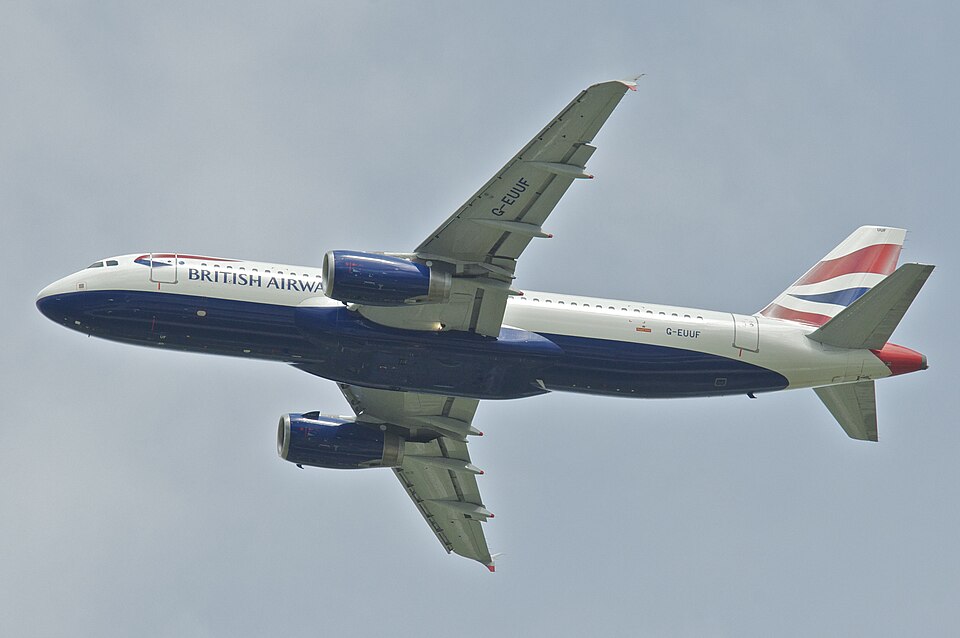
On 26 June 2006, at 1645 hours UTC, an Airbus A320-232, registration G-EUUF, was preparing for a routine departure from London Heathrow Airport to Munich, Germany. The aircraft, operated by a commercial air transport crew, had 7 crew members and 83 passengers on board. There was no significant weather and good visibility. Due to air traffic control delays, the pushback was delayed by ten minutes.
Once ATC clearance was received, the aircraft was pushed back from Stand 139 onto Taxiway Kilo. ATC requested a long pushback to allow another aircraft onto Stand 139, which meant the aircraft would be pushed back into the narrower part of Taxiway Kilo, abeam Stand 118 and adjacent to a blast wall on the right side.
During the pushback, both engines were started. The procedure proceeded without incident until the headset operator (HO) asked the commander to apply the parking brake. After acknowledgment, the ground crew disconnected the towbarless (TBL) tractor and the tractor driver moved it to the right side of the aircraft’s nose. The HO removed his headset, showed the steering lockout pin to the flight deck, received acknowledgment from the co-pilot, and then entered the tractor.
Ground Crew Actions
As the HO entered the tractor, the driver informed him that the "cradle up" indicator light was not illuminated and that it was not possible to move the tractor. At that moment, they heard the aircraft’s engines increase power and saw it start to move. Both ground crew members got out of the tractor and attempted to signal the flight crew to stop, but it became apparent that the flight crew were not looking in their direction. They returned to the tractor for another attempt to move it and for their own protection.
The aircraft continued to move forward, and the underside of the right engine struck the rear of the tractor, pushing it into the middle of the vehicle crossing point between Stands 139 and 118/120. The aircraft continued to taxi along Taxiway Kilo.
Collision and Aftermath
The ground crew believed the operating crew were unaware of the impact, so the tractor driver contacted ATC and asked them to stop the aircraft. ATC then informed the crew of G-EUUF of the accident and instructed them to stop. The commander stopped the aircraft and applied the parking brake. The Aerodrome Fire & Rescue Service (AFRS) attended, and the right engine was shut down; the APU was started. After clearance from AFRS, the aircraft taxied to Stand 158, where the remaining engine was shut down. The right engine fire handle was operated as a precaution after smoke was reported from the engine jetpipe.
Operating Crew Comments
The commander stated that after the pushback, the HO requested the parking brake be applied. The commander asked the co-pilot for the "After Start" checklist, which was completed up to "GROUND CREW CLEARANCE […] RECEIVED." The co-pilot received visual clearance from the ground crew. The commander released the parking brake and applied small power to start moving, then checked the foot brakes. He heard a "graunching" sound but was unsure of its origin. All engine parameters were normal, and the aircraft did not slow or yaw. The crew discussed the event and decided that an inspection was needed before taxiing from the cul-de-sac. Just as the commander was about to request an inspection vehicle, he heard a transmission advising ATC to stop an aircraft that had hit a tractor. Realizing they were the aircraft involved, they stopped and applied the parking brake.
The co-pilot stated that when he looked to the right to "clear starboard," he did not see the tractor. He focused from his three o'clock rearwards to clear the wing tip due to the proximity of a blast screen.
Damage and Investigation
The aircraft and tractor were examined at Stand 158. The underside of the right engine’s inlet cowl, fan cowl, and thrust reverser C-duct were badly damaged from contact with the rear of the tractor. Scoring and blue paint transfer on the engine cowls matched score marks on the tractor legs. It was deduced that the tractor had been positioned on the right side of the aircraft, with its longitudinal axis oriented 70 to 80 degrees to the right of the aircraft’s direction, with the rear of the tractor in line with the No. 2 engine. The aircraft’s Flight Data Recorder and Cockpit Voice Recorder were downloaded by the AAIB.