Summary
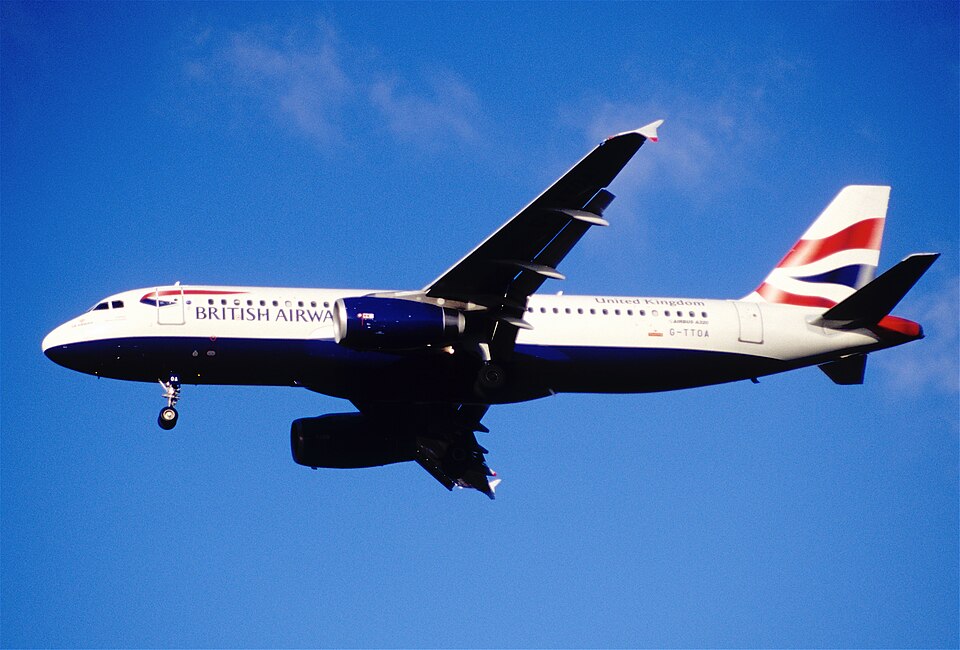
On 15 April 2004, an Airbus A320-232, registration G-TTOA, was operating a public transport passenger flight near Malaga, Spain. The aircraft had 6 crew and 115 passengers on board. During the descent, the co-pilot, who was the handling pilot, selected the autopilot speed control to MACH mode. The aircraft descended at a high rate, with increasing indicated airspeed approaching the maximum operating limit (VMO). Both pilots made simultaneous aft sidestick inputs after the autopilot disengaged, resulting in a peak normal acceleration of 2g. Four cabin crew and two passengers sustained injuries. The aircraft landed normally at Malaga.
History of Flight
Both pilots reported feeling tired at the start of their duty, having completed a pattern of late finishes and an early start. The aircraft was level at flight level 310 (FL310) with the autopilot engaged in selected speed (SPD) control mode. Madrid Air Traffic Control had descended the aircraft to FL310 unusually early. As the approach to Malaga began, the co-pilot initiated a descent in managed lateral and vertical navigation modes and changed the speed target from SPD to MACH control mode. He believed he had accidentally selected SPD mode earlier. After leveling at FL250, a further descent to FL130 was initiated in open descent mode.
At FL220, the aircraft was descending at 4,800 feet per minute, maintaining Mach 0.78 to 0.79. The calibrated airspeed (CAS) had increased to 349 knots, and the Mach number was approaching VMO, with the speed trend arrow indicating acceleration to a speed well above VMO. The commander called "speed" to the co-pilot, and a lower Mach number equivalent to 320 knots CAS was selected on the Flight Control Unit (FCU), though the autopilot and autothrottle remained in MACH mode. One second later, the autopilot disengaged. A second later, both pilots applied aft stick demands of approximately 10° each to prevent an overspeed. This resulted in a sudden increase in normal acceleration, peaking at 2g before returning to about 1g. For eight more seconds, both pilots continued to make sidestick inputs without pressing the take-over button. The autothrust remained engaged, and no speedbrake was used.
Injuries
The sudden acceleration caused three of the four cabin crew to be thrown to the floor. Two suffered minor injuries, and a third in the aft galley sustained a broken ankle. The fourth cabin crew member, seated in a passenger seat at the front, was thrown onto an armrest. Two passengers later reported stiff necks.
Discussion
The selection of MACH speed mode by the co-pilot left the aircraft in MACH mode for the remainder of the descent. With the autopilot in MACH mode, the aircraft maintained the selected Mach number, causing CAS to increase as the aircraft descended until it exceeded VMO. The pilots did not recognize that the aircraft was still in MACH mode late in the descent and did not appreciate the relevance of the selected Mach number to VMO. According to the Flight Crew Operating Manual, when close to VMO with an accelerating speed trend, procedures recommend selecting a lower target speed and, if acceleration continues, disconnecting the autopilot and establishing a shallower pitch attitude. In this case, after selecting a lower Mach, both pilots almost immediately disconnected the autopilot to reduce descent rate and avoid overspeed. However, without using the sidestick take-over button, their inputs were summated, causing a rapid pitch-up and higher g-load than intended. Both pilots continued making inputs for eight seconds without realizing the other was doing so. This dual sidestick input situation has occurred in previous incidents. A modification exists to warn of dual inputs, but in this case, it would not have prevented the initial acceleration that caused the injuries, though it could have prevented the subsequent potentially hazardous situation.